
In case you’ve missed it: Residents lament smouldering sludge
ERWAT’s Ancor Water Care Works said the work would continue until the entire sludge paddies area was free of any smouldering and subsequent smoke.
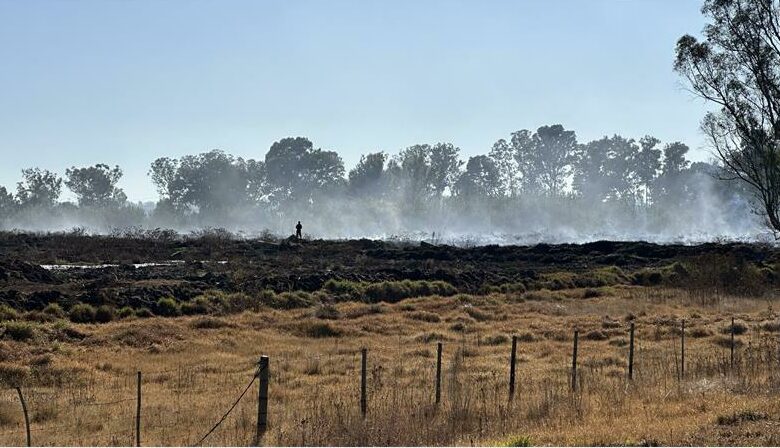
On June 9, heavy, acrid smoke blanketed Largo and the surrounding areas for more than a week, leaving residents and motorists struggling to see and with few answers about what was clouding the air.
Springs resident Matthew Havinga joined other residents who lamented the smoke and stench from the Ekurhuleni Water Care Company’s (ERWAT) Ancor Water Care Works (WCW) on Ermelo Road.
“The situation is hazardous to the environment and the safety and lives of the communities in the area,” said Havinga.
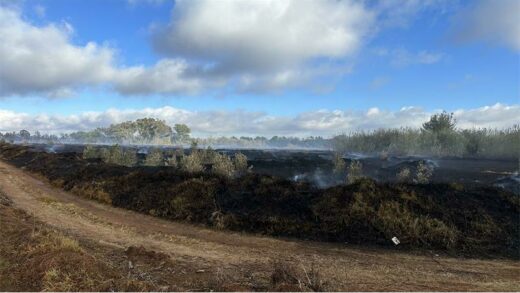
“The company has burnt sludge since early June. It smokes continually, and they said they had tried everything to put out the smoking heaps.
“The damage it has caused is terrible.”
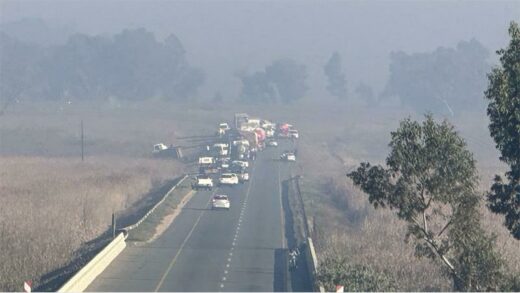
Another resident, added that in an attempt to get to her work, she drove on the road when the smouldering smoke wasn’t too bad, but minutes later, the road was not visible.
“With the wind blowing, it changes the movement of the smoke, which covers the whole area, making it difficult for other motorists to pass through.”
“It’s also very toxic to breathe in. There is an informal settlement right across the road that is also affected. It is beyond awful, and many people have suffered and are still suffering.”
While ERWAT understood the plight of residents, it claimed it was also affected by the fire.

“While strides were made to extinguish the fire on June 10 and the early morning of June 11, the fire flared up again, jumped the fire break, and spread significantly,” stated Wanda Annandale, the ERWAT manager of communications, marketing, and stakeholder engagement.
Annandale said they called DEMS to the scene as per ERWAT’s incident management protocol.
“Water was continually pumped to the burning area to extinguish the flames,” said Annandale.
She said additional measures helped to extinguish the fire – a TLB (tractor-loader-backhoe) opened furrows for the water to reach the burning areas. Furthermore, a combination truck (jet and vacuum) sprayed water on the burning areas.
“Unfortunately, it is difficult to extinguish smouldering material on the sludge lands because of the nature of the material and its tendency to smoulder from the bottom.”
Annandale added that extinguishing the smouldering material was slower than anticipated because of heavy winds that spread the smouldering areas in the sludge paddies.
“Great strides were made despite the challenges, with over 80% of the smouldering sludge paddies extinguished.
“Due to heavy winds and environmental factors, such as the cold weather, there are still some areas where smoke formation reoccurs, especially in the early mornings, and these get cleared as and when it occurs,” said Annandale.
The company said work would continue until the entire sludge paddies area was free of any smouldering and subsequent smoke.