
US Presidential and Correctional Services partner in inmates’ health care services
Correctional Services hosted a presidential delegation from the United States of America who came to monitor the progress made on the health care services training intervention they funded from their Presidential Emergency Plan for Aids Relief Fund (PEPFAR).
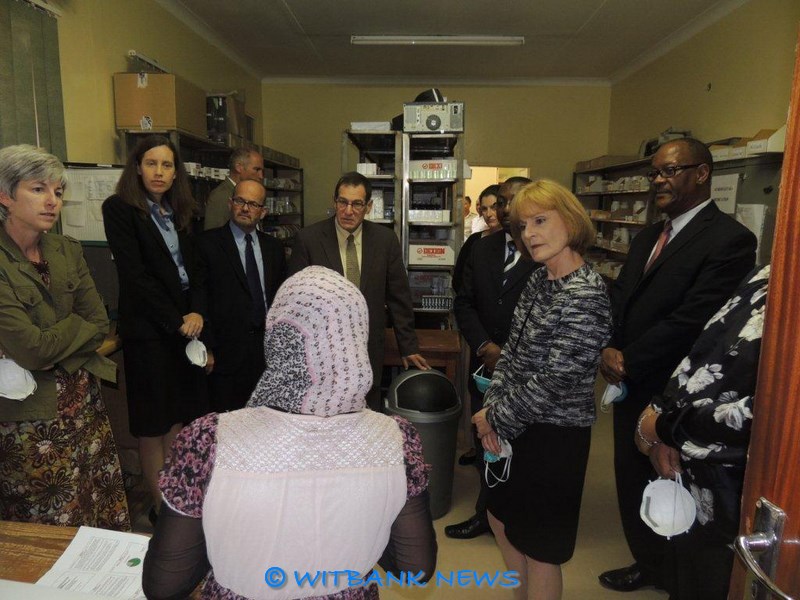
The delegation, which included stakeholders from International Training and Education Centre for Health (ITECH), Health Resource South Africa (HRSA), South African Council of Nursing (SACO), received a very rewarding and much appreciated feedback from the Correctional Service delegation led by Deputy Commissioner in Health Care Service Directorate, Ms Maria Mabena.
“The training intervention conducted by ITECH has delivered on the following aims: to conduct an assessment of training and resource needs among health care workers and patient referral systems in the DCS; strengthen DCS capacity related to HIV/AIDS, TB, STIs and Infection Control, including training of front-line health care workers; work with DCS to ensure availability of resources that are essential for quality health care; strengthen referral systems to ensure that released inmates in need of care access health care services at health care facilities outside of correctional facilities,” said Mr Moses Nkabinde.
“The funding and training intervention by various stakeholders was borne out of this background that South Africa has a large proportion of its inmates still awaiting trial, which contributes to overcrowding. Overcrowding leads to insufficient ventilation, poor physical and mental health, which fuels the spread of HIV and TB. In addition to adequate human resource capacity, adequate skills among existing health care providers in correctional facilities are essential to good Correctional Centre’s health and to support efforts to fight the spread of HIV and other communicable diseases,” he said.
The department says over the past few years, the National Department of Health (NDoH) introduced several guidelines on care and management of communicable diseases, including the recently introduced Nurse Initiated and Managed Antiretroviral Treatment (NIMART).
The correctional facilities are different from the health facilities for which the NDoH guidelines are developed. Moreover, due to limited health care workers in DCS, it has not been possible to follow the NDoH approach of training a pool of trainers with the aim of using them to roll out training to all health care workers across correctional health care facilities.