
Pink tax: discrimination in our shopping centres
South Africa is ranked 19th in the world by the World Economic Forum when it comes to the gender wage gap.
Pink tax has been trending on social media this month.
South Africa is ranked 19th in the world by the World Economic Forum when it comes to the gender wage gap.
Ipsos, a global market research firm, found that on average women in South Africa earn 27% less than their male counterparts in similar positions and occupations.
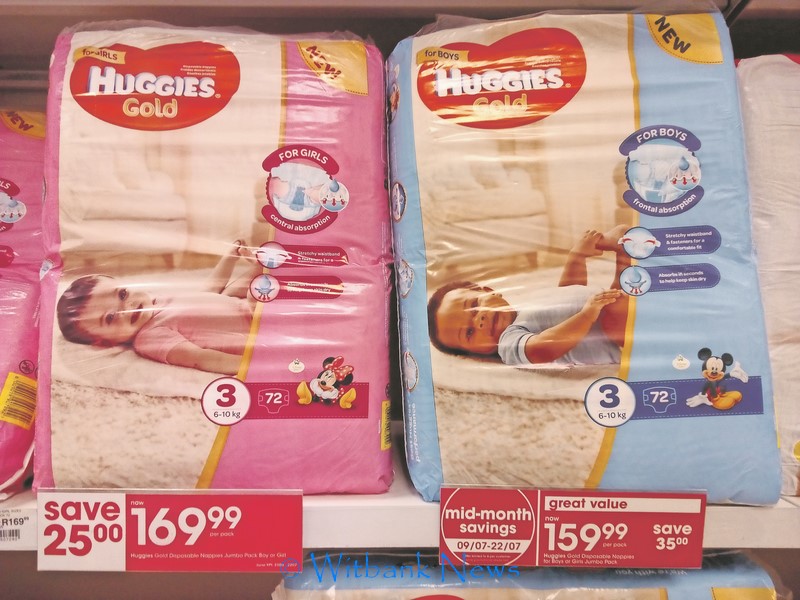
Women pay pink tax from birth. Here is the pricing difference between two gender specific diapers of the same brand.
The discrepancy between the spending power of men and women does not end there. Not only do women earn less than men in similar occupations and positions,
ALSO READ
Women raising their voices in a march
they are also unknowingly paying pink tax with almost every trolley they push through their local convenience store.
Pink tax refers to the extra amount women are charged for certain products and services.
It seems that global marketing firms have realised that if you end a product’s name with “for women” they can charge any imagined amount more for that product than they would for a product marketed at men.
In December 2015, the New York City Department of Consumer Affairs released a study titled “The Cost of Being a Female Consumer”. This study found that on average, women’s products cost 7% more than similar products for men.
It found that the most expensive category of products a woman can buy, when comparing it to similar products marketed at men, were personal care products such as deodorants, shaving razors and lotions.
WITBANK NEWS investigated the presence of pink tax in eMalahleni and found that in almost every shop, women paid more when compared to similar products marketed at men.
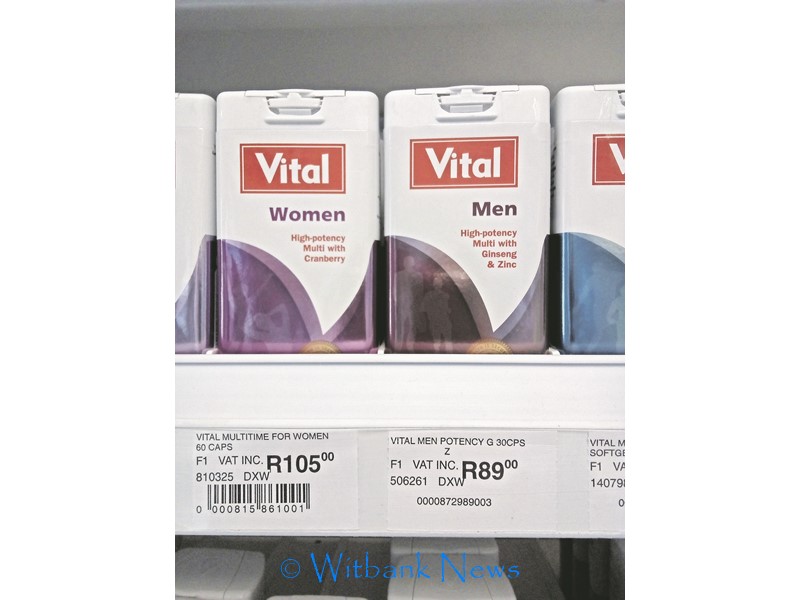
Pink tax on vitamins – as per usual, women pay more.
This was evident in the R10 price difference between diapers for girls and diapers for boys, and the R16 price difference between vitamins of the same brand marketed at women versus those marketed at men.
Many women are fighting against this discrimination by opting to buy products marketed at men, leaving the pink shaving razors and sparkly soaps behind on the shelves, and saving themselves a pretty penny in the process.
By voting with your money, you can either encourage companies to continue producing products specifically for women and then charging 7% more for them or you can prove to these companies that women are tired of being consumerism’s cash-cow and buy the blue-stuff instead.