
Teaching abroad turns into living nightmare
For some it works out and they come back with fond memories and experiences
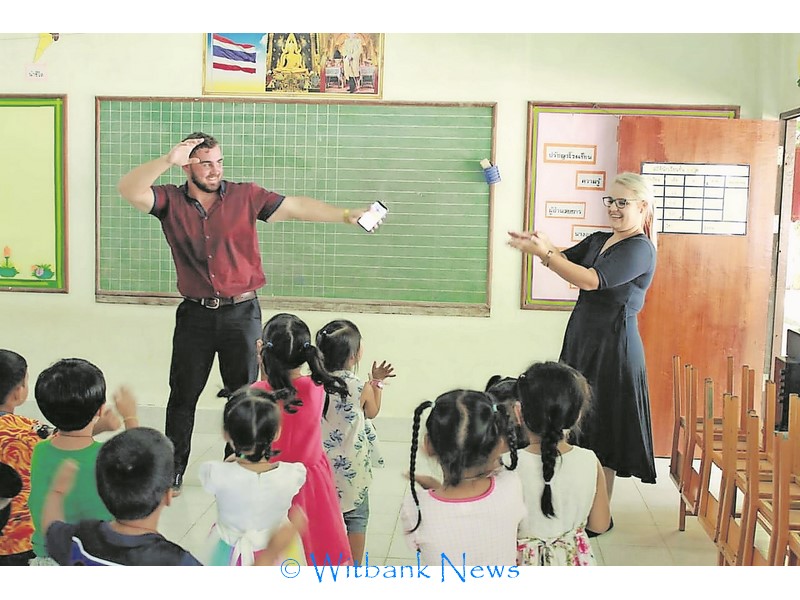
Many people are grabbing this opportunity to get paid to live, travel and work in another country.
For some it works out and they come back with fond memories and experiences.
For others, teaching English in a foreign country becomes a nightmare.
This was the experience of three locals who completed the required Teach English in a Foreign Language course, but were not able to secure jobs legally because they lacked degrees.
They allege that they were not informed of this prerequisite prior to departing to Thailand.
They also alleged being offered the opportunity to purchase fake degree certificates, which they refused to do.
As a result, they had to return to South Africa without reaching their dreams.
Jessica-Lee Smith and JP van der Merwe envisioned a thrilling adventure in one of the world’s most fascinating countries, Thailand, but soon learned that it was not all they imagined it would be.
WITBANK NEWS caught up with them back in South Africa.
“It was an enriching experience. We were very naïve and made the mistake of having high expectations. I saw it as a romantic expedition where I would be doing some amazing teaching and make a big difference in the lives of the children and teachers,” Jess said.
Another young man who wishes to stay anonymous had a similar experience.
“I was looking to get out of my day-to-day job… looking at various options to leave my current work and get to travel a little bit while making money. I found an agency that takes in any person that is English speaking.”
According to the man, they said that he would easily find a school to teach at.
“The recruiting company was going to give me training to get me a certificate that allows me to teach English as a foreign language,” he said and added that, after the training, the company would place candidates at Thai schools where they earn a minimum of R15 000 a month.
“It is a good salary for a good life in Thailand,” he said.
Jessica-Lee, JP and the anonymous source did a three-week course and got their certificates, whereafter they were allocated to schools, which was when things started not adding up.
“I met my agent and he requested I change my CV to say that I studied at a university,” said the anonymous source, who never obtained a degree.
It turned out that it was a prerequisite for a Thai working Visa.
The source informed his agent that he had never obtained a degree.
The latter allegedly reacted by opening up a drawer filled with certificates seemingly from the Universities of Pretoria, Cape Town and North-West University.
“He said it would be as easy as printing my name of the degree,” said the source.
The same offer was made to Jessica-Lee and JP. Both declined.
The three were stuck with three options.
One entailed using a fake degree.
Another option was so-called border hopping.
In the absence of a work visa, they would have to leave and re-enter the country every 30 days for holiday purposes in order to be there legally.
The third option would entail applying to a university in Thailand and staying in the country on a student visa.
The first two options amounted to fraud and could easily result in a prison sentence.
The third was very expensive.
Regardless of how much money they had spent on getting there, they decided that their best option was to pack their bags and return home.
Do they regret the choices they made?
“I do not regret the choices I have made, nor do I regret having my bad experiences. They all taught me something and helped me making better choices and moving towards a path that I really enjoy walking on,” Jessica-Lee said.
WITBANK NEWS had emailed The Ministry of Education in Thailand and the two companies allegedly involved in the fiddle, for comment, but received none by the time of going to press.