
Help Ian to fight the good fight
The brain stem is the bottommost portion of the brain, connecting the cerebrum with the spinal cord
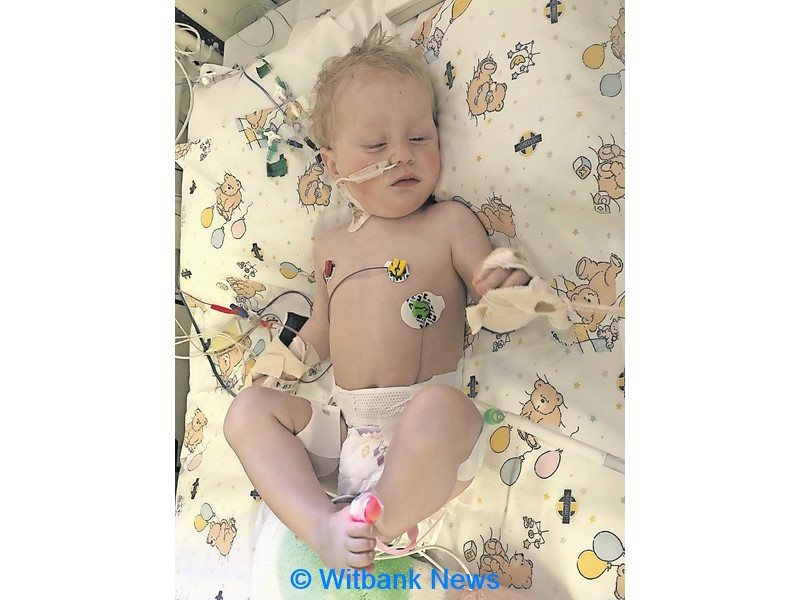
Little Ian Neethling (two-years-old) was diagnosed in September of 2018 with diffuse intrinsic pontine glioma (DIPG) after a biopsy that was done confirmed the diagnosis.
He was given only three to six months to live, but fought with all his heart against the cancer and is still with us today.
“The doctors had actually given up on Ian. The first academic hospital we went to did the initial craniotomy and biopsy, but after Ian took a turn for the worst a couple of weeks later – they told us to just take him home and make him comfortable for the time he has left. At the same time, we got into contact with Cupcakes for Hope who organised a trip down to Durban for Ian and his family so that they could go and make some memories to carry with them. On their third day there, Ian got very ill and went into a kind of spasm that caused all of his muscles and joints to contract. They rushed him to hospital, and that’s where Ian met Dr Samuel. Dr Samuel realised that Ian’s shunt was causing problems by not allowing the fluid to drain from his skull, and immediately inserted a new one,” explained Donna Neethling, Ian’s aunt.
A diffuse intrinsic pontine glioma is a tumour located in the pons (middle) of the brain stem.
Glioma is a general name for any tumour that arises from the supportive tissue called glia, which help keep the neurons in place and functioning well.
DIPG is a brainstem glioma.
The brain stem is the bottommost portion of the brain, connecting the cerebrum with the spinal cord.
The majority of brain stem tumours occur in the pons and are diffusely infiltrating (they grow amidst the nerves), and therefore cannot be surgically removed.
The brain stem contains all of the incoming neurons within the spinal cord, as well as important structures involved in eye movements and in face and throat muscle control and sensation.
Surgery to attempt tumour removal is usually not possible or advisable for DIPG.
By nature, these tumours invade diffusely throughout the brain stem, growing between normal nerve cells.
Aggressive surgery would cause severe damage to neural structures vital for arm and leg movement, eye movement, swallowing, breathing, and even consciousness.
DIPG has a five year survival rate of less than one percent.
The median overall survival of children diagnosed with DIPG is approximately nine months.
The one- and two-year survival rates are approximately 30% and less than 10%, respectively.
These statistics make DIPG one of the most devastating pediatric cancers.
“Little Ian’s facial nerves were damaged during the craniotomy that was necessary in order to obtain a biopsy, which unfortunately means he can’t smile or cry, but he’s just like any other little boy. He loves cars, in fact, his first word was ‘car’ and no matter how sick he has been, he’s always up for playing with his cars,” Donna explained, “a month ago Ian started getting sick again. He was losing a lot of weight and sleeping all of the time. We knew this could be a sign that the tumour is further affecting him. We took him back to Dr Samuel, who surprisingly told us that the tumour had in fact decreased in size. Ian spent about a week in the Intensive Care Unit (ICU) but is back home and beaming again. Although we are incredibly happy that the tumour is shrinking; it won’t be forever. DIPG tumours shrink, but they always come back, and when they come back – they come back extremely aggressively.”
Little Ian Neethling will be at The Boat and Caravan Club (Steve’s Place) this weekend (on September 28 and 29), and his family are happy to introduce him to anyone that might want to meet him whilst there.
Ian will be enjoying the Spring Racing Festival.
The gates will open at 07:00. Entrance is R100 for adults, R60 for children and kids under five will be allowed to attend the event for free.
There will be boat racing, pony rides, flea market stalls, jumping castles, a sokkie/karaoke night on Saturday night and you will get the chance to take a spin in a racing boat.
The reason for Ian’s visit is that funds need to be raised in order to cover his exorbitant medical costs.
Those who would like to make a donation to the non-profit organization (NPO) set up in order to help cover Ian’s costs, can make payment to:
Account: OUR BUDDY IAN NPC
Bank: First National Bank (FNB)
Account number: 62793298962
Branch code: 210554
Alternatively, those who would like to donate, can contact Ian’s aunt, Donna Neeethling at DNeethling@marleyps.co.za or phone 084 264 8292.