
Coffee with Reverend Maans – character over charisma, why we keep choosing wrong leaders
Charisma may capture attention, but character is what builds a future worth trusting.
Charisma is seductive. It feels like leadership. It sounds confident, decisive, and reassuring, especially in times of uncertainty.
The three main advantages of charisma are especially important for people with anxiety because they provide clear direction during confusing times when systems break down.
The event unites various social groups, and their fans show intense passion throughout. South Africa learned from its own history that leadership that depends only on charm will not endure.
The concept makes a brief impact, but it loses its power when it encounters obstacles.
The power to inspire others through charisma does not benefit organisations when they need to make tough decisions or when members must bear personal financial costs.
Charismatic leaders have the power to quickly obtain backing from their followers. Leaders who use their personal character values to make decisions establish institutions through a process of slow institutional growth.
And it is institutions — not personalities — that carry a country through difficult seasons.
Organisations need trust-based systems which run continuously while upholding ethical standards. Leaders who want to succeed need to demonstrate consistent behaviour in both applause and camera presence, and when there is no audience.
Leaders who want to succeed need to stay true to their principles even when it would be easier to compromise.
Character is quieter than charisma
The system operates without making any loud public announcements. It reveals itself over time, through patterns of behaviour rather than moments of performance.
People demonstrate integrity through their actions, including fulfilling their work responsibilities, reporting mistakes accurately, and refraining from using their power to harm others.
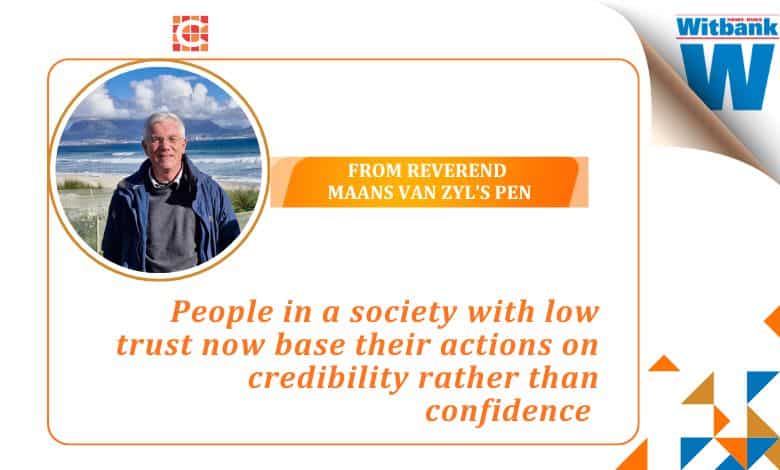
People in a society with low trust now base their actions on credibility rather than confidence.
South Africans are currently observing all leadership actions closely.
People tend to watch how others behave rather than believe their empty statements.
People observe how leaders handle responsibility by accepting blame or by avoiding it, and they also see how they respond to feedback and if they work for the benefit of all or only to advance their own goals. This is not cynicism.
People learn this survival technique because trust has failed them multiple times in their environment.
One reason charismatic leadership remains so attractive is that it is easier to recognise than character.
Charisma is immediate. Your presence becomes visible to others when you demonstrate confidence through your physical presence and your ability to communicate.
Character requires an extended period to become visible
The process requires three fundamental components: patience, memory, and moral attentiveness. People tend to seek leaders who demonstrate absolute confidence during emergencies, even though these leaders might speak cautiously.
But having complete knowledge does not equal having wisdom, and being confident does not mean being powerful.
South Africa’s leadership struggles are not primarily the result of a lack of intelligence or talent. Leadership problems arise when leaders prioritise maintaining their charisma over building their personal character.
Too often, leaders have been chosen because they could command attention rather than because they could be trusted with responsibility.
The result has been cycles of enthusiasm followed by disappointment, loyalty followed by disillusionment.
The ongoing pattern causes political harm, which simultaneously breaks down social systems and weakens institutional stability until they collapse.
Leaders who lead through their character do not need to lose their interest or become inactive.
Leaders who want to achieve this concept need to guide their organisations through values instead of superficial displays.
It means leaders who can say, “I was wrong,” without collapsing into defensiveness, who can apologise sincerely without shifting responsibility, and who understand that authority grows through accountability, not avoidance.
These leaders do not fear criticism because their identity is not built on perfection.
The authors understand that people who criticise others do so to defend important things
Research on trust indicates that people tend to forgive mistakes more readily than deceitful conduct and defensive behaviours.
Leaders who show their mistakes and make changes will regain trust more quickly than those who hide facts, fight criticism, or shift attention elsewhere.
Leadership defensiveness is one of the most common automatic responses leaders exhibit. Leaders who experience vulnerability choose to defend their public image rather than develop their personal relationships.
People use physical responses to answer questions instead of taking the time to think. The breakdown of trust occurs through repeated unfulfilled promises, which eventually lead to its collapse.
ALSO READ Ubuntu teaches that leadership exists for the well-being of the community
Leaders who have charisma, but no character, will transfer their moral duties to other people
Charismatic leaders create an environment that leads their followers to abandon their moral decision-making, believing that strong self-assurance proves professional ability and intense dedication proves moral character.
The situation leads people to become so dedicated to their leaders that they miss warning signs until damage has already been done.
Leaders who base their leadership on character use methods which differ from those of other leaders. The system promotes collective responsibility and allows people to express their disagreements while holding all participants accountable.
The environment enables people to express themselves freely while also allowing them to acknowledge their errors and provide substantial value to the group.
Strong character also reshapes how leaders relate to power.
The power structure of charisma establishes that personal charisma should determine which individuals should maintain authority. The organisation distributes power through character.
Leaders who base their leadership on character principles view their role as guardians of their organisation rather than as people who expect special treatment.
The organisation understands that authority functions as a trust-based responsibility that people receive rather than possess, and that leadership exists to serve those who face decisions rather than to seek self-approval.
The entire system transforms when people adopt this new position, as they begin to receive criticism differently and redefine success.
The nation requires leaders who will lead without taking control of domains while ensuring all people maintain their right to express their opinions.
ALSO READ The moral compass for a nation in need
The organisation requires leaders who can manage complex situations without making false claims about their absolute knowledge.
- Leaders who are teachable rather than defensive.
- Leaders who are willing to collaborate across differences rather than retreat into factionalism.
- Leaders who maintain their consistency during times of isolation and who demonstrate integrity even when it becomes expensive for them.
Choosing character over charisma also requires something of citizens.
It demands patience.
Character reveals itself slowly
The process requires voters, their communities, and institutions to resist the urge for instant solutions and bold campaign declarations.
People should learn to discriminate between things instead of losing control, and they need to keep their memories instead of experiencing brief excitement.
The present condition of our society, which requires transformation, creates an extremely difficult situation for this process.
But sustainable change has never come through personality alone. The development of trust emerges from leaders who demonstrate their commitment through consistent actions during multiple years of service.
If South Africa is to rebuild trust, it must learn to value depth over display, consistency over confidence, and integrity over image.
The leaders who will carry this country forward may not always be the loudest or the most captivating.
They may speak carefully, act steadily, and take responsibility quietly. But they will build something that lasts.
Christian reflection
Jesus offered a simple but demanding measure of leadership and life: “By their fruit you will recognise them” (Matthew 7:16). Fruit takes time to grow.
It cannot be rushed or faked. In the same way, character reveals itself not in promises made, but in patterns sustained.
This column is the opinion of the writer and does not represent the views of Witbank News.
Your city, your story, as it happens. Stay in the loop with WITBANK NEWS.
Find us on our website, Facebook, X, Instagram or TikTok
Got a tip? Email: info@witbanknews.co.za