
Vultures die from lead bullets and poison baits
Bird's plight needs financial support.
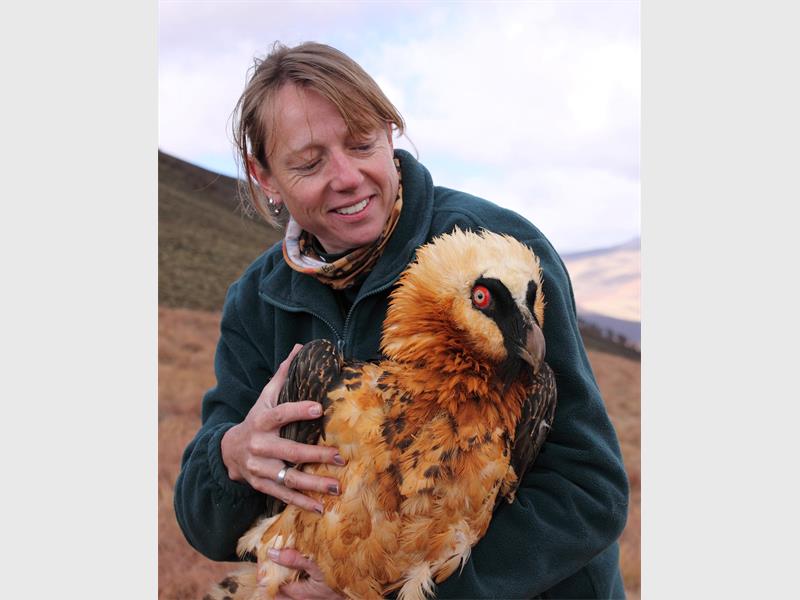
ONE woman’s quest to save the critically endangered Bearded Vulture (Gypaetus Barbatus) needs a lot more help.
With now only an estimated 100 breeding pairs left – half the number documented about 30 years ago – Olivia Taylor committed herself as far back as 2000 to raising funds for the species as part of the Ezemvelo KZN Wildlife-inspired Maloti-Drakensberg Vulture Project.
Statuesque, magnificent and emblematic of South Africa’s transfrontier conservation efforts with Lesotho, the Bearded Vulture is slowly disappearing.
Olivia has raised R100 000 for the project, which is situated within a government approved and gazetted Biodiversity Management Plan drawn up in 2011.
Olivia approached donors such as Marriott Bank, Shepstone and Wylie Attorneys, the Suncoast Casino, Taylor and Findlay Attorneys, all of whom contributed towards this funding.
Other collaborators have been the Wildlands Conservation Trust, the Maloti Drakensberg Transfrontier Programme and Sasol through the Endangered Wildlife Trust.
She was inspired by the overwhelming commitment of Dr Sonja Krüger, Ezemvelo’s ecologist for the Maloti Drakensberg Park World Heritage Site, who has dedicated the past 15 years to saving these birds.
Having just obtained her PhD, Sonja’s latest findings and opinions on the bird don’t make pretty reading.
Like most threats to all fauna and flora, human thoughtlessness, ignorance and indifference take the high ground where wind farms, power lines and poisoning for traditional medicine pose real threats.
But it is to poisoning by farmers and hunters that she points the harshest finger.
‘Some 90% of all fatalities come from this.
‘Lead poisoning from bullets used by farmers to cull livestock (and hunters killing game) as well as poison baits meant to kill predators such as jackals, present the greatest danger.
‘We need stringent measures to prosecute and impose harsh penalties.
‘We also have to urgently regulate the import, manufacture and use of poisons including agricultural chemicals and pharmaceutical products lethal to vultures.’
Reducing human activities, such as helicopter flights and mountaineering close to nest sites at the beginning of the breeding season as well as supplementing food close to nests, would also help.
The money raised to date has been put to great use.
Satellite transmitters were fitted to 21 individual birds of all age classes to determine their movement patters and causes of mortality.
These cost R30 000 each and data downloading costs from the satellite amounted to R1 000 per bird per month.
A digital camera was later placed on a nest site, allowing Sonja to monitor and capture breeding activity.
But the stringent financial climate now asks for further funds, specifically to allow the bird’s plight to reach a wider audience.
Funds have dried up and it’s to the global audience that Sonja is now paying attention.
And she’s hoping someone will fund the necessary bandwidth so that the footage can be uploaded onto the internet to a designated website.
‘A camcorder presents an extraordinary marketing tool, where a designated website will open a big window on this species’ plight.’