Armed response – police, guns and protests
A look at why the police carry certain weapons
‘They should just let us use live ammunition,’ the policeman said. ‘Then they won’t be so clever.’
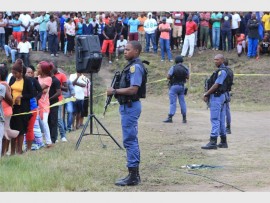
It’s early March and rain falls on the streets of iSithebe near Mandeni in rural northern KZN.
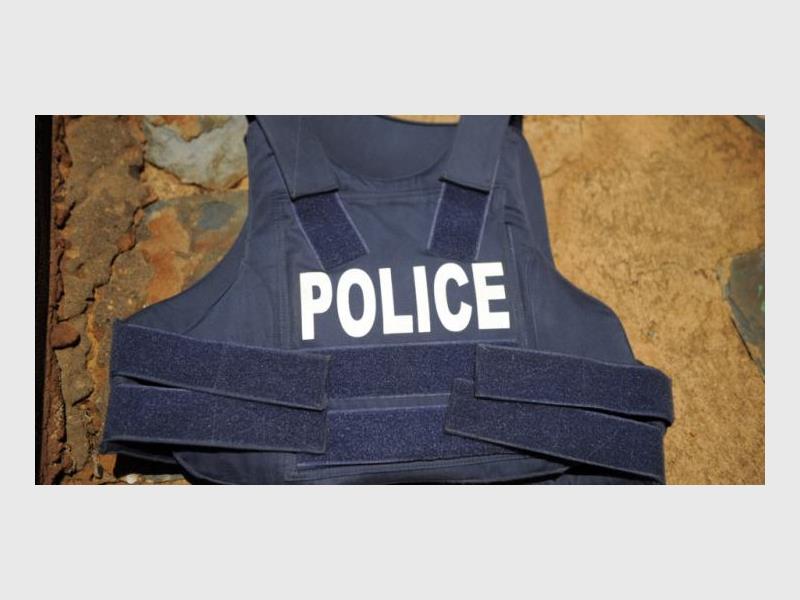
The officer stands leaning against a car, rain darkening his blue bulletproof vest.
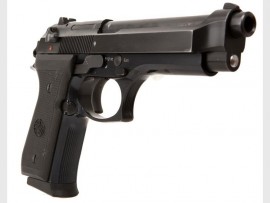
His right hand rests on the 9mm pistol holstered and strapped to his leg.
It is the third day of violent protests in iSithebe. Factories and trucks have been torched and roads blocked.
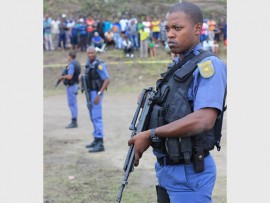
His small unit of Visible Policing members is providing backup for the Public Order Police units stationed around town.
Another security guard was just assaulted at a factory. The policemen, together with other members of the security company gave chase, but the large group of assailants scattered into the surrounding shacks.
They stand on a ridge hurling insults, laughing.
‘You know that they want to take our rifles away from us,’ says the policeman, as he mimes bringing a rifle to his shoulder and pulling the trigger.
‘Bang, bang.’
Laughing, he says he doesn’t know why.
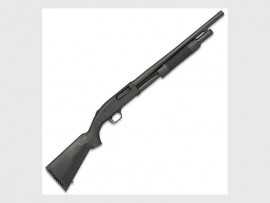
‘Yes, I would feel safer if I had a rifle. Maybe even a shotgun with rubber bullets. They are scared of those.’
Yet, the officer and the other members of his unit have only a four door Mazda police vehicle, 9mm pistols and bulletproof vests.
Some of the protesters do have guns, as shots fired earlier that morning at the security company’s vehicle proved.
Disarmed?
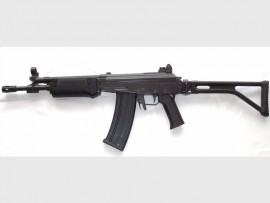
Questions sent to KZN SAPS spokesman Major Thulani Zwane for comment on the issuing of R5 rifles to police units were met with a blanket response.
Among others, the ZO asked the police if an active decision had been taken to stop the issue of rifles to Visible Police units when deployed in areas of public unrest, the reason for that decision and what precaution was taken for the safety of those officers.
‘Members are armed according to the operational requirements of the duties they perform,’ said Major Zwane in an e-mailed response.
‘We will not wish to discuss these issues on a public platform due to the risk of endangering our members working in the field.’
He also declined to comment on assertions that the officers would have felt safer and in turn be less likely to use lethal force against the protesters if they were better armed.
In stark contrast, nearly every member deployed in iSithebe was carrying a shotgun or rifle later that week during visits by members of government.
Kill or be killed
Statistics released by the SAPS show that between April 2015 and January 2016, 22 police officers were killed in KZN.
Nine of the officers were off duty and the remaining 13 died conducting arrests or attempting to stop crimes in progress.
On average, 100 police officers die in South Africa every year, compared to an average of around 120 suspects killed by police.
At the other end of the spectrum, the South African Police Services annually deal with an average of 14 000 cases of illegal firearm and ammunition possession.
It is a shocking statistic that strengthens the belief that many officers never know when they leave their homes if they will return, and the level of illegal gun trade in our country.
In a response to questions in January regarding this same issue, Zwane said he did not believe the statistics portrayed an environment where policemen believed it was ‘kill or be killed’.
‘When criminals attack, police officers must defend themselves. They will always react with the same force shown to them,’ he said at the time.
‘To our members, we are saying they must take extra precautions and approach every call, whether minor or serious, with the same level of caution.’
A Colonel on active duty with SAPS as commander of a Visible Policing unit in KZN, who did not wish to be named, agreed with this assessment.
‘Before every operation, intelligence is gathered and a full threat analysis is done before decisions are made regarding how many members to deploy and also how they should be armed. This has always been a clear directive from top police management,’ he said.
Asked whether the shooting at Marikana in August 2012 that resulted in the deaths of 34 miners had impacted on this directive, he said no.
‘We follow simple rules – ensure the safety of our members and the public at all times.’
He would not comment further, saying the matters under discussion related directly to the security of police officers.
Riflemen
Many officers deployed in iSithebe were armed with the same R5 rifles during VIP visits from government officials.
After Marikana, police came under considerable criticism for still using the R5 in crowd control situations.
During the Marikana Commission of Inquiry, firearm expert Cees de Rover gave testimony that the rifle and its 5.56mm ammunition violated international police best practice, calling it ‘extremely dangerous’.
He testified to two main reasons for calling the rifle ‘guaranteed lethal’.
Firstly, a bullet fired from the rifle will travel up to 600m, increasing the risk of injury to bystanders significantly.
Secondly, bullets fired from the rifle disintegrate upon striking the body, making ballistics tests impossible and the fatality rate high.
The resulting report and testimony called for police to stop the use of the weapon in crowd control situations, which to this day, the police have not done.
Martin Hood, a firearms law and firearms expert said the situation had to be placed in context.
‘Our police officers unfortunately must be equipped to deal with armed gangs, sometimes carrying AK47 rifles,’ he said on Friday.
‘However, it is not the possession of the rifle or what ammunition it shoots that is the key issue here.
‘This type of weapon is not an uncommon type of firearm issued to police all over the world. Guns are intended to kill, and pointing any gun at a threat and pulling the trigger is not a half measure.’
He reiterated the problem was not the R5 rifle itself, but adequate training.
‘Basic training for officers is the critical measure,’ he said.
‘It boils down to how the firearm is used, not the firearm itself.’
Questions posed to the SAPS on Friday about whether an alternative was being sourced for the R5 as per the Marikana Commission of Inquiry recommendations, were met with the same response by Major Zwane, who reiterated police did not wish to speak on the issue on a public platform.
‘We have lost too many members in this province and we do not think that it is in the interest of the SAPS or the public to continue with this reckless line of questioning,’ he said.
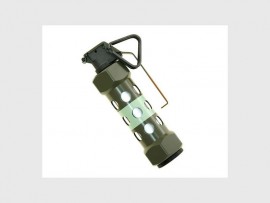
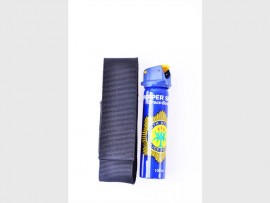
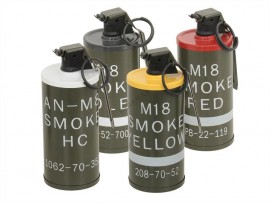
Standard issue equipment for SAPS