
Water and time are running out
‘Timing is now more critical than permanency but measures implemented should be part of a permanent scheme where feasible’ - consultants
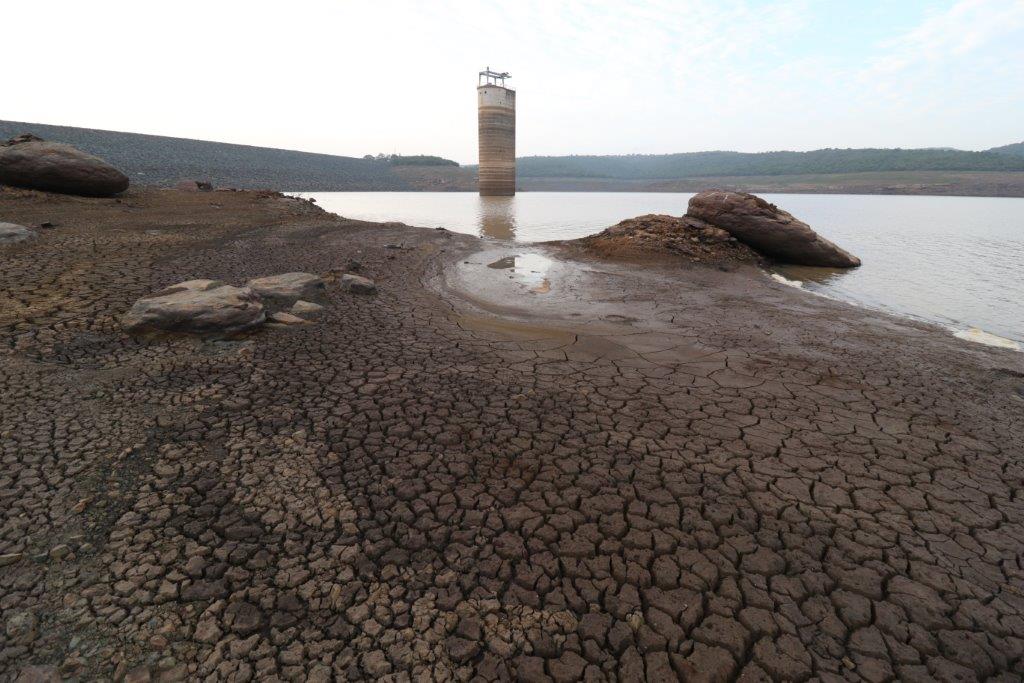
WHILE agreement has been reached in principle to go ahead with crucial short-term intervention to solve the water crisis, huge hurdles stand in the way.
At a well-attended Water Crisis Task Team meeting held at the Richards Bay Civic Centre on Tuesday, a number of emergency options were presented by the Tugela Transfer Working Group.
Led by Richards Bay Minerals, who have already poured considerable funding and technical expertise into exploring the doubling of the capacity of the Tugela Transfer Scheme to Goedertrouw Dam, the level of urgency was raised a few notches.
An in-depth technical report by engineering consultants Royal Haskoning DHV repeatedly drew attention to the fact time is rapidly running out, and critical paths must be cleared.
The count-down to total water supply failure is now being calculated in days, rather than weeks.
By the end of October this year, the Goedertrouw Dam will no longer be a viable water source.
The meeting agreed unanimously on a resolution for ‘quick-fix’ measures including refurbishing of existing infrastructure and installation of larger pipes and extra pumps.
This will effectively, by October 2016, increase the scheme’s capacity from 1m³/sec to 2.4m³/sec, at a cost of R426-million.
Even this will only extend water availability to around November 2017 unless the drought cycle is broken and resources (dams, rivers, water tables) are recharged.
Major challenges
While the client would presumably be the Department of Water & Sanitation (DWS), with Mhlathuze Water as implementing agent, subject to ‘internal processes’, there are still a number of looming obstacles to overcome:
• The programme does not allow for delays, and normal tender processes cannot apply. Procurement of contractors and preparation of documents must commence immediately, as certain items such as pumps may have a long procurement lead time.
• The go-ahead from authorities needs to be obtained, with no ‘red tape’ slowdowns. Temporary permissions followed by later compliance would be the route to take.
• With the entire project dependent on the availability of water from the Tugela River, when called upon in the meeting DWS was unable to confirm a water allocation for the project, stating that they were not in favour of additional abstraction via the Tugela scheme.
• Funding has yet to be spelt out, with calls being made for industry – whose future is decisively linked to water security – being urged to contribute.
• While upgrading of the existing scheme would require little extra power, as yet there is no assurance Eskom can supply additional electricity. This could become a ‘fatal flaw’ in longer term interventions.
• Resident community liaison and buy-in is deemed essential. Extra volumes of water could cause drownings and cattle loss.
• Technical challenges such as river abstraction, floating pumps, de-sanding and cavitation require speedy solutions.
Zululand dams
Storage as at 20 April:
Goedertrouw 21.61%
Hluhluwe 16.26%
Pongolapoort 45.09%
Lavumisa 34.30%
Klipfontein 22.22%
Ulundi Weir 28.57%
GALLERY: Goedertrouw Dam as on Thursday, 21 April