
Authorities act after indigenous forest illegally felled
Concerns raised as indigenous forest outside eShowe is felled
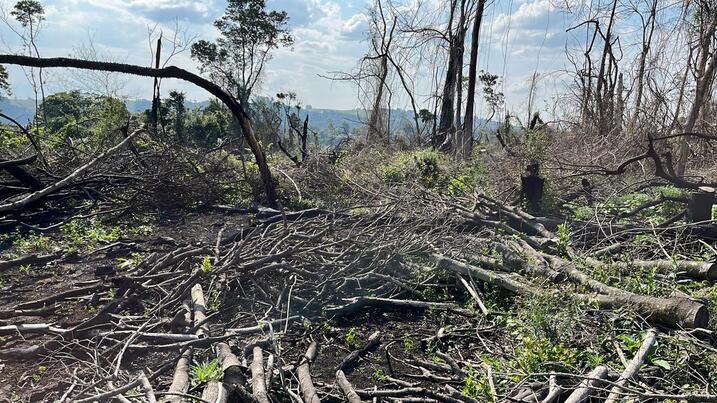
Conservation has taken a major hit after four hectares of indigenous forest outside eShowe was illegally felled.
The felled and burnt trees in Ntumeni include white stinkwood, giant umzimbeet and forest iron plum; some of which take up to a century to mature.
The trees are endemic to the KZN mist belt, with some reaching 35m in height.
While a man was apprehended by conservation authorities, the relevant stakeholders have implemented a conservation action plan to educate local communities.
Illegal actions
Indigenous bush is State property. While Ezemvelo manages land in parks and reserves, forest pockets outside these areas fall under Department of Forestry, Fisheries and the Environment (DFFE).
Ezemvelo district conservation officer for King Cetshwayo, Phumla Zulu, received the complaint and found the perpetrator living on tribal land.
“I explained it was illegal to destroy an indigenous forest and they needed to stop,” said Zulu. “A week later, the clearing had continued and the damage was worse.”
The DFFE was contacted and undertook a site visit.
“We then met with iNkosi Dube and an induna of the Uduku Forest area. We requested their intervention as the perpetrator was undermining environmental law.
“[They] played a vital role by calling the perpetrator to order and instructing him to stop immediately.”
A stakeholder meeting – including DFFE, SAPS and the KZN Department of Economic Development, Tourism and Environmental Affairs – was held to discuss preventing further deforestation in Ntumeni, including Kholweni township,
An awareness programme with Kholweni Traditional Council is planned, including expanding outreach at community meetings, schools, traditional councils and uMlalazi Municipality.
Conservation impacts
“That’s three generations of growth. Once you remove these pockets, you’ll never restore them in a lifetime,” said one concerned community member.
“This forest is at the start of the drainage basin leading into the Matikulu River. You shouldn’t touch vegetation at the start of a watershed – that’s your sponge during dry months.
“It’s paramount that the forest we have left is protected. When rivers run dirty or run dry, it’s the forests that keep them flowing and clean in winter,” he said.
Zulu added that traditional councils are requested to avoid giving away plots in sensitive areas like indigenous forests and wetlands, as this triggers environmental legislation.
“The destruction of indigenous forests has severe ecological implications, including biodiversity loss, climate impacts and disruption of water and soil systems,” said Zulu.
“The forests can rehabilitate, but many large trees were cut and burnt, so recovery will take 50 to 100 years.”
Don’t have the ZO app? Download it to your Android or Apple device here:


HAVE YOUR SAY
Like our Facebook page and follow us on Twitter.
For news straight to your phone invite us:
WhatsApp – 060 784 2695
Instagram – zululand_observer