Department of Social Development in hot waters as private place of safety highlights payment delays and placement challenges
Alberton foster home calling for accountability as delayed DSD payments, unresolved paperwork, and SASSA grant issues leave children in limbo and threaten her ability to continue providing care.
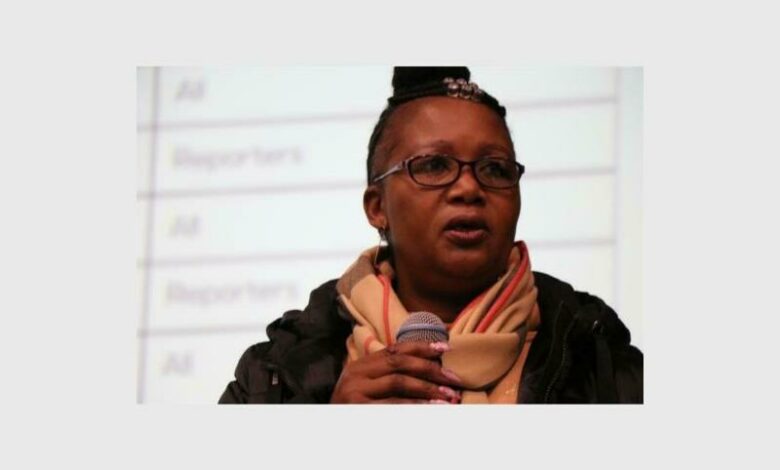
Lynn Tyack, known as a private place of safety, has opened her home to more than 45 vulnerable children over the past 11 years.
Tyack currently cares for six children, including three in temporary safe care, two long-term foster placements and one adopted child.
She is also supporting her 37-year-old son, who is battling stage four cancer.
Tyack began taking in children after her mother passed away 11 years ago.
“There was a huge void. I love children, so I decided to help. Within days, the first baby arrived, and I’ve never stopped,” Tyack said.
Over the years, she has cared for 45 children. However, she now says ongoing payment issues and delays in placement processes are threatening her ability to continue.
Placement delays and administrative challenges
Two children were placed with Tyack by ABBA Adoptions in February and March 2023.
In August and September 2025, DSD removed these children from ABBA. Two children were later placed with Alberton Child Welfare, and one was placed with DSD Kempton Park.
Tyack says she proactively helped identify prospective caregivers for the children.
One family in Hartbeespoort Dam agreed to take the two children from Alberton Child Welfare, and one family agreed to take the child placed with DSD Kempton Park.
These arrangements were made in November 2025, but five months later, the paperwork has still not been finalised.
The child with Tyack has yet to start school at his new placement, leaving him at home.
“It is very sad that they don’t seem to see the urgency for these poor children,” Tyack said.
Alberton Child Welfare responds
Connie Mncube, a director at Alberton Child Welfare, outlined the organisation’s official process.
She stated that when a child is placed in temporary safe care using a Form 36, the social worker must open a matter at court within 48 hours.
Supporting documents are submitted, and the temporary safe care parent is granted a court order, usually within a week, depending on court delays.
She added that the organisation has no administrative backlogs affecting temporary safe care placements.
According to Mncube, social workers submit monthly Section 50 reports until matters are finalised, and supervisors monitor progress through monthly supervision sessions.
Regarding payments, Mncube explained that once a matter is opened at court, social workers provide claim forms to the caregiver, which must be completed and submitted to the Department of Social Development (DSD) along with supporting documents.
She said temporary safe care parents typically receive funds within three to four months due to DSD processing delays.
The organisation also confirmed that it assists caregivers with food parcels and clothing when donations are available, but noted that temporary safe care is voluntary, and caregivers are informed about possible DSD payment delays.
Where claim forms are submitted late, social workers compile motivational letters to DSD requesting back payment.
Dispute over unpaid funds
Tyack alleges she has not received payments for certain children for extended periods, in one case up to three years.
“I don’t need a red carpet. Just respect and accountability,” she said.
She believes departments shift blame between each other, leaving caregivers in limbo.
“I’m willing to help but I need a little bit of support,” she said.
DSD refers to provincial office
The Alberton Record also contacted the national Department of Social Development (DSD) for comment regarding the alleged delays in temporary safe care payments and court processes.
Neliswa Cekiso, director of child protection at the national department, said the matter falls under provincial authority.
“National DSD is not aware of the reported matter. The merits of the TSC, court proceedings and delayed payments to NGOs are provincial competencies,” she said, advising that enquiries be directed to the Gauteng provincial department.
The Alberton Record has since contacted the Gauteng Department of Social Development for comment and is awaiting a response.
Alberton Child Welfare responds
Separate from the child welfare concerns, Tyack also reported issues with her SASSA grant.
In March 2025, she went to replace her SASSA gold card and was informed that a black card had already been issued in her name.
She reported the matter as fraud and says she did not receive her grant payments from March to July 2025.
In August, payments resumed via her personal bank account. However, she says she is still awaiting reimbursement for the missed months and the issuance of a new SASSA card.
Responding to enquiries, Postbank spokesperson Bongani Diko said the institution deploys robust fraud management systems to safeguard customers.
“Grant payments to a customer are not discontinued due to an investigation of any fraud incident that they have reported. The funds are paid into the account monthly, and any balance is available to the customer upon conclusion,” he said.
Regarding Tyack’s case, Diko said the delay in finalisation was due to outstanding additional information requested from the client.
“We can confirm that the client has since been contacted again in this regard for the submission of the additional information,” he said.
Contradiction over outstanding documents
Tyack disputes this explanation.
She says she submitted all documentation requested and that the most recent communication she received from Postbank indicated that the matter had been escalated and was being processed, not that additional documents were outstanding.
“I’ve given them everything they asked for,” she said.
The apparent contradiction between Postbank’s statement and Tyack’s account raises questions about whether there is a communication breakdown or whether documentation submissions have not been properly recorded.
In addition, several specific questions posed to Postbank were not directly answered.
These included how a replacement card could allegedly be issued without the account holder’s knowledge, what specific safeguards failed in this case, the average timeframe for restoring grant access following fraud, whether reimbursement of missed payments is guaranteed, and what recourse is available to vulnerable beneficiaries facing prolonged delays.
The publication has requested further clarification from Postbank on these points.
A system under strain
Tyack acknowledges that social workers appear overwhelmed.
“I think they are snowed under. I think they don’t have enough resources,” she said.
She estimates that Alberton Child Welfare has limited vehicles for numerous social workers, which may affect service delivery.
Despite her frustrations, Tyack insists she will not abandon the children in her care.
“People say I must take them back. I would never do that. They’re loved here,” she said.
However, she admits she is considering closing her doors to future placements if the situation does not improve.
“I don’t give up on children, but I need help,” she said.