Alberton man turns backyard into urban tree nursery
From mango seeds discarded in his backyard to fruit trees bearing produce in recycled bags, 52-year-old Lesiba Seaba is showing how ordinary household spaces can become part of a greener, more food-secure future.
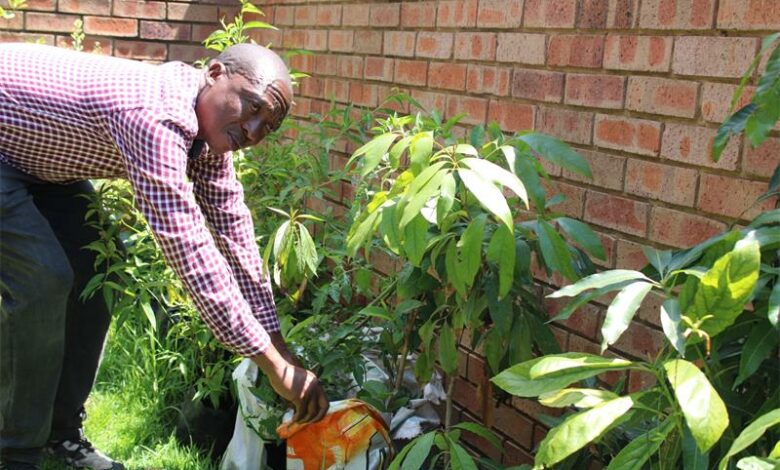
Every morning, Lesiba Seaba steps outside his home in Newmarket, Alberton, and looks at the trees growing around him.
For the 52-year-old, seeing them thrive is a reminder that possibilities can grow from the simplest beginnings.
What started in 2016 with fruit seeds discarded in his backyard has developed into a tree nursery that he hopes will inspire households to grow their own food and encourage communities to embrace urban farming.
Originally from Limpopo, Seaba said his interest in growing fruit trees began naturally. His family enjoyed eating fruit, and whenever they travelled to Limpopo, they would return with fruit from home.
After eating the fruit, they would discard the seeds in the backyard, where some began to germinate.
“In Limpopo, mangoes grow so easily. You can throw a seed where there is water, and it will grow without doing much,” he said.
At first, he would take the young trees back to Limpopo.
“I started to think that this project belongs here. Why don’t I keep it here and make sure that I grow them here? Maybe people will be able to see what I’m doing and do the same,” he said.
Seaba began researching how to care for the seedlings, learning through experience as some survived while others died.
Today, his backyard nursery includes mango, avocado, peach, guava, lemon, orange and litchi trees. Some have already started bearing fruit, including mangoes, guavas and peaches.
Learning to grow in limited space
As the seedlings grew, Seaba had to find creative ways to give them enough room to develop.
He began transferring them into bags, eventually sourcing recycled packaging from a nearby Pick n Pay in Newmarket. He also uses bags purchased for household groceries to accommodate trees as they grow.
This space-saving approach has let him nurture trees in a residential setting, with some producing fruit while growing in containers.
Seaba said he has also experimented with growing crops such as spinach in the same bags as fruit trees, allowing households with limited garden space to make better use of what they have.
He is largely self-taught, developing his gardening knowledge through observation, research, and learning from mistakes.
“Some die, some survive. You learn from that. This one died because I didn’t do this or that, so you learn through research,” he said.
Water is one resource he has had to manage carefully. With metered water at his complex, he relies on rainfall where possible and reuses household greywater to keep the trees hydrated.
He also makes compost and fertiliser from kitchen scraps and garden waste collected while helping neighbours maintain their gardens.
Instead of throwing away fruit and vegetable scraps, he turns them into compost to nourish his seedlings.
“Whatever we eat in the house is no longer going into the bin. It becomes compost,” he said.
A garden that inspires others
The nursery has become more than a personal project. Seaba said seeing the trees grow has encouraged his neighbours to take an interest, with some buying trees and others receiving them as gifts.
He has also seen his children become interested in planting and caring for trees by watching him.
These experiences have strengthened his belief that people can learn about food production from a young age, particularly through schools and community initiatives.
He wants households to recognise that a backyard can be used for more than grass and ornamental plants. Even a small space can help produce food, improve the environment and introduce children to agriculture.
Seaba believes planting indigenous trees alongside fruit trees can also contribute to biodiversity and environmental conservation.
“If we can have a green project in our backyards, it will help us have a good environment to live in,” he said.
His vision has developed into a broader initiative called Limvest Urban Smart Farming and Green Technology, which aims to promote practical agricultural skills, mentorship and knowledge-sharing in urban communities.
From backyard nursery to community food hub
Seaba has also established Limvest Industry Africa, an industrial ecosystem development and research initiative exploring links between real estate, agriculture, renewable energy and other sectors.
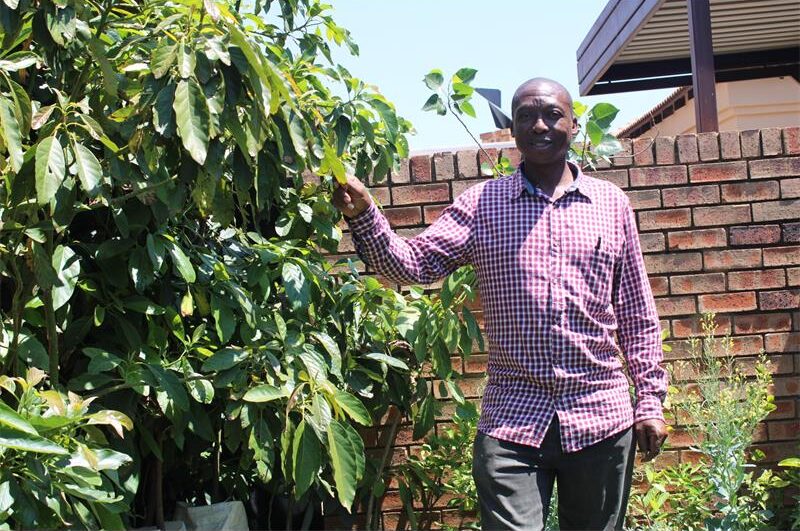
His immediate focus is on agriculture and renewable energy, with urban farming offering an opportunity to make better use of available spaces.
Over the next five years, he hopes to develop a food hub connecting households that grow their own produce with markets and other participants in the food system.
His vision is for households to contribute to local food production while creating opportunities for skills development, income generation and job creation.
He also wants to establish a demonstration and training site where residents, young people and institutions can learn the methods he has developed through his own experience.
“I want every household to have fruit trees,” he said.
He hopes to work with schools, universities, environmental organisations, community gardens and government institutions to turn the idea into a wider initiative.
For organisations already involved in gardening, greening or food-security programmes, Seaba believes he could contribute practical knowledge, seedlings and opportunities for collaboration.
“I will share the knowledge and the skills that I have and be able to add to what they have. Let’s work together and make this thing big,” he said.
He has not yet formally approached organisations in Alberton to establish partnerships, but hopes to begin those conversations as he works towards expanding the project.
A growing vision in need of room
Despite his enthusiasm, the nursery has reached the limits of the space available at his home. Seaba said the trees now compete with the family’s need for living and recreational space, while water availability remains another challenge.
He is therefore looking for a landowner, institution, municipality, investor or organisation willing to partner with him to expand the nursery and develop his urban farming programme.
He is open to different forms of collaboration, including access to suitable land, shared projects and partnerships with organisations that already have environmental or agricultural initiatives.
Seaba said he has identified potential open spaces, subject to the necessary checks and arrangements, including access to water.
He also has approximately 3 000m² of nursery space in Limpopo, where he could relocate the trees if he cannot secure additional space in Gauteng. However, he would prefer to develop the project in an urban setting, where residents could see and learn from it.
For him, the urgency is both personal and practical. He expects to move from his current residence in December and needs to determine where the trees will go.
Looking back on his journey, Seaba said the trees have taught him lessons about perseverance and the importance of support during difficult times.
“During winter, my trees need me more than in summer. I have to make sure that I support them,” he said. He compares caring for trees to supporting people through difficult periods, believing both need the right conditions to thrive.
When asked what he hopes people will take from his story, he said his message was simple: growing food doesn’t have to start on a large farm.
“It doesn’t matter where you are. You can still grow your own food, whether it’s in a small garden or on a farm. It just needs you to do it,” he said.
People who are interested in partnering with Lesiba Seaba can contact him at 072 371 9091.