Mechanical engineering PhD student one step closer to making hospitals cleaner
Michael grew up in Edenvale and Bedfordview and was part of the 1st Bedfordview Scout Group and is also a member of the St Margaret's of Scotland Anglican Church in Bedfordview.
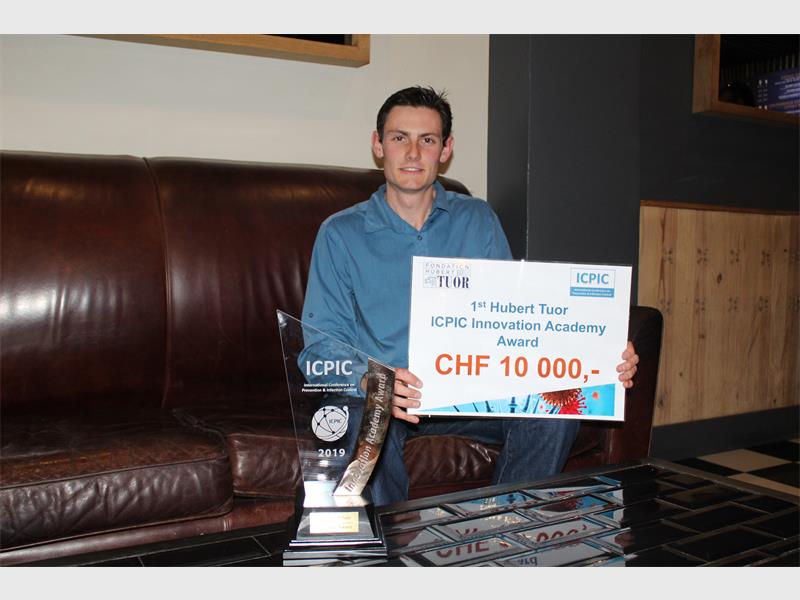
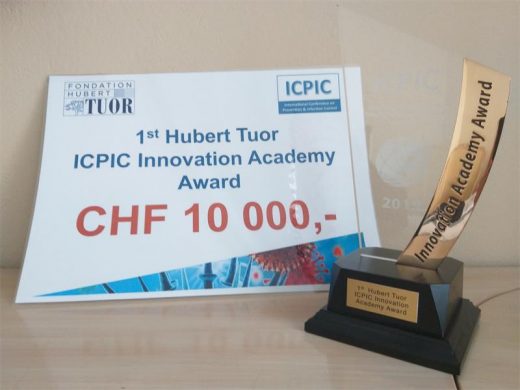
Commitment paid off for Bedfordview resident Michael Lucas who took first price at the International Conference on Prevention and Infection Control (ICPIC) in the Innovation Academy competition in Switzerland in September.
He was rewarded for his work to prevent the transmission of super bugs in hospitals.
“The risk of picking up an infection while getting treatment for something else in a hospital is high in South Africa,” said Lucas.
His solution and research into this problem looked at surface contamination in hospitals and the creation of a surface coating or material that has antimicrobial properties to kill this type of bacteria and prevent the transmission of super bugs.
Lucas’ academic supervisor Prof Ionel Botef, a former Wits industrial engineering professor, played an integral role in his achievement. Botef died before he could see Lucas achieve in Switzerland.
“Prof Botef’s work on bio materials interested me and we spoke about the research. I did my project with him and continued to my masters. I am now doing a PhD to specifically look at surface coating technologies for the medical field,” said Lucas.
“On the engineering side I looked at the surface coating technology cold spray added to manufacturing and I needed a co-supervisor from the medical school in order to test this material. Prof Sandy van Vuuren from Wits Department of Pharmacy and Pharmacology helped me with this,” said Lucas.
Michael said Botef wanted him to experience, present and network at an international conference and they identified the ICPIC Conference in Geneva as the right platform.
He submitted an abstract paper for the conference in February and was informed of his acceptance in July. He left for the conference on September 9.
“Unfortunately Prof Botef, who was battling with cancer for the last two years, died a week after I received my acceptance letter. It meant a lot for me to go to this conference. It made it difficult but also made it more meaningful than just academics. He was with me in spirit,” said Lucas.
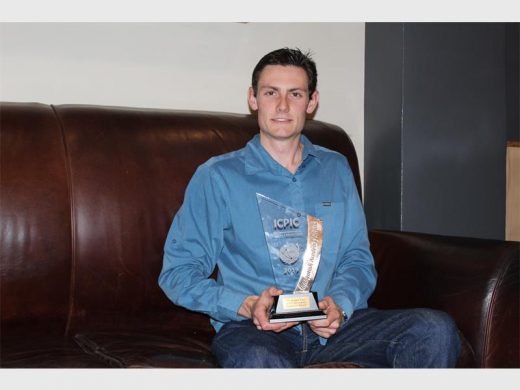
At the conference, Lucas was selected to compete in the Innovation Academy where he showcased his innovation in the infection field.
“It was surprising. I was not expecting it. I thought I would just go with it and see what happens.”
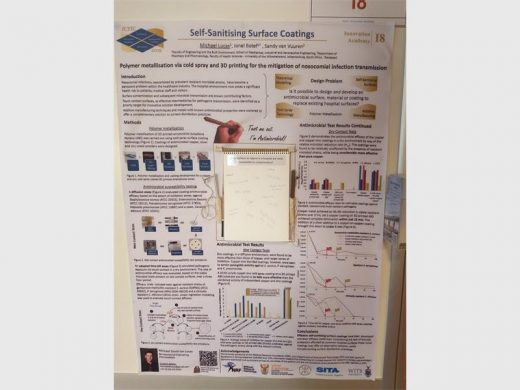
Michael prepared a poster and an oral presentation for a jury and panel of judges and was one of nine selected to participate in the academy.
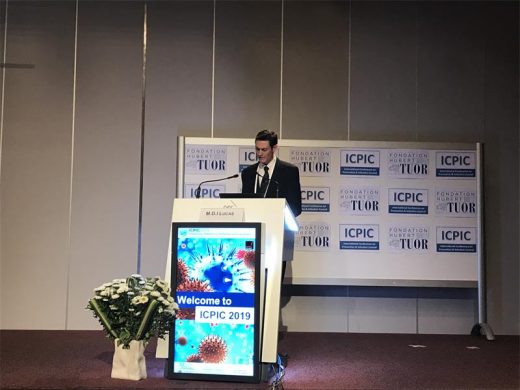
He made it to the finals where he had to prepare an eight-minute presentation.
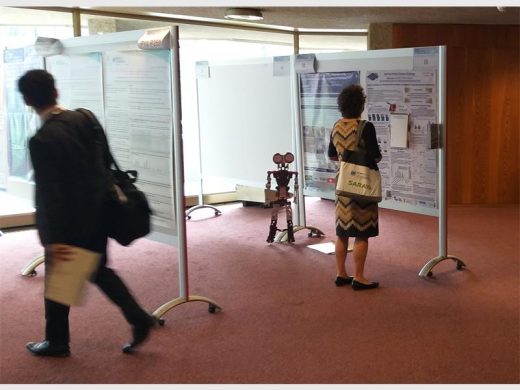
“It was exciting to reach the finals. It was validation for my research. I presented first which added nerves and pressure, but I went up there and did my best. It went well. I was happy with the way I presented,” said Lucas.
Lucas won based on his innovative research into polymer metallisation via cold spray and 3D printing for the mitigation of nosocomial infection transmission.
“It was a shock. It was overwhelming to know that this is what Prof Botef wanted me to experience and I did. He wanted to see me succeed and he believed in me. The first person I called was his wife,” said Lucas.
He has since received several emails from people interested in his research.
“I feel like there is a possibility to turn my research into a start-up company. It will obviously be a lot of work, such as clinical trials and other testing. I am open to see where it can go. My ultimate goal is to make hospitals safer and cleaner. The next step is to test it in a hospital. It could also be used in public spaces, public transport and food processing plants,” said Lucas.
Lucas is in the process of completing his PhD and also enjoys running and volunteering at the Giloolly’s Parkrun.
He described engineers as “critical thinkers”.
“As an engineer, you come across a problem that nobody has fixed yet. In my case it was the problem with infections in hospitals. You ask yourself what can we do about it? You look for a solution.”
See Lucas in the ICPIC 2019 Innovation Academy finals.