
Golden Drive zama zamas: They’re nowhere near gone for good
“The zama zamas have no intention on releasing its grip on the city’s underground resources.”
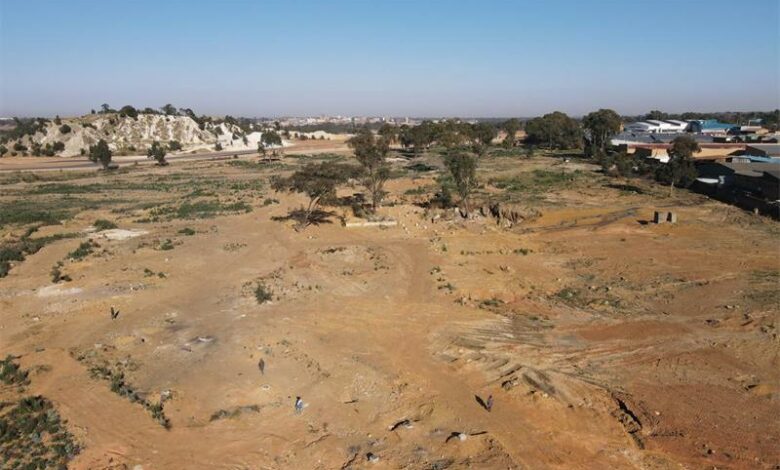
Recent drone footage of the infamous Shaft 10 in Golden Drive shows an area devoid of illegal mining activity.
The footage, captured by Lionel Marks of Supercops, during a routine fly-over on August 6, shows that the rickety structures erected by zama zamas and the multitude of vendors who formed part of the operations’ supply chain, have been dismantled and removed, leaving a barren footprint of a once bustling “village”.
Marks warns the lack of activity on the surface is no cause for celebration, a sentiment echoed by Benoni CPF chairperson Dr Reza Patel.
Patel explained that monitoring of zama zama territories, by private security companies, the SAPS and CPF, indicates that very little activity is taking place on the surface but that majority of the operations are now concentrated below ground.

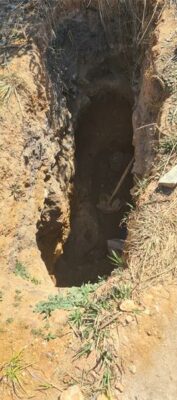
“The miners have simply dug new tunnels next to the sealed shafts, burrowing next to the cement slab to again gain access to the vast, established underground system,” he said.
“The appearance of a sink hole on Snake Road is a clear indication that their operations are continuing, unabated.”
“Further information indicates that some factions have migrated to areas surrounding Rynsoord, Lindelani with a small concentration being seen behind Morehill.”
Patel continued by saying that these ‘career criminals’ have ‘diversified’ their operations, with fingers of blame, relating to incidents of delivery motorcycle hijackings, pointing to their strongholds.
“The multi-disciplinary operation may have closed the zama zama’s main access points but it did not hamper them by any means. If anything, it has drawn their attention to alternative activities to sustain and fund their operations and strengthen their trading system,” he said.
“The area surrounding Golden Drive remains volatile and extremely dangerous. With miners retreating to the safety of their underground abodes there is no way to predict their movements or their capabilities to protect their operations.”
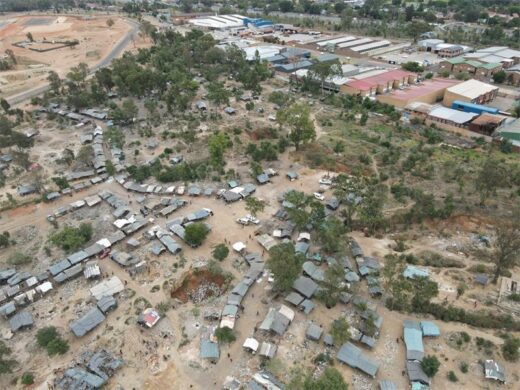
Marks said it is hoped that plans to develop the area, rife with illegal mining activity, would in future drive the perpetrators to abandon their long reign of terror, but this won’t happen overnight.
“As a community we need to give respect where it is due. Members of the Benoni SAPS have done their level best to curb the growing problem,” said Patel.
“We need a DMR funded, tactically trained and equipped unit to be established to apply effective and sustainable tactics to finally bring an end to the illegal mining scourge.
“Continued efforts are needed to prevent the complete collapse of our city’s infrastructure as well as mines that have been illegally mined to depletion.”
Vala Mgodi
On January 27, SAPS deputy district commissioner Brigadier Lebohang Machakela, along with the Department of Minerals and Energy (DMR), launched the highly anticipated Operation Vala Mgodi (Close the Holes).
The objective of the operation, which ran until March 31, was to identify and seal mine shafts in Benoni and other areas in Gauteng.
During the three-month period, specialised public and private units were deployed to illegal mining hotspots to safeguard the shafts, allowing necessary machinery to access and seal the sites.
According to Benoni CPF chairperson Dr Reza Patel, 129 shafts were identified for closure in Benoni.
“About 75 were backfilled and sealed with cement, measuring between 20 to 30 meters in depth. In total, 66% of the holes were closed during the operation,” he said.
“It must be noted that the underground tunnel system, stemming from historic legal mining activities measure in excess of 1 to 1.2km deep and run along the rich gold ore bearing reef to Brakpan and Springs.
“Operation Vala Mgodi did yield some results, however, the fight against illegal mining is far from over.”
ALSO READ: WATCH: Illegal mining in Benoni: Operation Close the Holes is here
ALSO READ: WATCH: War on illegal mining in Benoni continues