Umbilo problem building under investigation
The municipality will investigate a property in McDonald Avenue following complaints of overcrowding at the property.
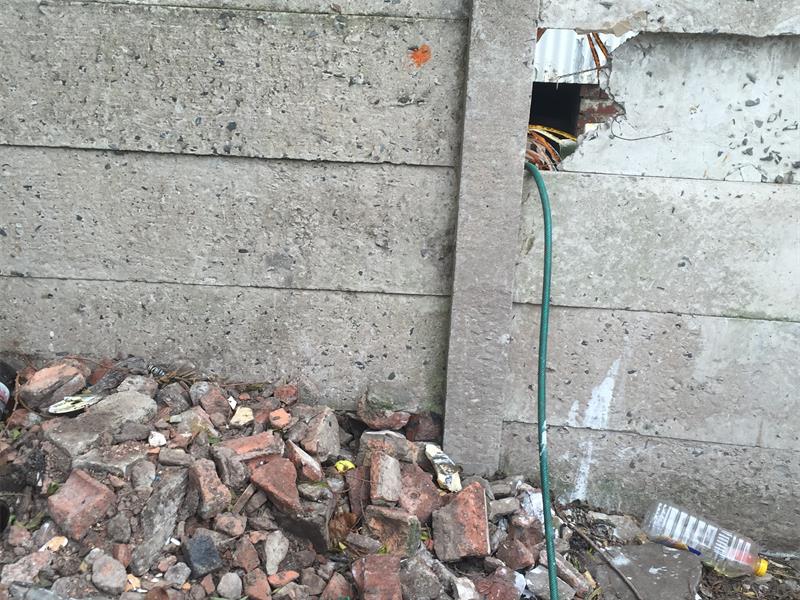
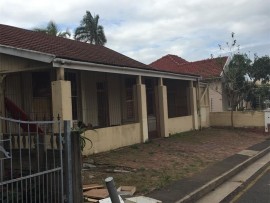
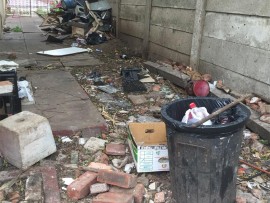
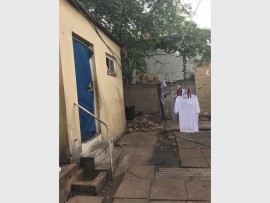
AN overcrowded home in McDonald Avenue, Umbilo, where about 20 people, including children, are currently living has been brought to the attention of the relevant eThekwini city departments who are currently investigating the matter.
A concerned resident alerted Berea Mail to the problem at the property saying there were at least four tenants to a room and that no electricity or water was being supplied to the home.
“The tenants are always in the street and the children do their homework by street light, sometimes sitting right in the middle of the road!” she said.
Heather Rorick, chairperson of the Bulwer Community Safety Forum, said the property had been a problem for a long time.
“I have had many complaints about it, and tenants are constantly in and out of the property, it’s like a mini hostel. A neighbour is supplying electricity and water to the tenants at a price, which is just encouraging them to stay,” she said.
Rorick said she has had to deal with complaints of noise and fighting at the property, adding that in many cases police had attended to the complaints. “There is a man who lives on the property who is a type of ‘supervisor.’ I have tried to contact the people who are supposedly the owners, after they bought the house on auction. I was told they had tried to give the tenants notice but that they couldn’t get rid of them. There are conflicting stories, and I’m not sure what has happened, but the owners are responsible. This is spilling out into the community and the problem is affecting residents in McDonald Avenue and Rodney Road,” she said.
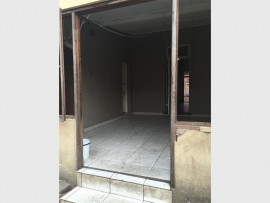
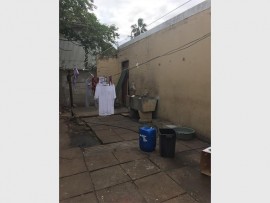
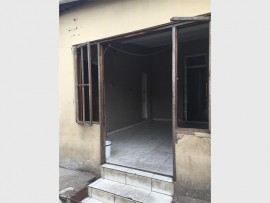
Berea Mail, accompanied by Rorick visited the property and were shown around by the supervisor. He said there were 17 partitions which were rented out to tenants, mostly foreigners. This included the six bedrooms and the front patio area, as well as outside rooms. The water and electricity was being supplied by neighbour. A number of barrels of water were seen stored inside the room and only a single toilet and bathroom was available on the premises for all the tenants to use.
“I am shocked by what we saw today. This is a fire and health hazard,” said Rorick, following the visit.
What the bylaws say:
In response, eThekwini Head of Communications, Tozi Mthethwa, said that the city had not been aware of the problem but that the relevant units had been tasked to investigate and address the matter accordingly. “Targeting problem buildings in the City is an ongoing City-wide programme and have been identified throughout the City by Safer Cities and iTrump through the better buildings programme which addresses issues of crime, bylaw enforcement and derelict buildings,” she said.
Mthethwa explained that each building posed its own set of unique problems which meant that different strategies were applied to address each individual case.
“Some derelict buildings are owned by people who live abroad, some are leased or sub-let to a number of tenants, some have been ‘hijacked’ and some are owned by people who are deceased. The City cannot apply a blanket approach in dealing with some of these complex cases,” she said.
“The recently gazetted Problem Building Bylaw however aims to effectively deal with problem buildings. The bylaw aims to provide for the identification, control and rehabilitation of problem buildings. The first step is identifying a building as problematic using certain criteria laid out in the bylaw. Once the building has been identified as a problem building, a notice of intention to declare it as such is issued to the owner. The notice also invites the building owner to make written representations within 14 days of the notice on why the building should not be declared a problem building. If it is declared a problem building, the Municipality gives written notice to the owner,” she said.
Mthethwa said the municipality was also responsible for identifying aspects of the building which were in contravention of the bylaw and any other applicable law as well as any risks to safety of the occupiers of the building or the public.
“Officials will profile the occupants of the building to determine the number of children, women, disabled people, elderly people, the number of people residing per room and the area of each room occupied as a residence. The total number of people residing in the building must be determined,” she said.
She said processes are then followed to rehabilitate the building. Firstly the Municipality tries engaging with owners and once the building has been profiled, the owner is served with a notice identifying aspects of the building which are in contravention of the bylaw and other applicable laws.
“The notice will specify steps the owner is obliged to take, within a reasonable period of time, to rectify those contraventions or remove the risks,” she said.
“If the problem building is occupied, the Municipality must serve a compliance notice on the occupiers and affix a copy at the main entrance to the building advising that the building has been declared a problem building and that the owner has been instructed to take specific steps. The notice will also inform occupants that the building is unsafe and that the Municipality will seek an eviction order if the owner fails to comply with the compliance notice,” she said.
Mthethwa said if the owner failed to comply with the compliance notice, residents would be informed of this through a notice affixed at the main entrance of the building. The notice will also inform them of the municipality’s intent to seek the eviction of occupiers. A list of possible alternative accommodation and contact details of a Mmunicipal official available to assist the occupiers find alternative accommodation will also be included.
Any person who is convicted of an offence under this bylaw is liable to a fine not exceeding R500 000, imprisonment for a period not exceeding three years or both a fine and imprisonment.
“If the owner fails to comply, they could incur an additional fine not exceeding R5 000 or imprisonment not exceeding 10 days for each day the offence continues,” she said.