
Language has the power to forge social cohesion
Colloquium provides guidelines to the Decolonization of African educational curriculum.
WHILE thousands of University students across the country, might have felt hard done by as their quest to realize free quality education has not materialised yet, the one issue which seems to be gathering momentum is the decolonizing of education.
It is a topic which has been debated all over the country. The University of KwaZulu-Natal (UKZN), is one of the first universities in the country to have a language policy, that requires isiZulu be developed as the university’s language of teaching and learning, and that students begin to use the language in selected modules and programmes.
ALSO READ: South Africa’s education crisis at a glance
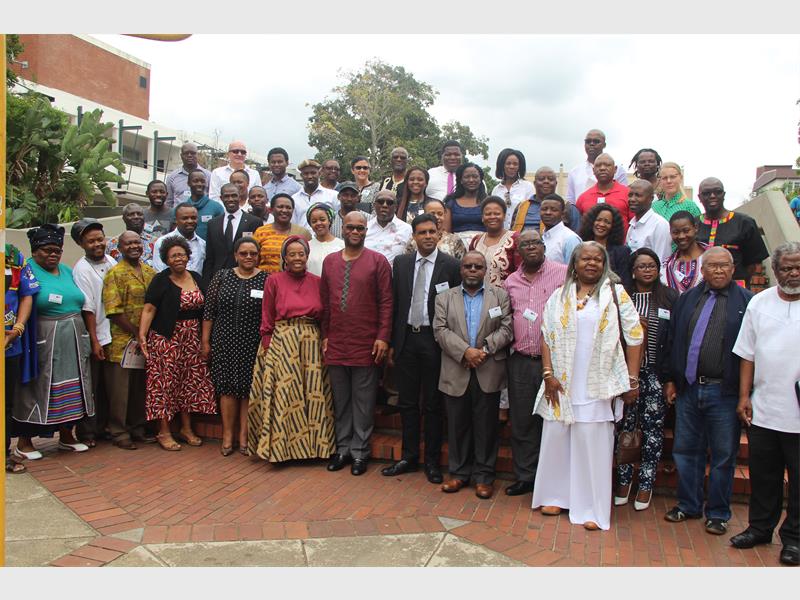
On Monday the University hosted a two-day international colloquium on Prof Mazisi Kunene’s contribution to African Scholarship aimed at the promotion of African scholarship in the global pool of knowledge and providing guidelines to the decolonization of African educational curriculum. In his welcome address, Prof Deresh Ramjugernath, Deputy Vice Chancellor of UKZN said one could not underestimate the power of language in forging social cohesion.
“It is important to take issues forward and be practical about them, it is also significant to know that the translation of IsiZulu into English demonstrates the comparable power of IsiZulu. People talk about the challenges of teaching in IsiZulu, well we have translated from English to IsiZulu, why cant we do that from IsiZulu to English? As one of the first institutions to have a language policy, we have to also contribute to this debate of the decolonization of education. We have to re-write African history from a an African perspective.”
Speaking at the colloquium during a question and answer session, UKZN’s Professor Nobuhle Hlongwa, who is Acting Deputy Dean in the Faculty of Humanities, Development and Social Sciences, and professor of isiZulu, said she and Rosemary Wildsmith-Cromarty, professor of Linguistics, worked on a joint research project which culminated in the production of the special issue on multilingualism of the interdisciplinary journal, Alternation, whose main objective is to promote multilingualism in Higher Education.
ALSO READ: North beach social housing project stirs up concerns
Hlongwa said: “Short courses are now provided for students and staff to learn additional languages and to help students registered for professional degrees such as Nursing, Psychology, Education and Dental Assisting to learn the language of their clients in order to provide a more effective service to the public.”
“Research has shown that English is still the preferred language of instruction at both school and university level, in spite of evidence in Africa and across the globe that the mother tongue is essential for true learning to occur at a deep level,” added Hlongwa.
Do you want to receive news alerts via WhatsApp? Send us a WhatsApp message (not an sms) with your name and surname to 060 532 5535.
You can also join the conversation on Facebook, Twitter and Instagram.
PLEASE NOTE: If you have signed up for our news alerts you need to save the Berea Mail WhatsApp number as a contact to your phone, otherwise you will not receive our alerts