Durban schools tackle rising heat’s impact on children
Scientific evidence has presented a scorching reality of the impact of rising heat on children, driving global researchers and experts to convene in Durban to carve intervention pathways, through Child Heat Impact-Climate Health Intervention (CHI2).
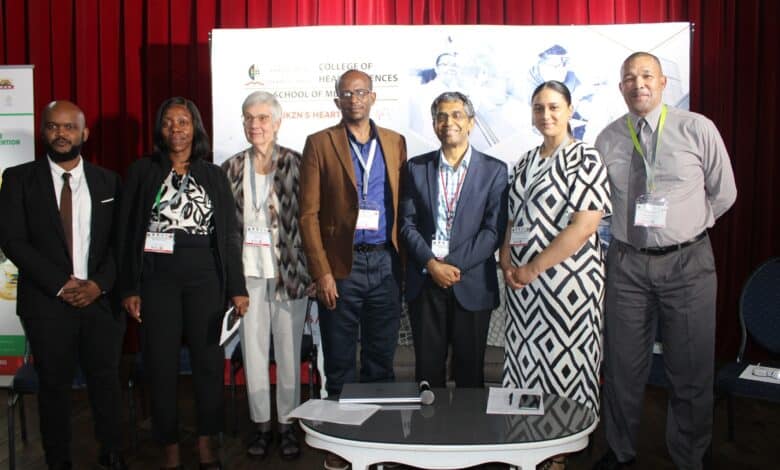
AFRICA is getting hotter than the rest of the planet and exceeding the set benchmarks. Most vulnerable members of society are children, hence the need for the Child Heat Impact-Climate Health Intervention (CHI2), which was unpacked in Durban yesterday (Tuesday).
Experts admitted that the effects of the rising heat may not be visible to the naked eye, even to health professionals. It’s this very invisibility that affects children, the largely heat-exposed group. “The effects have proven impossible to reverse”, they attest.
Two schools in Durban have been selected to run the research, namely eThekwini Primary School in KwaMashu and Assegai Primary School in Austerville.
Also read: Eight sun protection tips for summer
The principal of Assegai Primary School, Neil Blankenberg, indicated that his school had already put in place measures to mitigate the impact of heat on learners. “High temperatures have really become an issue. We have observed that over time, learners suffer respiratory issues, nose bleeding, and fainting. At a nearby school, one learner passed away due to heat exposure.
“We have sought to introduce ‘comfort breaks’ to step away from crowded classrooms and spend some time in the shade. We have allowed the learners to keep water bottles in front of them the whole time. We have agreed to add hats as part of the school uniform in summer, and we insist on sunblocks as part of daily use,” shared Blankenberg.
Also read: How to protect your children against skin cancer
The most critical time is during Physical Education periods, he highlighted, noting that it is not easy to stop children from playing and running about. He added that they have extended the intervention to parents to indicate if their children have any pre-existing respiratory issues, so that the child can be closely monitored.
The (CHI2) project is funded by a Wellcome Trust Climate Impacts Award. It is proposed to run for 36 months, having started with groundwork in June 2025. The project will be conducted in three sites across Sub-Saharan Africa: Durban, South Africa; Haramaya, Ethiopia; and Harare, Zimbabwe.
For more from Berea Mail, follow us on Facebook, X and Instagram. You can also check out our videos on our YouTube channel or follow us on TikTok.
Click to subscribe to our newsletter – here