
The oil companies joining President Donald Trump at a press conference on Friday did not look particularly excited by the prospect of gaining access to more oil. Here’s why.
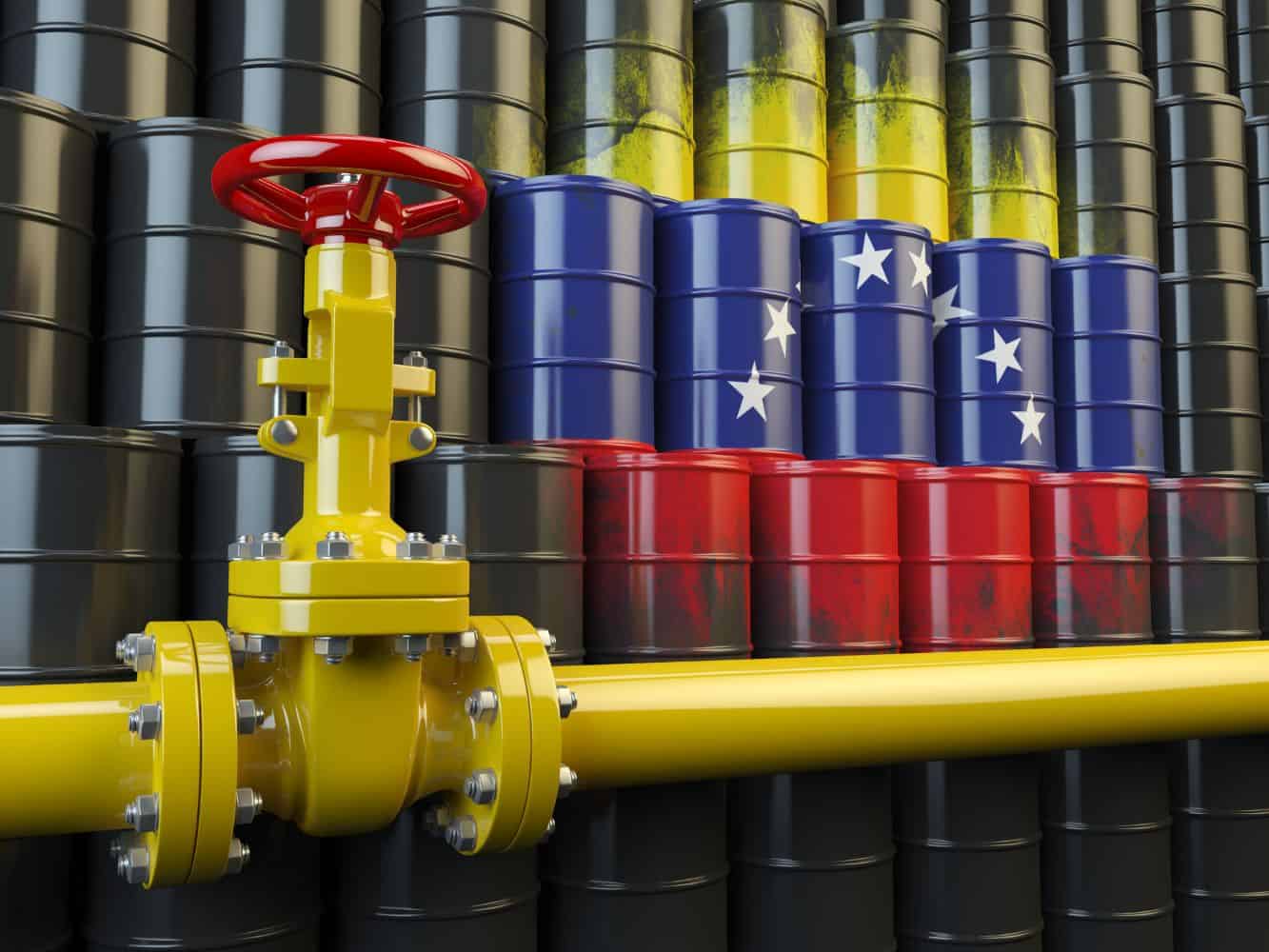
Picture: iStock


It was easy enough for the Trump administration to get hold of Venezuela’s oil, and it seems there was minimal risk in the process. However, getting the oil companies to invest and extract the oil is the risk.
Oil remains important enough to spark military action, but that does not reduce the investment risks of discovering, extracting and refining oil products, Simonetta Spavieri, active ownership manager and climate engagement lead at Schroders, says.
She says US actions in Venezuela reflect a broader geopolitical rearrangement and reveal the evolving geopolitics of energy in particular. “Energy access, sanctions policy and resource control are deployed as instruments of international influence in many parts of the world.
“Hydrocarbons continue to shape foreign policy choices, even as the global energy system undergoes structural change.”
However, Spavieri says, the Trump administration’s posture on Venezuelan oil is not a wholesale reversal. “The Maduro government was already cooperating with the US on energy, under constrained conditions, as Chevron continued operating in Venezuela. Seen in that context, the US’ renewed focus on Venezuelan oil is better understood as an incremental action.”
ALSO READ: US strike against Venezuela had little effect on markets and none on SA
Venezuelan oil and the short-term reaction
The initial market response has been instructive, Spavieri says. “Shares of major US refiners rose as investors anticipated increased access to Venezuelan heavy crude if sanctions were eased. US Gulf Coast refineries are structurally well suited to process these barrels, having been configured decades ago to handle heavy grades from Venezuela, Mexico and Canada.”
Although this matters in the near term, it is only important up to a point. “Sanctions policy can change quickly, and crude flows can be rerouted, away from China, which absorbed around 80% of Venezuelan exports, far faster than new supply can be developed. That explains the short-term market reaction. It does not materially alter the underlying supply picture.”
Venezuela’s strategic relevance stems from the scale of its reserves, nominally the world’s largest, rather than from its current production, which is less than 1% of the market. Spavieri points out that output fell from peaks of more than 3.5 million barrels per day to around 1 million barrels per day today after decades of mismanagement, underinvestment and governance failures.
“Oil still accounts for more than 90% of Venezuelan exports, leaving the economy acutely exposed to disruption in the sector,” she says.
ALSO READ: ‘Regime change by force’: SA political parties react to US capture of Maduro
Can Venezuela rapidly re-emerge as a major oil producer?
“The narrative that Venezuela could rapidly re-emerge as a major producer overlooks basic realities of oil production. Venezuelan production is dominated by heavy and extra-heavy sour crudes from the Orinoco Belt, which are costly to extract, carbon-intensive to upgrade and dependent on imported additives. Breakeven estimates for new projects are among the highest globally.”
While it may be technically possible to achieve limited production increases, Spavieri points out that the more insurmountable constraints are above-ground, namely political instability, legal uncertainty, degraded infrastructure and unresolved arbitration claims.
“These challenges collide with a changed investment environment. Oil markets entered 2026 well supplied, with inventories building. Prices remain moderate. At the same time, investors are demanding sustained capital discipline. As a result, listed oil and gas companies have shifted away from growth toward free cash flow, dividends and buybacks.”
She says that discipline was initially evident in the slashing of low-carbon investments, but it increasingly applies to upstream exploration and development, particularly in high-risk jurisdictions. “Exploration budgets have been cut, frontier projects deferred, and long-dated investments subjected to greater downside scrutiny. In that context, large-scale greenfield investment in Venezuela appears misaligned with prevailing investor expectations.”
ALSO READ: SA urges UN action after US captures Venezuela’s president
Venezuela shows precisely risks investors want to reduce
Spavieri warns that this creates a tension at the heart of the Venezuelan story. “From a geopolitical perspective, oil remains powerful enough, at least in part, to motivate military action. However, from an investment perspective, Venezuela concentrates precisely the risks investors have been working to reduce, namely high costs, long payback periods, political exposure and uncertain long-term demand.
“That demand uncertainty is structural. Energy security is increasingly defined by electrification, grid resilience and control over technologies and critical minerals, rather than simply securing incremental oil and gas supply.
“Since Russia’s invasion of Ukraine, reducing dependence on imported oil and gas, including LNG, has become an explicit policy objective across Europe and parts of Asia. Venezuela, therefore, illustrates the growing gap between geopolitical relevance and investment viability in the energy transition.”
Lesson of Venezuela’s oil for investors
What is the lesson for investors? Spavieri says the lesson is not that oil no longer matters. “Oil can still shape foreign policy and move markets. Rather, political urgency does not resolve economic reality.
“In a world of capital discipline, uneven transitions and evolving definitions of energy security, assets that rely on geopolitical intervention to become competitive are precisely those most at risk of stranding.”