


Calls for expressions of interest from prospective partners
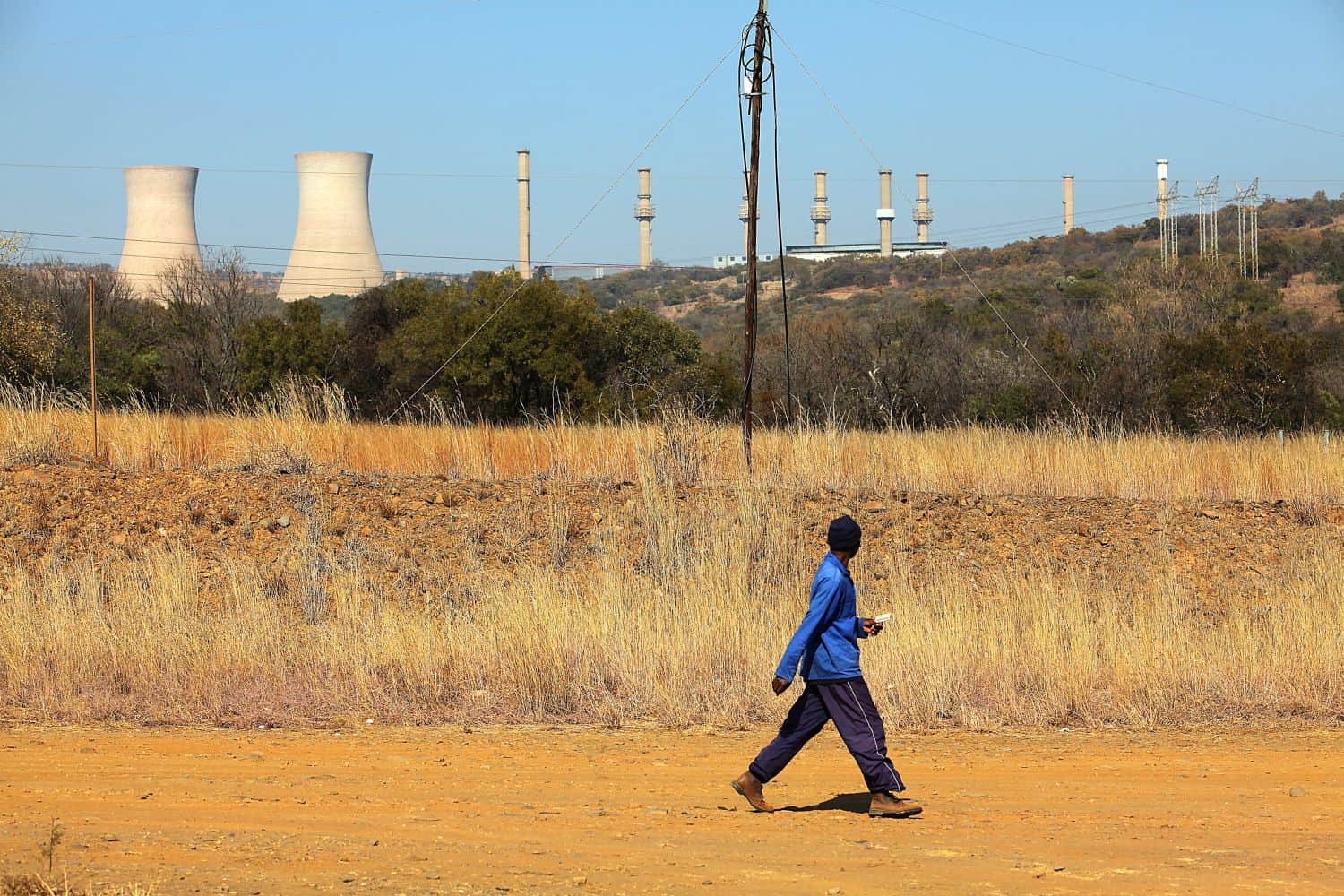
A man walks past Pelindaba Nuclear Research Centre, west of Pretoria, on 10 July 2012. Picture: Gallo Images / The Times / Alon Skuy


The South African Nuclear Energy Corporation (Necsa) has issued an invitation to manufacturers of small modular reactors (SMRs) worldwide to partner with it in developing such reactors locally.
Necsa ultimately hopes to establish an entire industry in South Africa that develops and supplies these types of reactors for the rest of the continent. The organisation also aims to again be involved in the supply of nuclear fuel and to manufacture components for the reactors, as it did previously.
Nuclear power is generally regarded as a clean technology for electricity generation, and because nuclear power plants are very stable in their output, is considered an ideal technology to replace coal-fired power stations.
However, building conventional nuclear power stations, such as Koeberg, is extremely expensive and takes years. These projects are notorious for regularly exceeding both budgets and completion deadlines.
Although SMRs are not yet widely commercially available, various designs are being developed globally, with the expectation that several will come into operation after 2030.
According to the World Nuclear Association, which tracks progress on these projects worldwide, there are currently only two in operation – one in Russia and one in China.
Five are under construction; two in Russia and one each in China, the US and Argentina.
Their generation capacity is generally no more than 300 megawatts (MW) per unit, and the idea is that one or more such units can be installed at lower cost than conventional nuclear plants at remote towns or facilities – or data centres – without necessarily having to be connected to the national transmission grid.
Necsa, a state-owned company that owns the Safari-1 research reactor and is a leading global producer of medical isotopes, says in a press release that it is seeking “suitably qualified and experienced organisations, consortia, and technology providers to partner in the development, customisation, demonstration, and deployment of a Small Modular Reactor (SMR) for multiple uses in South Africa.”
Necsa Group CEO Loyiso Tyabashe says the organisation aims to gather detailed information on available SMR technologies, their maturity, licensing experience, and readiness for deployment.
“Our aim is to demonstrate an SMR technology that will produce power, process heat and isotopes. This gives Necsa an opportunity to assess existing capabilities and financing models to fulfil its strategic objectives of positioning South Africa at the forefront of advanced nuclear technologies,” he adds.
“We aim to participate in the global SMR supply chain and contribute meaningfully to the local nuclear industrialisation plan through building local capabilities for nuclear build programmes.”
David Nicholls, chair of the Necsa board, says the invitation serves as the first phase of a structured selection process.
“It prequalifies respondents based on alignment with South Africa’s nuclear policy and experience base, technology readiness for timely deployment, financial strength for long-term delivery, commitment to intellectual property transfer and localisation of skills and technology, and the diversity of applications to maximise socio-economic and industrial benefits.”
According to Tyabashe, the next step will be the issuing of a Request for Proposals (RFP), and further developments in the process will be subject to South Africa’s regulatory framework, including public participation processes, environmental impact assessments and regulatory approvals.
Conventional nuclear power station
The invitation comes shortly after the start of the public participation process to assess the suitability of two sites to host a conventional nuclear power station of up to 5 200MW – Thyspunt near Oyster Bay in the Eastern Cape and Bantamsklip near Pearly Beach in the Western Cape.
Government is expected to eventually select one of these two sites, or Duynefontein next to the existing Koeberg nuclear power station outside Cape Town, for construction.
Both projects form part of the country’s Integrated Resource Plan (IRP 2025), which was released last year.
Professor Jo-Ansie van Wyk, a nuclear energy expert from Unisa’s department of international politics, points out that since 1994 the government has taken similar steps to launch a nuclear programme several times, but nothing has ultimately come of it.
However, she believes South Africa has a solid base to build on, with nuclear expertise at Necsa and Koeberg. The specific technology ultimately chosen will determine how applicable local knowledge is.
If South Africa can position itself as a key player on the continent in advanced SMR technology, the country will be at the forefront of nuclear technology development, which could attract significant investment, she says.
Other countries also developing SMRs, from which interest may come, include the United Kingdom, South Korea, France and Japan, she adds.
There is also considerable political support for these developments, with Minister of Electricity and Energy Kgosientsho Ramokgopa making no secret of his enthusiasm for nuclear power.
Regarding the possibility of a conventional nuclear power station at Thyspunt, Bantamsklip or Duynefontein, Van Wyk says politicians always emphasise the economic benefits such a large project could bring, while local communities, such as fishermen and farmers, are concerned that it could negatively affect their activities.
She emphasises that it is important to secure public support before the government proceeds with such plans and warns that mega projects are often associated with high levels of corruption.
“That is why transparency is very important,” she says.
This article was republished from Moneyweb. Read the original here.
Support Local Journalism
Add The Citizen as a Preferred Source on Google and follow us on Google News to see more of our trusted reporting in Google News and Top Stories.

