


As the Women's Month draws to a close, SANParks pays homage to its exceptional women who continue to lead the way in pursuit of inclusive conservation.
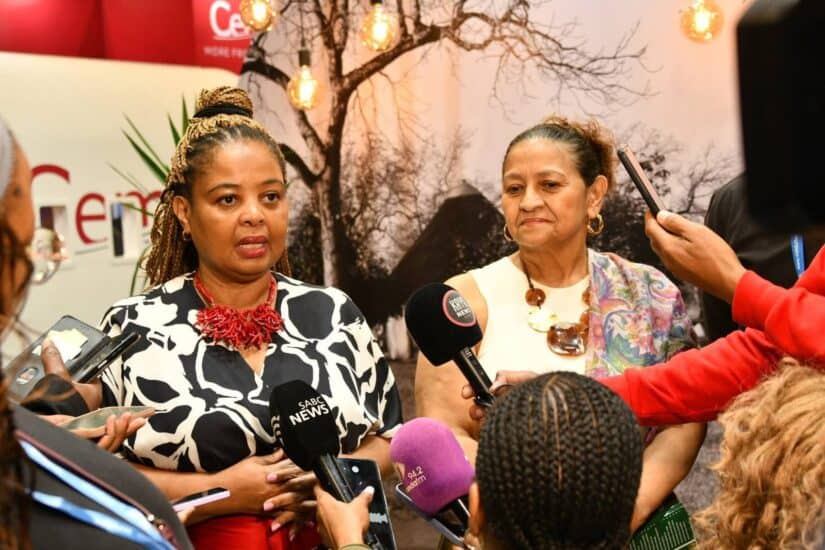


Women at SANParks are dedicated to spearheading a future where inclusive conservation, cultural heritage and tourism move forward together.
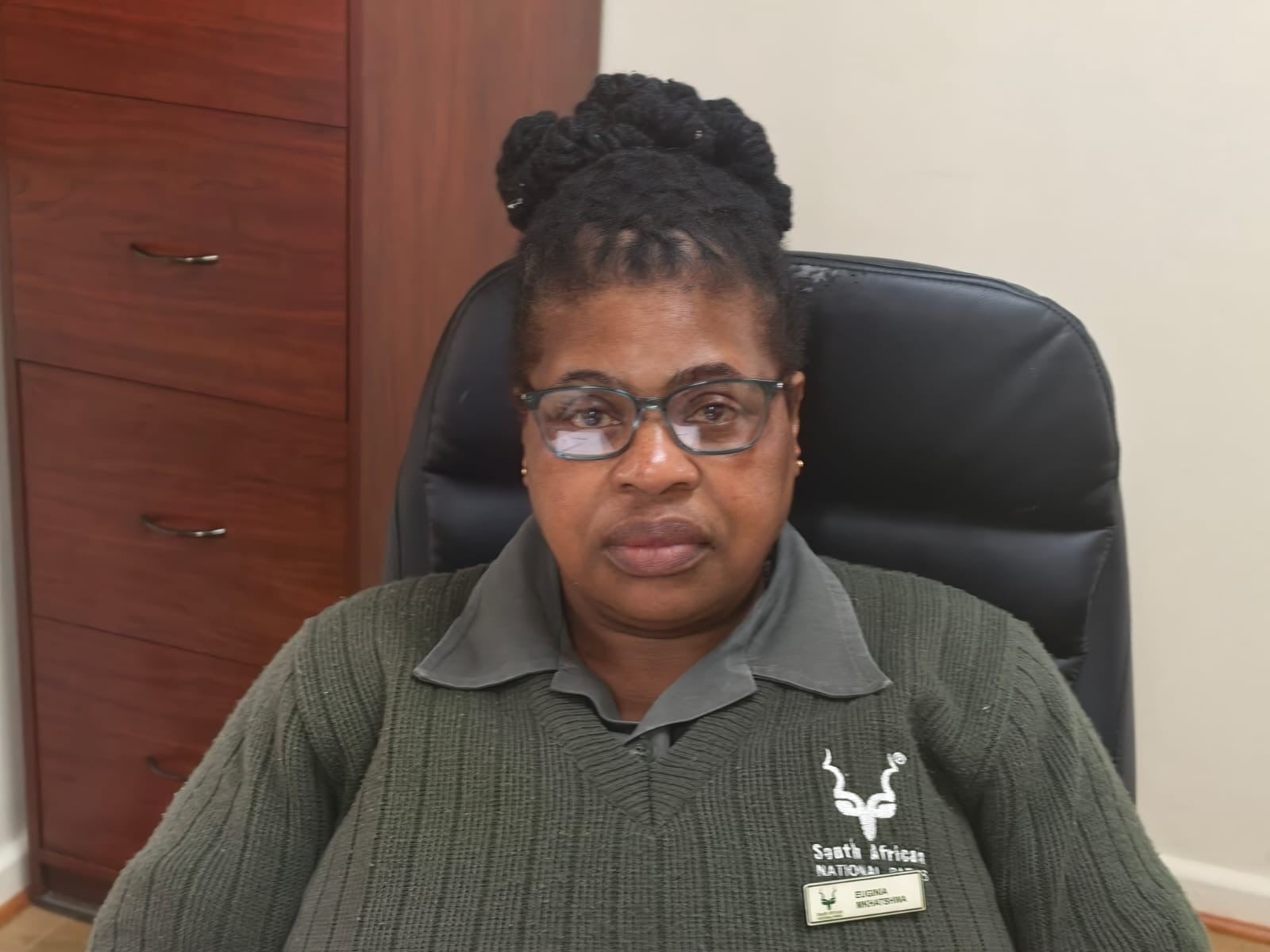
A Trailblazer in Conservation: Celebrating Euginia Mkhatshwa During Women’s Month
Women’s Month provides an opportunity to recognise the remarkable women whose courage, determination and leadership continue to shape South Africa’s future. Among these outstanding women is Euginia Mkhatshwa, a conservation leader whose life and career tell a story of resilience, pioneering achievement and unwavering dedication to protecting the country’s natural heritage. With more than 30 years of distinguished service in conservation, she has become an inspiration not only to the conservation fraternity but also to generations of women who aspire to lead in fields where barriers once seemed insurmountable.
Her journey is particularly significant because it began during a transformative period in South Africa’s history. Entering the forestry profession shortly after 1994, Euginia Mkhatshwa found herself in a sector overwhelmingly dominated by white men. At a time when few women, and even fewer black women, occupied technical and field-based conservation roles, she chose a path that demanded courage, perseverance and exceptional determination. In doing so, she became one of the pioneering black women foresters in the country, helping to open doors for those who would follow. Her success challenged perceptions, broke stereotypes and demonstrated that excellence in conservation knows neither race nor gender.
From these humble beginnings, she steadily built a remarkable career founded on hard work, integrity and an unshakeable passion for nature conservation. Over the years, she transitioned from forestry into protected area management, rising through the ranks to become a highly respected Senior Section Ranger at Tsitsikamma National Park. Her ascent was not defined merely by personal achievement, but by an unwavering commitment to service and by her ability to uplift those around her.
Throughout her distinguished career, Euginia Mkhatshwa has demonstrated exceptional leadership and operational excellence. One of the most remarkable achievements associated with her leadership has been the extraordinary success of Tsitsikamma National Park at SANParks’ prestigious Kudu Awards. Under her stewardship and contribution, the park’s ranger corps achieved the distinction of being recognised as the Best Ranger Post in the country for three consecutive years. During this same period, Tsitsikamma National Park was also recognised as the Best Performing National Park on three separate occasions.
What makes Euginia Mkhatshwa’s story particularly inspiring is her deep commitment to developing people. Throughout her career, she has invested considerable time in guiding young Rangers, supporting newly appointed supervisors and creating opportunities for growth and development. Many conservation practitioners and leaders have benefited directly from her mentorship, wisdom and encouragement.
Her contribution extends well beyond her formal responsibilities. Whether assisting with infrastructure planning, coordinating maintenance activities, managing vehicle fleets, supporting tourism operations or advancing socio-economic transformation initiatives, she has demonstrated remarkable versatility and an extraordinary willingness to serve wherever needed.
Equally noteworthy is her role in promoting employee wellbeing and strengthening workplace culture. Through staff imbizos, team-building initiatives, women’s celebrations, wellness programmes, cultural activities and employee recognition events, she has consistently championed efforts that create a positive and supportive working environment.
As a woman in conservation, Euginia Mkhatshwa has become a powerful role model. In a profession traditionally dominated by men, she has demonstrated that leadership is built through competence, resilience and service. Through her example, many young women have gained the confidence to pursue careers in conservation and protected area management.
As South Africa commemorates Women’s Month, the story of Euginia Mkhatshwa deserves to be celebrated. Her career is the story of a pioneer who entered a profession where few women looked like her, overcame barriers through determination and excellence, and went on to become one of the most respected conservation leaders in the country.
After more than thirty years of selfless service and dedication to conservation, her impact reaches far beyond the forests, rivers, mountains and coastlines she has helped protect. Her true legacy lies in the people she has inspired, the barriers she has broken, and the standards of excellence she has established for future generations.
This Women’s Month, we honour Euginia Mkhatshwa not only for what she has achieved, but for what she represents: courage, perseverance, leadership and an enduring commitment to conservation. Her journey reminds us that when women lead with purpose and passion, they do not simply change organisations; they transform entire professions.
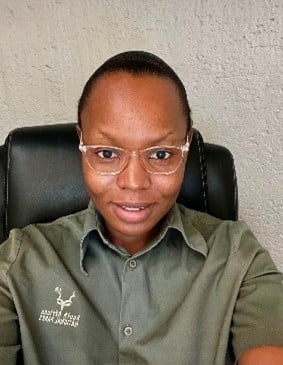
Ms Nkateko Silinda, an Officer for Socio-Economic Transformation and Curator at Agulhas National Park, is a highly committed conservation professional whose work demonstrates the practical meaning of inclusive and people-centred conservation. Through her commitment, innovation, and close engagement with communities, Nkateko continues to advance the mandate of South African National Parks (SANParks), ensuring that conservation contributes meaningfully to local economic development, community participation, and sustainable livelihoods.
At the heart of Nkateko’s work is a firm belief that the future of conservation depends on its ability to create tangible value for the people who live alongside protected areas. She understands that communities are more likely to support and participate in conservation when they can see, experience, and share in its benefits. For her, conservation cannot be measured only by the protection of biodiversity; it must also be reflected in jobs created, enterprises supported, skills transferred, heritage celebrated, and economic opportunities made accessible to surrounding communities.
In her role at Agulhas National Park, Nkateko leads and facilitates the implementation of a range of Socio-Economic Transformation programs that deliberately connect conservation with community development. Her portfolio includes strengthening community participation, supporting the localisation of procurement and Corporate Social Investment expenditure, facilitating community enterprise development, promoting cultural heritage, and enabling fair and sustainable access to natural resources.
A particularly significant aspect of her work is her contribution to the localisation of procurement and investment opportunities. Through this work, Nkateko helps ensure that expenditure associated with the park does not remain disconnected from the socio-economic realities of neighbouring communities. By promoting opportunities for local suppliers, entrepreneurs, and community-based organisations, she helps keep economic value within the local economy. She expands participation by communities that have historically had limited access to opportunities linked to protected areas.
Her work facilitating sustainable resource-use partnerships further demonstrates the balance she strives to achieve between ecological sustainability and community livelihoods. Through engagement with local flower and sour fig harvesters, Nkateko supports mechanisms that enable communities to access natural resources in a responsible, regulated, and sustainable manner. These initiatives recognise traditional and local livelihood practices while ensuring that resource utilisation remains consistent with conservation objectives.
This is an important expression of the evolving conservation philosophy within SANParks. Rather than viewing communities and conservation as competing interests, Nkateko’s work demonstrates that the two can and must reinforce one another. Sustainable resource use creates an opportunity for communities to derive legitimate benefits from protected landscapes while simultaneously developing an appreciation for the long-term protection and responsible management of those resources.
Another significant component of Nkateko’s portfolio is the support she provides to community-owned enterprises operating within Agulhas National Park. These include the community-run restaurant and curio shop, which represent practical platforms for economic inclusion within the protected area economy.
Through these enterprises, local community members and entrepreneurs have opportunities to create employment, generate income, showcase indigenous foods and cultural heritage, and market locally produced crafts and products to visitors. These initiatives enable communities to participate directly in the tourism value chain rather than remain passive observers of economic activity within and around the national park.
Nkateko’s role extends beyond simply facilitating access to these opportunities. She provides ongoing guidance and support to ensure that the enterprises operate in accordance with SANParks’ Socio-Economic Transformation requirements and are positioned for long-term sustainability. This includes supporting compliance, facilitating skills development, strengthening governance, identifying market access opportunities, and assisting community enterprises in building the institutional capacity required to operate independently and successfully.
Her approach is particularly important because true economic empowerment cannot be achieved merely by establishing an enterprise. It requires sustained capacity building, market access, sound governance, accountability, and the ability of communities to take ownership of the opportunities created. Nkateko works to ensure that these initiatives remain genuinely community-led, with SANParks playing an enabling and supportive role rather than creating dependency.
In addition to economic development, Nkateko appreciates the importance of cultural heritage as an integral component of conservation. Her dual responsibility as a set officer and curator provides her with a valuable platform to connect biodiversity conservation, local history, indigenous knowledge, and community identity. Through this work, she helps ensure that protected areas are understood not only as spaces of ecological significance but also as landscapes rich in cultural memory, heritage, and human experience.
This integrated approach is particularly relevant in a country such as South Africa, where many protected areas have complex historical relationships with surrounding communities. Ensuring that local communities see their history, culture, and aspirations reflected within national parks is critical to building stronger relationships and establishing a shared sense of ownership over the conservation estate.
What distinguishes Nkateko is the conviction with which she approaches her work. She does not regard Socio-Economic Transformation as an additional responsibility attached to conservation. Rather, she understands it as central to the long-term sustainability and legitimacy of conservation itself. She believes that when protected areas become catalysts for employment, enterprise development, skills creation, and cultural recognition, conservation gains stronger social foundations.
Her passion is therefore rooted in the point at which conservation becomes a tool for economic inclusion. It is this intersection between biodiversity protection and human development that drives her commitment. Through her day-to-day work, Nkateko translates the broader SANParks transformation mandate into practical interventions that communities can experience and benefit from.
As HOD: Socio-Economic Transformation, the department regards Ms Nkateko Silinda as an important contributor to the continued transformation of SANParks and the conservation sector. Her work reflects the leadership and commitment required of a new generation of conservation practitioners: professionals who understand that the sustainability of national parks depends equally on ecological integrity and on strong, mutually beneficial relationships with neighbouring communities.
The department therefore strongly supports and advocates for the recognition of Ms Nkateko Silinda. Through her commitment to community participation, local economic development, sustainable resource use, enterprise support, and cultural heritage, she demonstrates how the SANParks mandate can translate into meaningful opportunities for people. Her contribution at Agulhas National Park is helping to build a model of conservation in which communities are not merely stakeholders on the margins of protected areas, but active participants, partners, and beneficiaries in their future.
Nkateko’s work reminds us that the true success of conservation will ultimately be measured not only by what we protect, but also by the opportunities, dignity, and shared value that conservation creates for the people who live alongside our national parks.
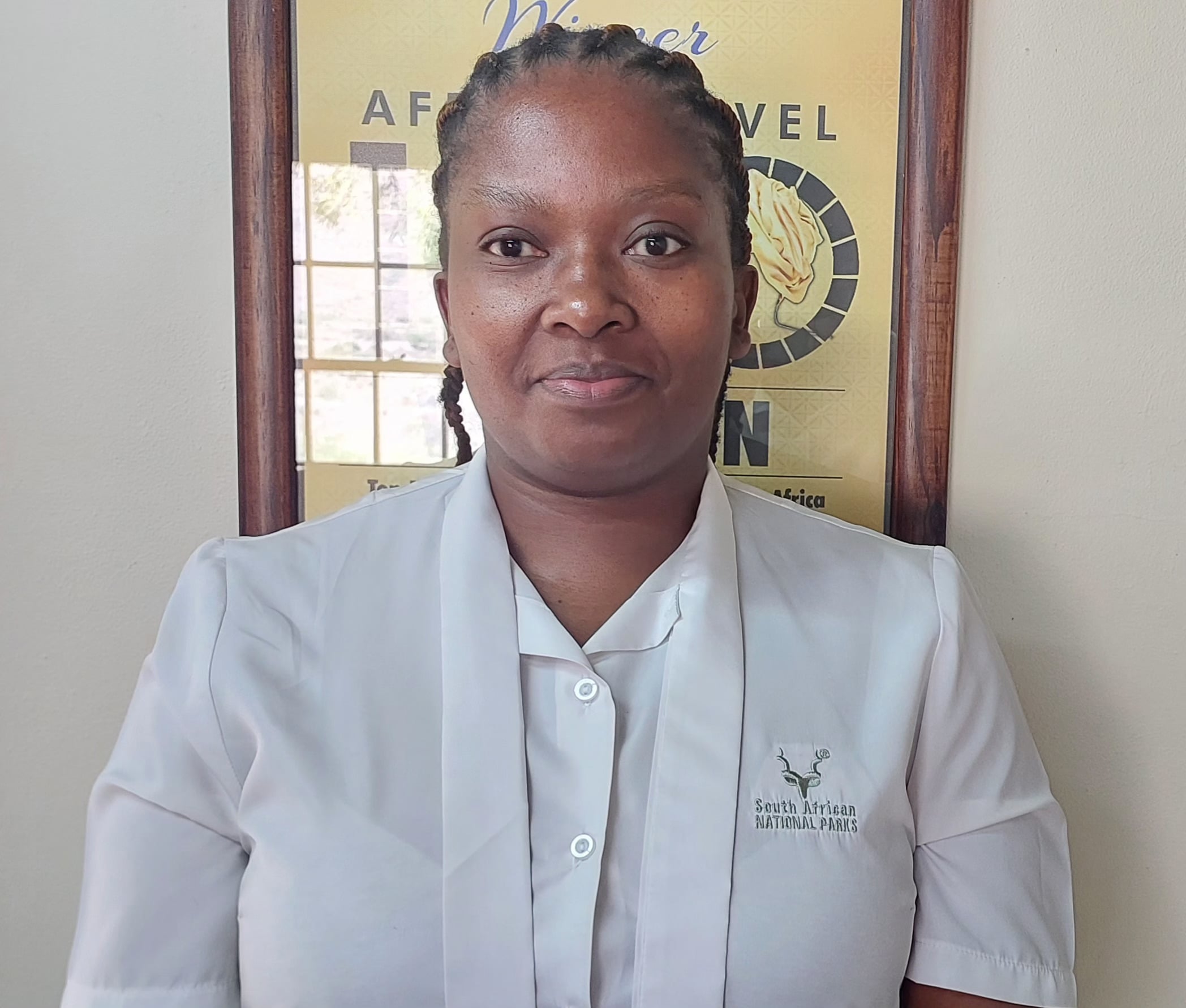
Bulelwa Msengi is an experienced conservation leader with over a decade in senior management roles at South African National Parks (SANParks), including Bontebok, Agulhas, Tsitsikamma and currently at Karoo National Park. Her expertise spans conservation governance, tourism management and stakeholder engagement, with a strong focus on building community partnerships.
She has led collaborative initiatives, notably advancing community engagement around fishing access in Tsitsikamma and inclusive park management planning. A recipient of the Africa Travel 100 Women Award, Msengi holds qualifications in tourism and a postgraduate degree in Business Management. She also completed the Management Leadership Development course at the University of the Witwatersrand and recently was part of the Park Management Leadership Development through African Leadership University (ALU).
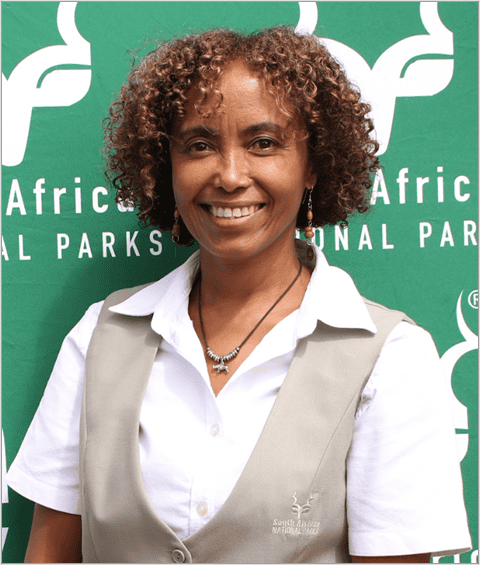
The year 2026 marks an outstanding milestone for Cathy Greaver, general manager of the Savanna Research Unit, as it signifies a 30-year career in conservation. Cathy currently leads a dynamic team of scientists, general workers, research assistants and biotechnicians in biodiversity research and monitoring across the SANParks Savanna parks, namely Kruger, Marakele, Mapungubwe and Golden Gate Highlands National Park.
She started her career in 1996 with Natal Parks Board, now Ezemvelo KZN Wildlife, as a Research Technician in the Greater St Lucia Wetland Park (now iSimangaliso Wetland Park). Cathy spent 12 years of dedicated service with Ezemvelo KZN Wildlife, where she gained experience in various biodiversity monitoring techniques, including vegetation surveys in the large coastal and swamp forest of St. Lucia’s Eastern Shores, to monitoring elephants when they were introduced in the early 2000s from Hluhluwe Imfolozi Park to St. Lucia’s Eastern Shores. Cathy also spent many years walking transects in uMkhuze Game Reserve, Hluhluwe Imfolozi Park, False Bay Park and St. Lucia’s Eastern Shores to count the various animals in these iconic reserves.
Cathy obtained a B-Tech degree in 2005, which focused on thermoregulation in Nile crocodiles at Lake St. Lucia. This involved her gaining insight into crocodile capture techniques. The results from her study triggered changes to the time of day when the aerial survey of crocodiles should be conducted along the lake shore. Cathy also has a Master of Science degree where her key focus was on monitoring the persistence of the black rhino population at Ithala Game Reserve.
Cathy left Ezemvelo KZN Wildlife in April 2008 to join SANParks as the regional ecologist in the Scientific Services department, where her first major task was to coordinate the aerial census of all the animals in the Kruger National Park. This role was a launchpad to use her extensive knowledge of the various aerial census methods and to coordinate these in several other National Parks over the years. Cathy also had opportunities to represent SANParks by participating in aerial surveys of game species in protected areas of Botswana, Zimbabwe and Mozambique, but she maintains that observing the entire Kruger National Park, from north to south and east to west, from an aerial perspective, remains a career highlight and a privilege not many people have.
Cathy’s 18-year journey with SANParks has also enabled her to fulfil another critical role of interfacing between research and management through various forums and ensuring integration of science and evidence-based learning into management decision-making, which requires continuous relationship building and integrating different personalities. Cathy has an unwavering passion for conservation, a dream career which she would not exchange for anything. Embracing technology as an important conservation tool remains exciting to Cathy, who sees this as a game-changer to make biodiversity monitoring more efficient and cost-effective.
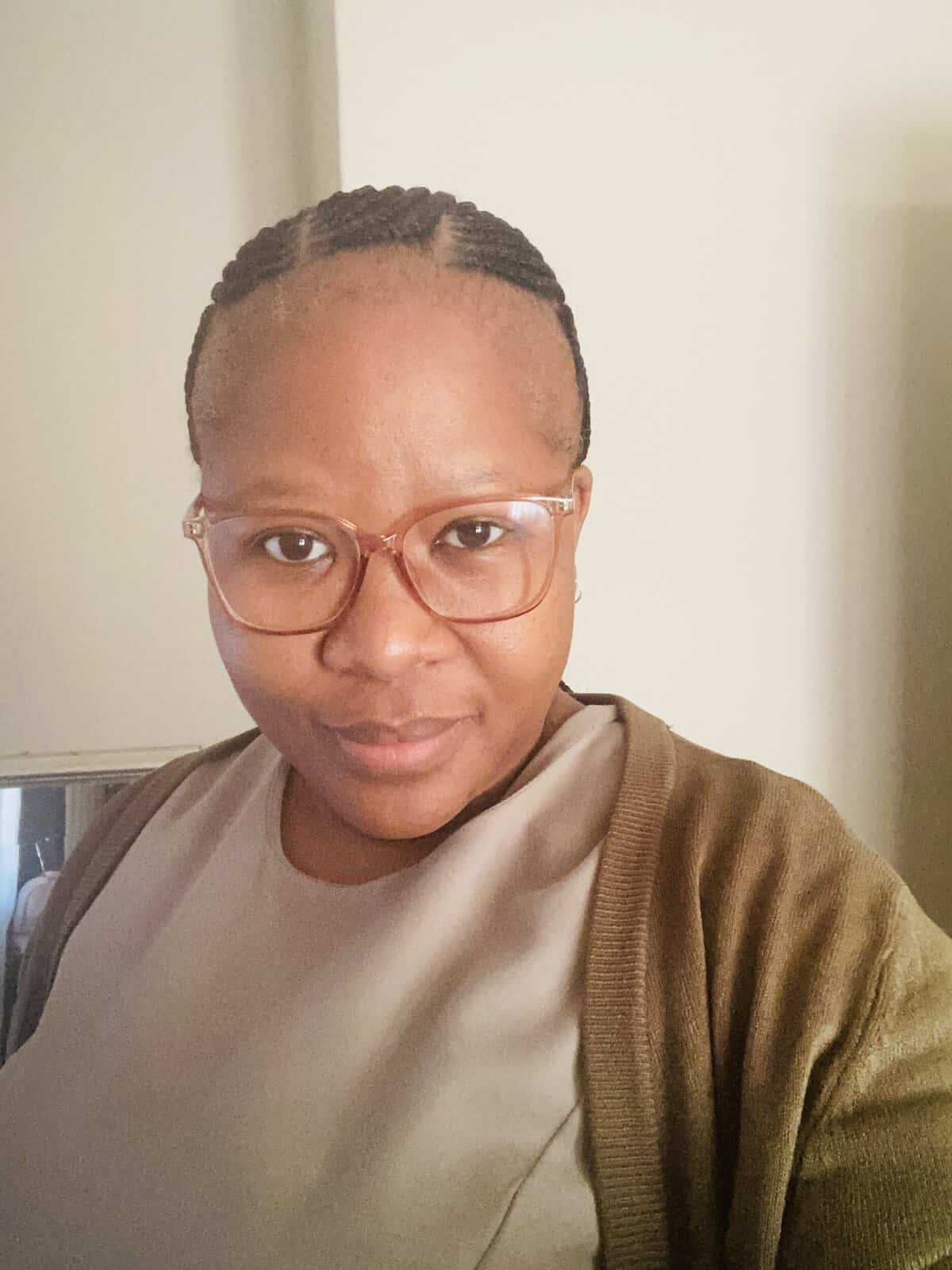
Nomonde Kgabage began her career as an Intern at Karoo National Park. In 2005, she was appointed as a Receptionist at Mapungubwe National Park in 2006, in 2010 she was promoted to Senior Receptionist at Mopane rest Camp in the Kruger National Park, she later got promotion as a Duty manager at a Punda Maria rest camp in 2011, in 2013 she moved to Mopane rest camp in the Kruger National Park and went to Camdeboo National Park as duty manager in 2016, 2018 she went back to Olifants rest camp in the Kruger National Park as Duty Manager, in 2026 got promoted to Hospitality service Manager at Mapungubwe National Park.
Throughout her career, Nomonde has proven her dedication, hard work, and unwavering support to Hospitality services within a tourism department. She has actively always committed to enforcing customer services focus on service delivery and protecting organisations best interests, Nomonde confronts unethical behaviour within tourism department.
Nomonde has consistently found ways to collaborate effectively with diverse teams across various provinces. Adapting to different cultures, beliefs, languages, and personalities has strengthened her ability to connect with customers and colleagues alike. Her experience has uniquely positioned her to integrate tourism efforts with stakeholder engagement, emphasising the importance of customer service focus.
Over the past months, she has gained valuable insights into stakeholder engagement through the support of the local communities.
Through her career she has shown dedication and determination to tourism serving for 20 years in the organisation with good leadership skills and personality skills has gained Her to be the best and managing the tourism team with respect and integrity.
Refiloe Motsoari joined SANParks in 2019 in the tourism department at Kgalagadi Transfrontier National Park and transferred to Mokala National Park in 2025. Throughout her career, she has demonstrated adaptability, resilience, and a strong commitment to delivering exceptional tourism and hospitality services in remote and challenging environments.
Her experience spans several areas within the tourism division, including retail operations, guest services, and camp management, providing her with a well-rounded understanding of tourism operations and visitor experience management.
As the Camp Supervisor at Mokala National Park, Refiloe is responsible for the effective day-to-day management of Mosu Rest Camp and oversees the park’s camping facilities. Her role includes coordinating accommodation services, maintaining operational and safety standards, supervising housekeeping and guest services, addressing visitor needs, and ensuring facilities remain well-maintained and welcoming.
Through her strong leadership, attention to detail, and hands-on approach, Refiloe ensures that guests enjoy safe, comfortable, and memorable experiences across both the rest camp and camping sites. Her dedication to service excellence, team leadership, and operational efficiency continues to contribute significantly to Mokala National Park’s reputation as a premier tourism destination and reflects her growing value within SANParks.
Content supplied by our select Partners and paid for content ad advertisement.


