Mountain climber takes us on her daring adventure
Marlette de Jager takes us through her climbing experience and how she fell in love with it.
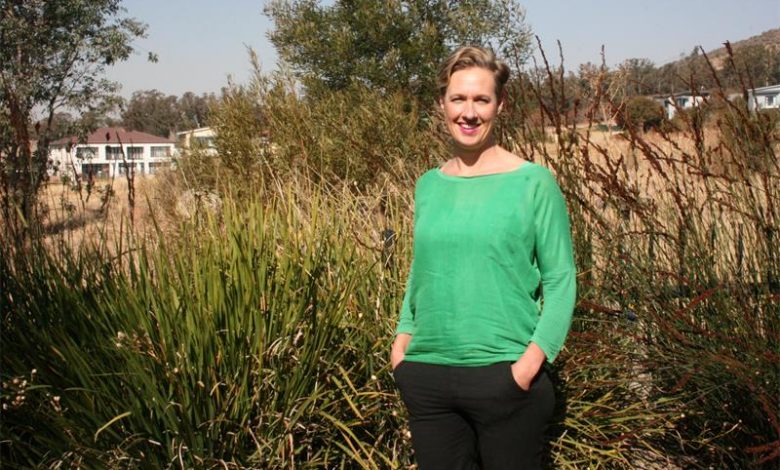
Marlette de Jager believes that she has always been adventurous.
“As a little girl, I was climbing trees or riding horses. With two older brothers, I had no choice but to be one of them. It was in the year 2000 that my one older brother invited me to go on a road trip with him and it was on that trip that we ended up climbing Kilimanjaro, which was the start of my mountaineering journey,” explained de Jager.
She was born in Natal near the sea, but have been living in Johannesburg for the past 21 years. She has lived on the West Rand, Midrand, the East Rand and now have been in the south for seven years.
“My family is supportive and know they cannot stop me from doing what I love, which is climbing. It was a very worrying time for them when we were in the earthquake and avalanche in 2015, and also on this Everest climb when they didn’t hear from us at camp four. But they know what mountaineering is like and are supportive.”
Toughest climb
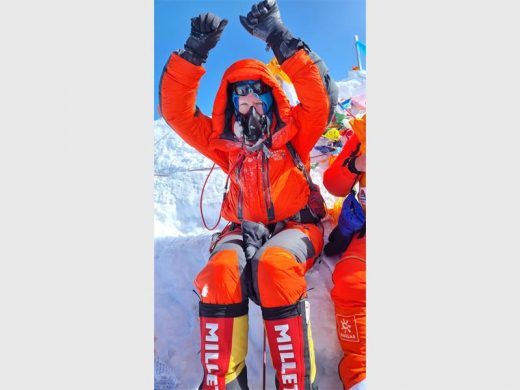
It was without a doubt that May 13, 2021, was the toughest climb de Jager had to face.
“On that day at Everest, my Sherpa had abandoned me at camp four, my climbing guide had severe frostbite and snow blindness, his Sherpa was also snow blind in one eye, and I was exhausted from the time we had spent in the death zone.
“Tragically, a friend had also died the day before and I was struggling with the loss and shock.
“The weather was really bad with poor visibility, sleet and cold, and we descended painfully and slowly from camp four to the second camp over nine scary hours. At the end of it, my guide was evacuated to hospital and I was grateful to be alive,” she said.
De Jager said normally it takes days to climb. Every mountain is different depending on its height and conditions.
“Kilimanjaro was done in four days up and down. Denali can take 12 to 21 days but Everest takes 45 to 60 days.
Everest takes so long because you need to acclimatise your body to produce more red blood cells to deal with the lack of oxygen. So you climb to a higher elevation, such as 7000m in rotation and descend to base camp to rest and recover, and repeat the process until acclimatised sufficiently for the summit,” said de Jager.
Climbing is expensive
She said mountaineering is very expensive, and she only manages to climb every couple of years.
“I did Kilimanjaro in the year 2000, Elbrus in 2010, Aconcagua in 2014, Denali in 2014, Everest base camp 2015, Carstensz pyramid in 2019 and now the summit of Everest 2021. In between I hike, ride mountain bikes and I have travelled to 40 countries so far.
“My favourite moment on Everest was when dawn broke before we were on the Hillary Step and also the summit. I had the ridge of the mountain ahead of me, splitting my view. To my right high above the clouds and white peaks of other mountains dwarfed by Everest, the sun was coming up, and to my left Everest cast its own shadow in a huge triangle. It was magnificent,” said de Jager.
Scary moments
De Jager adds that she is afraid of avalanches.
“The avalanche at base camp in 2015 was so devastating that it killed 20 people around us. When I was at base camp this year I heard rumbling and moving ice and snow, which is a common occurrence. I feared that it would rip through the base camp to cause widespread devastation. I was always poised and ready to jump in under my mattress.
“Climbing takes a certain mentality and attitude besides physical strength. If you don’t have those qualities of common sense, awareness of yourself and surroundings and being grounded and humble, I wouldn’t recommend it,” she said.
Ambassador
She is an ambassador for Sorbet’s SEW Foundation and a professional speaker.
“I have been involved with Summits with A Purpose to upskill females in the Drakensberg area to qualify as guides at different levels, which we did in September last year. Three were certified to guide people in the mountains, which I was very excited about,” she said.
Since starting with her climbing journey, de Jager has learnt her limits, be it mental, physical or emotional.
“I have learnt resilience and flexibility, to be present and patient. I have become intimately acquainted and comfortable with fear. I know my strengths and weaknesses well,” she said.