
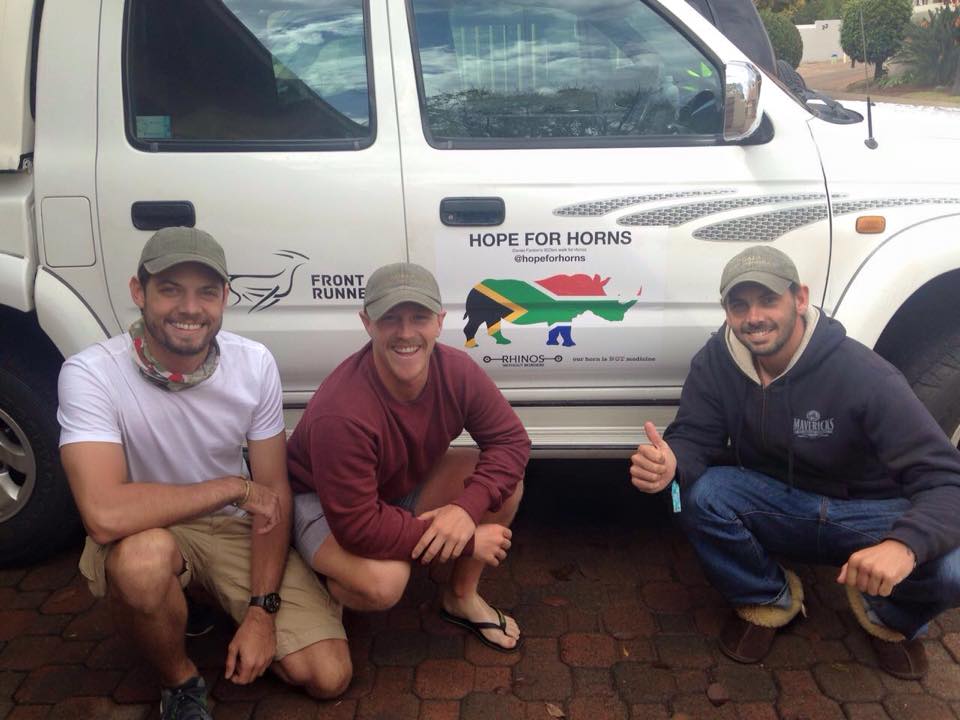
For Daniel (Dan) Fenton, a 23-year-old dedicated wild life lover and ranger at the Ngela Private game reserve in the Kruger National Park, the dwindling number of Rhinos in our national parks and reserves has awoken a desperate urge to protect and save these majestic animals from the hands of poachers.
In order to create an awareness of the plight facing the Rhino population in South Africa and to generate funds for trans locating them, Dan has embarked on a walk of 922 km, from the Phinda Private Nature Reserve in the Kruger National Park, across South Africa to the Ramatlabama border of Botswana.
He set out on 1 May and hopes to reach his destination within 45 days.
The Highvelder spoke to Dan when he stopped over at Ermelo on Thursday night, 330km into his journey.
Dan, who originally hails from Cape Town, said he has seen first hand how the numbers of rhinos have dwindled due to poaching.
“I have found that not too many South Africans are truly aware of just how many rhinos are being slaughtered for their horns. At the current rate it is estimated that they will become extinct within 10 years and this is what my motivation is for this walk,” he said.
He added that the dwindling number of rhinos has become evident in game drives where three years ago rhinos could be spotted daily but lately one is lucky if rhinos are spotted every two or three days.
“This is despite the use of tracking devices which makes it easier to spot the animals. As rangers we also come across dead rhino more often these days, which is most disturbing and traumatic especially if one is on a drive with tourists. I strongly feel the need to protect the rhinos and I hope to create an awareness to bring home the importance of saving them. I also hope to generate funds to help in trans locating rhinos to Botswana. ”
During his walk Dan will be stopping off at schools to chat to youngsters and also to people along the route to inform them of the dire situation.
The Rhinos without borders project of the “& Beyond” company for which he works plans to translocate 100 rhinos to an undisclosed location in Botswana.
He explained that it costs about R720 000 to translocate one rhino to Botswana by air.
The walk follows the exact route taken by the translocation of the first six rhinos that were transported by road from Kruger park to Botswana in 2012. These animals were trans-located as a pilot project to test their ability to adapt to conditions in Botswana.
Follow Dan’s progress on Facebook at Our Horn is NOT Medicine or visit www.gofundme.com/hopeforhorns to make a donation to this worthy cause.