
Conservation conference brings forest communities together
The Global Forest Coalition brought communities from around the world together in Durban.
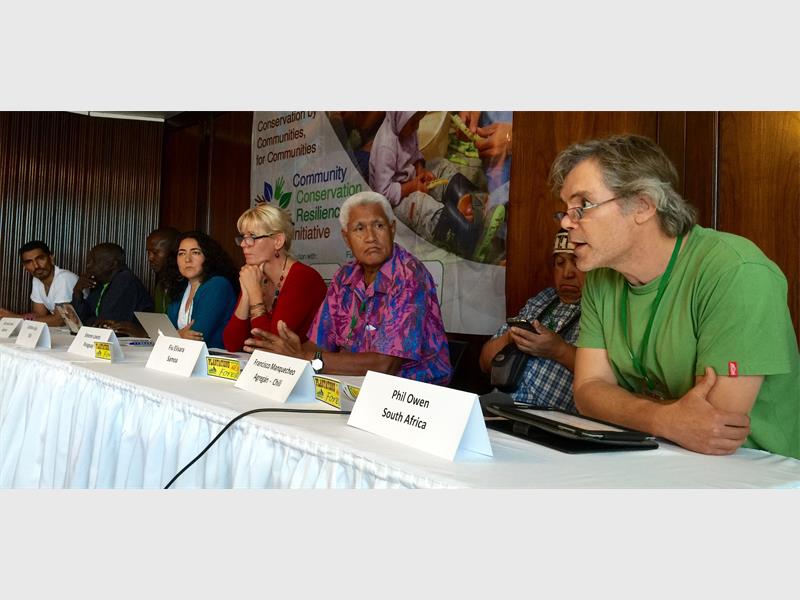
The Global Forest Coalition (GFC) brought together more than 100 indigenous people and forest community members from over 40 countries around the world to Durban for its Fostering Community Conservation Conference from 31 August to 4 September.
This initiative represents the way in which forests and communities should and have always co-existed, with communities protecting and conserving their indigenous territories as they have long-standing ties to their land.
“Contrary to what is assumed in many international policy processes, local communities are not threats to forests; they are actually the ones who have maintained these territories and guaranteed that they continue to exist,” said Diego Cardona, chairman of GFC.
In many traditional conservation efforts, such as national parks, local communities are often evicted from their lands or marginalised from their sources of livelihoods. However, there is a growing body of scientific evidence that forest communities are the real conservation heroes as their efforts are often more cost-efficient and effective than in government-protected areas.
A recent study confirmed that while government efforts may fall short, local communities observe, manage and protect their environments.
“We are capable of protecting and conserving our forests, biodiversity and cultural heritage when our rights are protected and respected,” said Nadezhda Seliuk of the Primorsky Association of Indigenous Peoples from Far East Russia.
The GFC, together with a number of indigenous peoples’ organisations and NGOs, is in the process of carrying out bottom-up assessments of community-led conservation efforts in communities across at least 20 countries. The communities themselves are documenting the things women and men do to protect their territories and the main threats that they face.
In South Africa, industrial timber plantations are one such threat, as these are replacing indigenous plants that have traditionally formed an important part of local medicine, health and well-being. The run-off from these plantations is also polluting rivers and silting up wetlands and estuaries.
As part of the upcoming World Forestry Congress, taking place in Durban from 7 to 11 September, the timber industry will be pushing for the expansion of tree plantations as part of its so-called Sustainable Forest Management (SFM) agenda.
Wally Menne of the South African Timberwatch Coalition said, “The timber industry is one of the biggest threats to the survival of real forests and important natural vegetation types, including grasslands and South Africa’s unique fynbos. Tree plantations are not forests. This idea is something the timber industry has been trying to pass off. In fact, they cause irreversible ecological damage to real forests while undermining the livelihoods of local communities and indigenous people and their capacity to protect their land for the benefit of future generations.”
GFC plans to bring the results and recommendations of this conference to the World Forestry Congress. GFC is also strongly supporting the Civil Society Alternative Programme – an alternative platform to the World Forestry Congress – that will provide a space for civil society and social movements’ voices to be heard.