KZN Premier and MEC launch construction sector women’s body
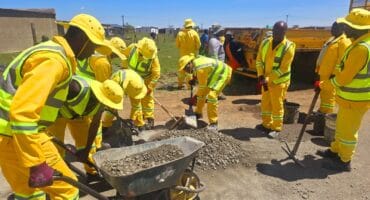
KZN has launched its first all-women construction advisory body to drive gender transformation and protect women in this sector.
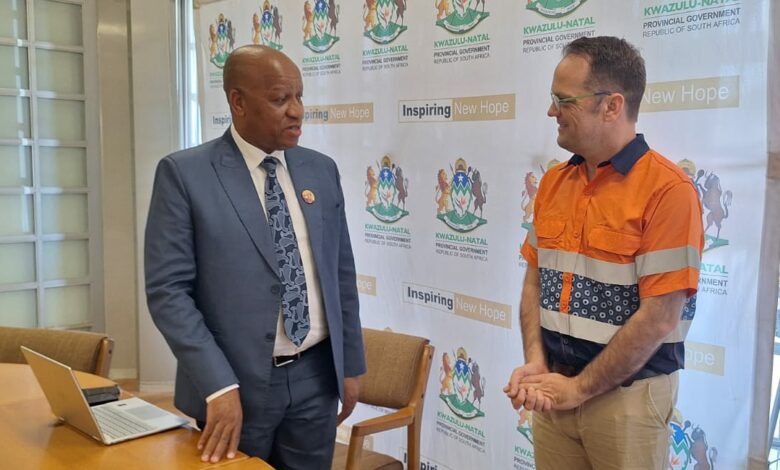
ON Tuesday, January 20, KZN Premier Thamsanqa Ntuli and the MEC for Public Works and Infrastructure Martin Meyer launched a first of its kind women’s body to advance women’s participation in the construction sector.
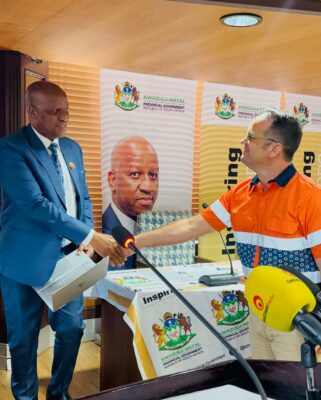
Ntuli delivered the keynote address during the official launch of the She Builds Advisory Body at the KZN Master Builders offices in Westville on Tuesday, January 20.
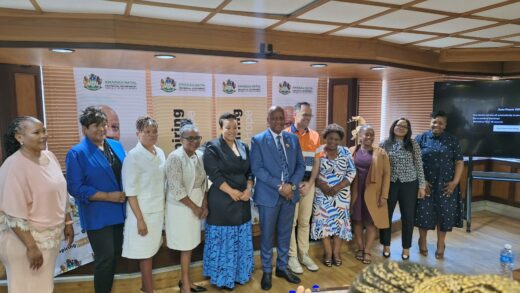
She Builds Advisory Body is a dedicated all-women advisory team comprised of qualified and experienced professionals from the construction sector.
The primary objective of the advisory body is to champion the advancement, participation, and protection of women seeking to enter the construction industry, as well as those already active within the sector. It is specifically aimed at promoting equitable access to opportunities for women and addressing the deliberate and systematic exclusion that has historically characterised the industry, which is largely dominated by men, with limited transformation achieved over the past decades.
According to insights gathered by the KZN Department of Public Works and Infrastructure (PWI), women in the province continue to face significant barriers, which are both historical and deliberately orchestrated, that hinder their meaningful participation and progression within the construction industry.
Key challenges identified include, but are not limited to:
- Ongoing targeting and intimidation by extortion syndicates
- Financial constraints imposed by financial institutions that disproportionately disadvantage women contractors
- Broad-Based Black Economic Empowerment (B-BBEE) procurement processes that prioritise company age over women participation
- Manipulation of procurement processes and pricing structures
- Outdated tender advertisement, application, and submission systems
- Unjustifiable exclusions and unfair treatment of women contractors
- Deliberate and excessive bureaucratic red tape
Meyer said it is only through the inclusion of women that some of the wrongs within the construction industry can be fixed.
The MEC added that looking at the construction sector at large, Quarter 2 statistics by Stats SA showed that while the construction sector in the country had recorded growth, men made up the majority of the workforce at 88.6%, meaning women represented only 11.4%.
“Coming home, here in KwaZulu-Natal, the construction sector is among those that is going strong and continues to grow. Recent and latest stats report that 35 000 new jobs were created last year in this province. However, the picture is not too different from the national perspective in that women are still heavily underrepresented,” said Meyer.
The MEC said the all-women advisory body came as a result of the cries for help expressed by women within the industry during a women’s symposium held during Women’s Month last year, at the department’s auditorium at the provincial head office.
Also read: Telephone-wire artist showcases her work at Woza Moya
Meyer noted that a strategy has been designed, which includes law enforcement and private security companies, all who have responded with urgency, to protect women in the industry from extortionists who had assumed women-run projects would be an easy target.
“The other was that financial institutions were still reluctant to either finance, or fully finance female projects. Part of this was our doing as KZN Public Works and Infrastructure in that contractors who approached financial institutions with secured contracts from us for funding purposes would be met with reluctance due to our then inability to pay our contractors on time for work done. I am proud to say, however, that this is something that has been addressed and payments to our contractors are well within the 30-day payment window.
“The other reason was that due to construction being a male-dominated industry, male contractors had established long-lasting relationships with financial institutions like banks while women, as newcomers, were seen as a financial risk. In this matter KZN Public Works and Infrastructure has begun the process to reach out to big financial institutions and have them come to the table.
“Another issue was that women wanting to enter the industry today are often disfavoured by legislation of yesterday such as BEE policies which favour and prioritise age over gender representation. This tells us that such legislation is out of touch with the need to transform the construction sector. In this regard KZN Public Works and Infrastructure will be approaching the Minister of Public Works and Infrastructure, Dean Macpherson, to find a solution,” said Meyer.
The MEC said the department has seen that it is often projects led by women contractors that tend to be completed on time, produced meticulously and within a sensible budget.
For more from the Highway Mail, follow us on Facebook , X and Instagram. You can also check out our videos on our YouTube channel or follow us on TikTok.
Click to subscribe to our newsletter here