
Lerato’s story raises questions about consent vs coercion
The widespread debate also raises questions about cybercrimes, the modelling industry, and the humiliation of women who are victims.
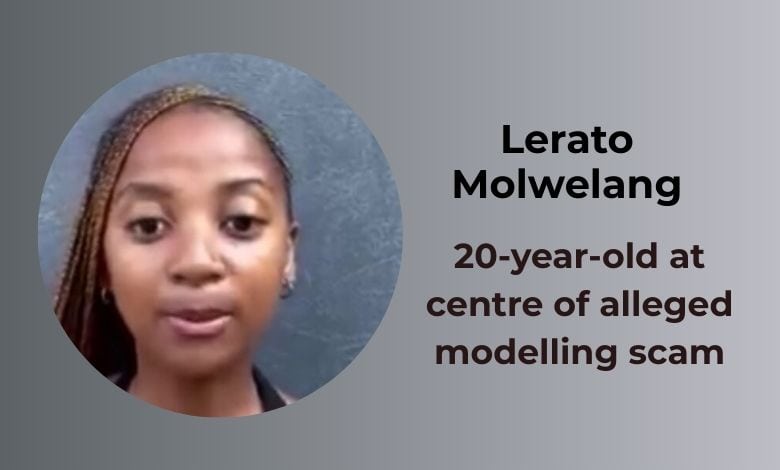
THE name of a woman aged 20, Lerato Molwelang, has been at the centre of a widespread public debate which highlights issues such as the difference between consent and coercion; an unregulated modeling industry; cyber crimes; and gender equality, in particular, how women are expected to pass a much higher bar of moral standards.
In a viral video statement, Molwelang has stated that she was the victim of a fake modelling scam in which she was exploited and subsequently publicly humiliated after explicit compromising content of a sexual nature was published without her consent and in the absence of a signed contractual agreement.
[VICTIM] A 20-year-old South African female who is a victim of a bogus casting agency. https://t.co/Aq3CxdX7cn pic.twitter.com/dOCxfLVhkr
— Justice, Crime Prevention and Security (@CrimeWatch_RSA) January 15, 2026
UKZN lecturer at the School of Law, Nomfundo Mthembu, who holds a Bachelor of Laws (LLB) and Master of Laws (LLM, Medical Law) and is a PhD candidate in Medical Law, said Lerato and other women, as well as other victims of such exploitation, can pursue criminal and civil cases as legal recourse.
Mthembu said the most effective legal recourse, however, would be to urgently obtain a High Court interdict compelling those in possession of the compromising content to desist from distributing it, and that the court can order that it be taken down from whichever platform it has been published on.
“Constitutionally, they may rely on Section 10, which protects human dignity; Section 12, which guarantees the freedom and security of the person, including bodily and psychological integrity; and Section 14, which protects privacy. These rights form the foundation for all further remedies. Criminally, they may open cases with the South African Police Service, which has a cybercrimes unit dedicated to these cases. They may also pursue charges for the non-consensual creation and distribution of the intimate images or videos under the Films and Publications Act. The Cybercrimes Act provides additional criminal remedies for unlawful recording, possession, and online distribution of intimate content,” said Mthembu.
Also read: Metro Police urge motorists to settle outstanding traffic fines
She added that Molwelang and other victims “may institute claims for damages arising from the invasion of privacy, impairment of dignity, and emotional and psychological harm suffered”.
“The bigger issue is not so much what they can do because to be honest the psychological damage has already been done. The bigger issue is how these women can be protected,” said Mthembu, who pointed out that it is concerning that the South African modelling industry lacks regulatory mechanisms which could protect women, and others, rather than them being exposed to risks of such violations.
“Although South Africa’s legal framework is comprehensive, enforcement and regulation remain weak. What needs strengthening is the formal regulation of the modelling and talent industry. Mandatory registration, oversight, and accountability of agencies would significantly reduce opportunities for exploitation,” said Mthembu.
Social media discussions have included derogatory labels leveled against Molwelang, which Mthembu said is a sign of a society which “suffers from what is called the perfect victim syndrome, which places high standards on victims”.
She is only 20 years
She didn’t even want to try and put her CV at Shoprite and start at the bottom like other kids
She wanted to jump the queue and be a superstar modeller 😭😭
Lerato Molwelang pic.twitter.com/miPotrpmMu
— IG:Joy-Zelda (@joy_zelda) January 17, 2026
Insinuations that victims like Lerato “should have known better” or labels that they are “gold diggers” set the bar of moral standards high for women, said Mthembu, and the humiliation that follows goes against “efforts to fight such crimes because other women will not come forward out of fear of being humiliated”.
“Public shaming, derogatory labelling, and moral judgement on social media amount to secondary victimisation. When survivors like Lerato are blamed or humiliated, it sends a clear message to other victims that coming forward will result in social punishment rather than protection. This fear silences survivors, shields perpetrators, and allows exploitation to persist. In industries already marked by imbalance and vulnerability, social condemnation becomes an informal enforcement mechanism that benefits abusers and undermines justice,” said Mthembu.
IVO SUZEE is the Victim here…. 🤔 These women give approvals… I mean Lerato molwelang clearly agreed everything in that video we saw it and it wasn’t an AI…
Now the system is trying to Victimize Lerato…. 😩🙄
Toxic Women 🤢🤮🚮🚮 pic.twitter.com/6G88llz32t— A M O 🇿🇦 💭 (@Only_Botake) January 17, 2026
She added that this also makes it difficult to assess the prevalence of such crimes because many victims may opt to remain silent out of fear of public humiliation.
THE LERATO MOLWELANG CASE IS BIGGER THAN JUST A VIRAL MOMENT
The story surrounding Lerato Molwelang is not just another trending topic on social media. It is a mirror reflecting how dangerous the digital world can be for young people chasing opportunities.
From what has been… pic.twitter.com/4wLPzGT6b3
— Thulani Ndaba (@tndaba) January 17, 2026
“These crimes are both prevalent and historically entrenched. Exploitation within the modelling, talent, and creative industries in South Africa has been reported for decades. The rise of digital platforms has exacerbated the problem by enabling rapid recording, distribution, and monetisation of exploitative content. Law enforcement agencies must therefore treat these cases as serious sexual offences and organised crimes rather than isolated moral lapses. Members of the public must also recognise that these crimes are rooted in deception, coercion, and power imbalances, not in the moral failings of victims,” said Mthembu.
Consent vs coercion
“Preaching the gospel of consent”, ensuring it is understood, and clearly juxtaposed with coercion is of utmost importance for Mthembu.
“Consent is given freely and voluntarily and from an informed position. Consent can be withdrawn at any time because it is a continuous act,” said Mthembu.
On the other hand, “coercion occurs when agreement is obtained through pressure, fear, manipulation, deception, or the abuse of power”.
“In the context of modelling scams, sexual coercion often manifests through promises of career advancement, threats of blacklisting, financial desperation, or misrepresentation of how images or footage will be used. Even where a person appears to agree, the law recognises that consent obtained under such conditions is invalid,” said Mthembu.
She added that with coercion, it is crucial to consider the complex and nuanced power dynamics at play.
Also read: December crime surge in Pinetown policing area
Mthembu agreed that gender equality is at the heart of the points of contention sparked by Molwelang’s humiliation.
“This is a very big problem, because women are forever finding themselves at the shorter end of the stick, whether socially, or at work, or at home. Women are more at risk of facing backlash, with no grace extended to them. The biggest concern in South Africa is that society has tilted the scales and now in almost all the instances women who are victims end up at the receiving end,” said Mthembu.
She pointed out that no questions have been raised about whether the Department of Arts and Culture has intervened in any way on behalf of Molwelang; whether the agency which exploited her has been shut down; and how many other women were victimised by the same agent.
“Yes, I do understand that there is a level of personal responsibility that is required, but we must not shift the blame. Young women entering the modelling and creative industries should exercise caution in an environment that has long been known to be vulnerable to exploitation. Legitimate agencies are transparent, contract-based, and open to scrutiny. No genuine opportunity requires secrecy, urgency, private auditions in informal spaces, or unexpected nudity or sexual acts. Young women should seek independent advice, verify agency credentials, and trust their instincts when something feels wrong. Significantly, none of these precautions shifts responsibility away from perpetrators,” said Mthembu.
Lerato Molwelang publicly made a video saying she’s a victim in that video. When will women start taking responsibility for their actions. Slept with a producer for an opportunity now that it went South she’s trying to justify herself as a victim.
LET’S SAVE THE NEXT GENERATION pic.twitter.com/EbqV6Vsvao
— Relationship Director Marcopolo 🇿🇼 (@SJikisera) January 16, 2026
Important to note
“Under the Cybercrimes Act and the Films and Publications Act, sharing, forwarding, or storing such content constitutes an offence. Once a person knows, or reasonably should know, that content is exploitative or non-consensual, continued viewing or dissemination contributes to ongoing harm and may expose them to criminal liability. Consumers are therefore not neutral participants because, in a way, they sustain the market for exploitation and cause further harm by sharing.”
For more from the Highway Mail, follow us on Facebook , X and Instagram. You can also check out our videos on our YouTube channel or follow us on TikTok.
Click to subscribe to our newsletter here