
What is sub-soil drainage?
The principles, components and how sub-soil drainage works.
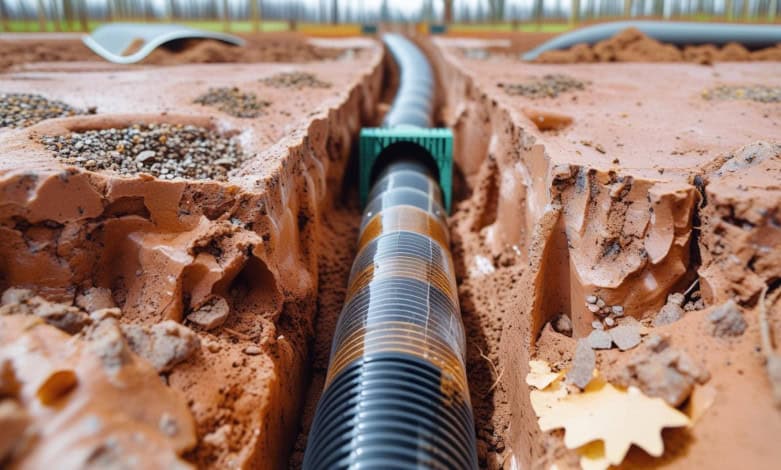
When water gathers beneath the surface, it can weaken structures or erode foundations, leading to costly damage over time. Sub-soil drainage systems are designed to manage that unseen flow, guiding water safely away from buildings and other load-bearing structures.
While it may sound complex, the principle behind it is straightforward: keep the ground stable by keeping it dry where it matters most.
Understanding Sub-Soil Drainage
Sub-soil drainage refers to the process of removing excess water from beneath the ground’s surface, particularly from the layers surrounding foundations, retaining walls, and underground structures.
It’s an essential part of structural drainage repair, which ensures that water doesn’t linger around load-bearing areas or cause hydrostatic pressure, a build-up that can push against walls and crack them over time.
In most environments, natural soil drainage isn’t uniform. Clay-heavy soils, for example, trap water, while sandy soils allow it to escape quickly.
A sub-soil drainage system equalises this balance by creating artificial channels where trapped water can be redirected. The result is a controlled underground flow that preserves both the structure’s integrity and the surrounding soil stability.
Core Principles Behind Sub-Soil Drainage
Every effective system is guided by three basic principles: collection, conveyance, and discharge.
- Collection – this involves capturing groundwater using perforated pipes or drainage membranes placed at precise depths.
- Conveyance – the captured water is then channelled through these pipes, often wrapped in geotextile fabric to prevent soil from clogging the system.
- Discharge – finally, the system directs the water to a suitable outlet, such as a stormwater drain or soakaway pit, etc.
These principles make sure that water moves freely without pooling beneath structures. It’s a dynamic process that relies on gravity, correct installation depth, and a carefully calculated slope to maintain a steady flow.
Components of a Sub-Soil Drainage System
A well-designed system includes several critical components that work together seamlessly:
- Perforated Pipes. Usually made from PVC, these are laid below the surface to collect and transport water.
- Gravel or Aggregate Layer. Surrounding the pipes, this layer allows water to flow in easily while filtering out larger soil particles.
- Geotextile Fabric. Acting as a barrier between soil and gravel, it prevents fine particles from clogging the system.
- Outlets. The final point where water exits the system, ensuring that it is carried away from vulnerable foundations.
When designed correctly, these components work like an underground river system – quiet, efficient, and largely invisible but vital for long-term stability.
How It Works in Structural Drainage Repair
In structural repair, sub-soil drainage plays a preventative and restorative role. When cracks or damp patches appear on walls or foundations, excess underground water is often to blame.
Installing or repairing a sub-soil drainage system relieves that pressure, drying out the affected zones and preventing future damage. For new builds, it’s part of proactive planning; for existing structures, it’s often a lifeline.
In Closing
Sub-soil drainage may be hidden from view, but its impact is visible in every stable foundation and dry wall it protects.
By understanding its principles and components, property owners can appreciate just how much depends on what’s happening beneath their feet and why proper drainage is a cornerstone of structural health.