
Chirping with Kloof Conservancy – Cape Wagtail
Find out more about this feathered Highway resident below.
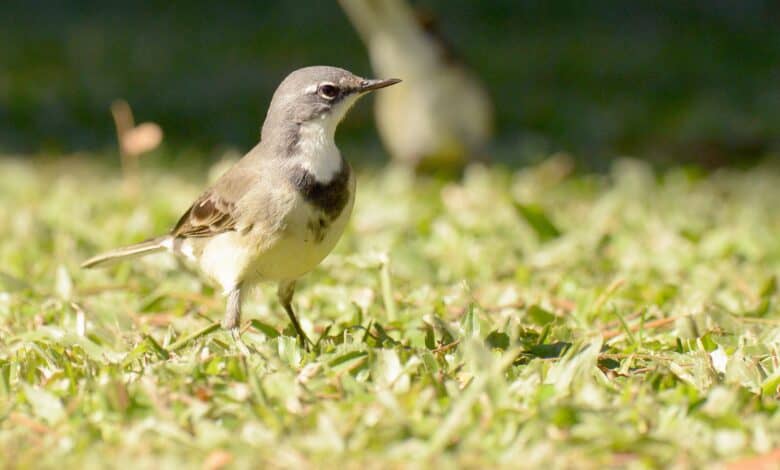
THIS week, we feature the Cape Wagtail which is found across the entire southern Africa but is not very common in the Highway area.
Also read: Chirping with Kloof Conservancy – Greater Striped Swallow
Description
The Cape Wagtail is an elegant, smallish bird that is forever on the move, bobbing its tail incessantly. It is approximately 20cm in length with a weight of 21g. It is greyish brown with a distinctive dark grey band on its chest. It also has a thin, white line above and below the eyes. The upperparts are grey-brown with the males and females being similar in appearance.
The Cape Wagtail can be easily confused with the Mountain Wagtail which is of similar size, shape and colour patterns. A distinguishing feature is that the Mountain Wagtail has white underparts and blue-grey upperparts.
Distribution
The Cape Wagtail can be found throughout South Africa and is common particularly where there is water present.
Habitat
This species likes open habitats where there is water so you may find it on garden lawns, parks, urban centres and farmlands.
Feeding
The Cape Wagtail feeds predominantly on insects which it picks while walking on the ground. They feed on mosquitoes, moths, beetles, dragonflies and similar species. They also wade in shallow water and will opportunistically feed on tadpoles, snails and even small fish.
Breeding
The Cape Wagtail is a monogamous species and pairs for life. The nest is built by both adults, and it is usually well concealed and situated in a recess on a steep bank next to a stream or in a tree. It has also adapted to nest in man-made structures such as bridges and buildings.
The egg-laying is quite long and takes place between July and April. Between one and five eggs are laid which take approximately two weeks to hatch. Both parents take care of the young.
Predators and threats
The Cape Wagtail is not considered to be under any significant threat. However, because they are insect eaters, the use of insecticides in gardens may be a concern.
Local information
In the Highway area, the Cape Wagtails are absent from most of our riverine areas because these are ‘controlled’ by the very similar-looking Mountain Wagtails who are aggressively defensive of their streams. Your best chances of finding the Cape Wagtails are to look for them in stream areas that are open without many trees as these streams are not favoured by the Mountain Wagtails. You may also find them feeding in your garden.
Interesting facts
Cape Wagtails have learnt to use the movements of large herbivores, such as cattle, to help them find food. They follow the large animals and pick the insects that have been dislodged or disturbed by their hooves.
For more from the Highway Mail, follow us on Facebook, X and Instagram. You can also check out our videos on our YouTube channel or follow us on TikTok.
Click to subscribe to our newsletter here