
Chirping with Kloof Conservancy – Black Cuckoo
Find out more about this feathered Highway resident below.
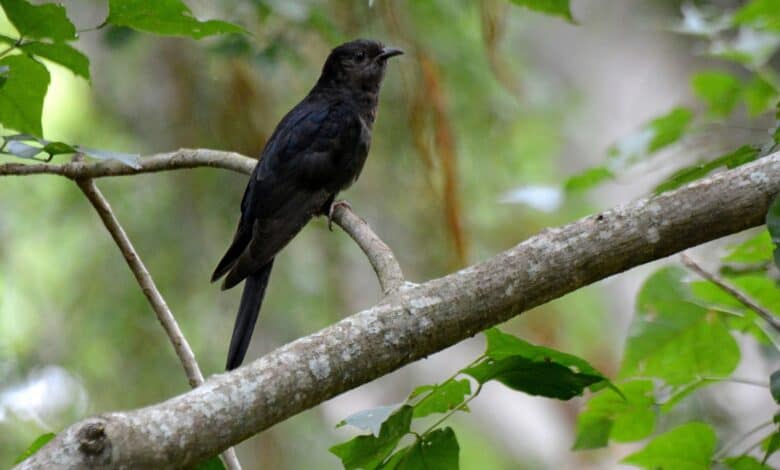
THIS is one of the less commonly seen birds in the Highway area, but it has a very distinctive call which will help to find it!
Also read: Chirping with Kloof Conservancy – Red-eyed Dove
Description
This is a relatively large cuckoo at around 30cm and 90g. It has a distinctive cuckoo shape and as it is predominantly black it is unlikely to be confused with any other cuckoo in our area. The males are uniformly black with a greenish shine and often with some white on the tail feathers. Occasionally they may have some rufus bars on the chest and belly, somewhat similar to the Red-chested Cuckoo. Males and females are alike with the rufus barring often more prominent in females.
Distribution
The Black Cuckoo is found throughout the eastern part of South Africa and the coastal areas of the Western Cape. It is a migrant species arriving in our area to breed from September-October. Most will have left by end January, and they migrate to Equatorial Africa for our winter period.
Habitat
This species is most often found in forests and open woodlands as well as commercial plantations.
Feeding
The Black Cuckoo is predominantly an insect eater and enjoys a wide variety of caterpillars. It will also enjoy termites, beetles, grasshoppers and even the occasional bird’s eggs! Feeding is done mainly in the forest canopy, but it will also hawk insects in the air.
Breeding
As with all cuckoos they lay their eggs in the nests of other birds, particularly shrikes, and in our area they often pick on the nests of the Southern Boubou. The females can lay up to 22 eggs in one season, often in clutches of four eggs with each egg laid every second day. The young are cared for by the unsuspecting host parents!
Predators and threats
The Black Cuckoo is not considered to be under any significant threat as it has also adapted well to feeding in gum plantations, so is not overly sensitive to deforestation.
Local information
In our area you are most likely to find the Black Cuckoo in forested areas such as our riverine forests.
Interesting facts
Cuckoos have developed an amazing ability to produce eggs that are very similar looking to the eggs of the bird species they parasitise. This is quite an achievement given the wide variety of other host species they use!
For more from the Highway Mail, follow us on Facebook , X and Instagram. You can also check out our videos on our YouTube channel or follow us on TikTok.
Click to subscribe to our newsletter here