Chirping with Kloof Conservancy – the Orange-breasted Bushshrike
Find out more about this feathered Highway resident below.
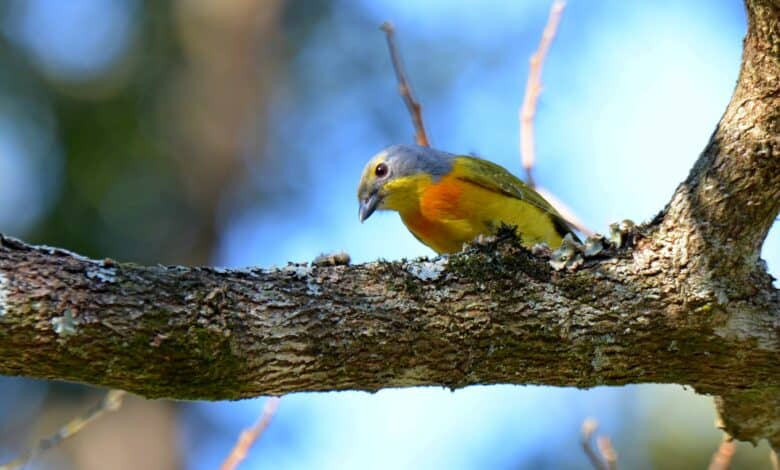
THE Orange-breasted Bushshrike is one of the most strikingly beautiful birds of the Highway area and worth searching for.
Also read: Chirping with Kloof Conservancy – the Little Sparrowhawk
Description
The striking orange and yellow combinations on the throat and chest immediately draw attention to this species! This adds to the pale green wing and tail feathers and a grey head with a distinguishing yellow eyebrow. Males and females are similar with the females being a bit duller in colour. The Orange-breasted Bushshrike is a smallish bird at 19cm and a weight of 27g. It can be confused with the larger and thicker billed Grey-headed Bushshrike which does not have a yellow eyebrow.
Distribution
The Orange-breasted Bushshrike can be found along the eastern and most northern parts of South Africa from East London through to Limpopo Province.
Habitat
Woodlands and bush thickets along drainage lines are the preferred habitat of the Orange-breasted Bushshrike. They can also be found in well wooded gardens.
Feeding
Not much is known about the feeding habits of the Orange-breasted Bushshrike but it is believed to be primarily an insect eater feeding on beetles, mantids, and bees. As with other Bushshrikes it may also take the chicks of other small birds. They do spend a lot of time feeding in the canopy of trees which is the best time to spot them.
Breeding
The Orange-breasted Bushshrike is a monogamous species and pairs for life. The nest is built by both adults, and it is usually situated high up on the branch of a thorn tree. The nest is not very elegant and is usually a shallow open cup of small twigs. One to three eggs are laid, incubated by both adults and they hatch in about two weeks. Both adults share the feeding duties, and the chicks leave the nest after about two weeks.
Predators and threats
This species is listed as ‘least concern’ by the International Union for Conservation of Nature and it does not face any significant threats.
Local information
As this species prefers woodlands and bush thickets and won’t be found in evergreen forests, it is not that common in the Highway area. To find it you will need to look on forest edges or shrubby areas along drainage lines
Interesting facts
Despite its relatively small size the Orange-breasted Bushshrike is very vocal. If you learn their call you will have a much better chance of seeing them in the canopy of trees.
For more from the Highway Mail, follow us on Facebook , X and Instagram. You can also check out our videos on our YouTube channel or follow us on TikTok.
Click to subscribe to our newsletter here