
Chirping with Kloof Conservancy – the Yellow-rumped Tinkerbird
Find out more about this feathered Highway resident below.
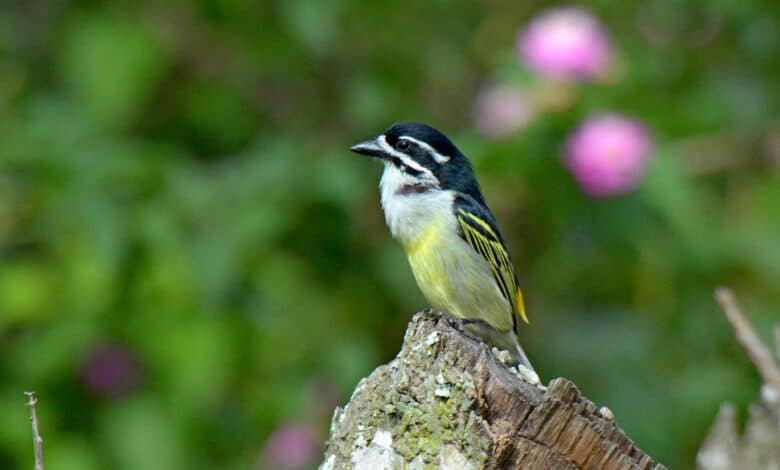
THIS week we look at a bird that is often heard but not easily seen, the Yellow-rumped Tinkerbird.
Description
The Yellow-rumped Tinkerbird has a typical Barbet shape (it is related to the Barbets) with a very powerful looking black bill and a short stumpy tail. They are relatively small compared to other Barbets with a typical length of 12cm and a weight of 15g.
As the name suggests its lower under feathers are a golden yellow, but it is the head and wings that are very striking. The head is dark black spreading down to the back and upper feathers.
There are two very distinguishing white stripes which start from the eye area and spread to the back of the neck. The flight feathers are black with yellow outer edges adding to the striking appearance of this bird.
Also read: Chirping with Kloof Conservancy – the Spectacled Weaver
Distribution
In South Africa the Yellow-rumped Tinkerbird is restricted to a very narrow strip along the KZN coast through to the Mozambique border. The Highway area is its western limit.
Habitat
This is a forest species and will only be spotted in the upper parts of evergreen forest canopies. Because of its small size it is difficult to spot but its call is very unique and repetitive.
Feeding
The Yellow-rumped Tinkerbird is omnivorous, feeding mainly on fruits, but will opportunistically hawk insects in flight.
Breeding
This species is monogamous and pairs for life. The nest is built in a cavity in a branch of a tree, often excavated by both adults. Two to five eggs are laid which take about 12 days to hatch. The nest area is defended very aggressively by the male.
Predators and threats
This species is listed as ‘least concern’ by the International Union for Conservation of Nature but it is vulnerable to habitat loss when forests are cleared for development or agriculture.
Local information
This is quite a special bird to find because it is not very common, and it is difficult to spot – you do need patience! Best areas are our evergreen scarp and riverine forests.
For more from the Highway Mail, follow us on Facebook , X and Instagram. You can also check out our videos on our YouTube channel or follow us on TikTok.
Click to subscribe to our newsletter here