
Chirping with Kloof Conservancy – Yellow-billed Kite
Find out more about this feathered Highway resident below.
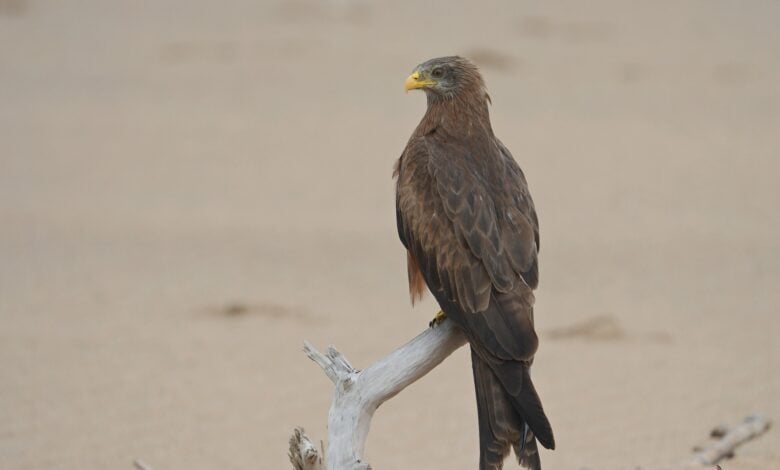
THIS week we review the Yellow-billed Kite which is one of the raptors that have adapted well to living close to humans. They are migrants and usually return to the Highway area in August, which is an eagerly anticipated event not only for birders but many residents who welcome their return. The first returnees have already been reported so do look out for them.
Also read: Chirping with Kloof Conservancy – The Laughing Dove
Description
The Yellow-billed Kite is a medium to large raptor at 55cm and a weight of approximately 674g, with the females usually being larger than the males. Males and females are identical in colouration. They are mainly brown in colour with a grey head and a yellow bill. In flight they have a very distinguishing deeply forked tail.
Distribution
They are found across the entire southern African region, but they are a migrant species arriving in August and departing around April/May. Most of the birds from the Highway area migrate to central-east Africa (Sudan/Uganda/Burundi)
Habitat
The Yellow-billed Kite is a very adaptable species and can make itself at home in a wide range of habitats. They are very common in forested areas and have adapted well to live in suburban gardens.
Feeding
This species has quite a diverse food range from termites and locusts to small birds, lizards and frogs. They are also adept at stealing food from other predators!
Breeding
The Yellow-billed Kite is monogamous and pairs for life. They tend to use the same nest or same site over a number of years. The sizable nest is built by both adults usually in the canopy of a tall tree. The female lays two to three eggs which take up to 38 days to hatch. The nest is defended very aggressively by both adults who will even swoop aggressively on humans if they approach too close to the nest. The chicks are provided with food by both adults.
Predators and threats
This species is not considered to be under threat and is not preyed upon by larger raptors.
Local information
They are very common in the Highway area and during August to March they can be seen daily flying over gardens, parks and roadways. They also hunt on school fields, often swooping to steal unguarded lunches!
Interesting facts
Because they often fly quite slowly the Yellow-billed kites provide fascinating acrobatic flight displays using their tails as a rudder to make sharp turns in mid-air. They are also often ‘mobbed’ by groups of smaller birds such as Drongo’s who chase them away from their nesting sites.
For more from the Highway Mail, follow us on Facebook , X and Instagram. You can also check out our videos on our YouTube channel or follow us on TikTok.
Click to subscribe to our newsletter here