
Kloof Conservation Trust turns 25
African Conservation Trust celebrates 25 years of driving food security, sustainability, and community empowerment.
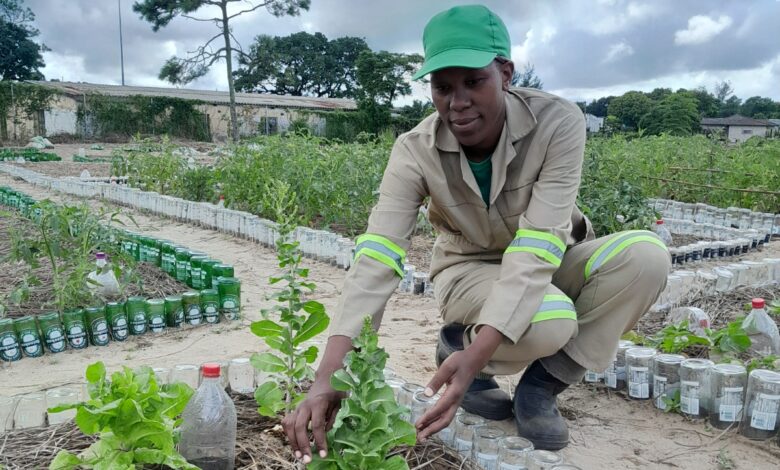
KZN-BASED African Conservation Trust (ACT) marked a 25-year milestone in October, the same month as the international celebration of World Food Day 2025.
As one of the most popular events on the United Nations calendar, this iteration of World Food Day was themed ‘Hand in Hand for Better Foods and a Better Future’, acknowledging agrifood systems are challenged by climate events, military conflict, and economics.
The theme is a sentiment ACT endorses, working in rural areas, establishing networks of homestead and community vegetable gardens, and supporting food security through agro-ecological training, seedling supplies, and paving a way to market.
The award-winning NPO was recently recognised at the Annual Kudu Awards for their food-security projects in communities bordering the Kruger National Park. ACT also has an impact around the KZN rhino reserves. The NPO’s broad trans-provincial footprint sees the implementation of programmes in KZN, the Free State, Limpopo, Mpumalanga, and the Western Cape.
Also read: IN PICS: Headway Natal’s market a success
These include bush thinning and alien plant eradication, soil erosion rehabilitation, monitoring of San rock art sites in Drakensberg’s traditional authority areas, and installations of energy-solutions in the Township Energy Fund (TEF).
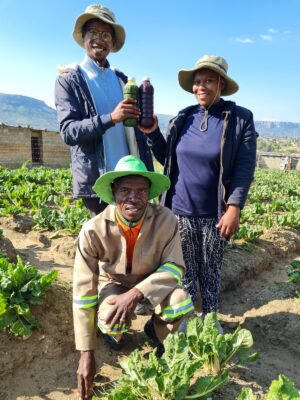
The NPO was founded as a volunteer entity, which initially recorded hippo and brown hyaena populations in Botswana and Malawi, before shifting focus to South Africa. Past projects include 3D mapping of heritage buildings and battlefields, the co-founding and administrative support of Project Rhino, the initiation of the Upper uThukela Catchment Forum, influencing the founding of FrackFree SA, and the Imfolozi Wilderness Community Alliance. In tandem, ACT chairman Carl Grossmann and CEO Francois du Toit aim to define the narrative around the Conservation Economy.
Du Toit said ACT grew from a vision of people thriving on a living planet.
He describes the Conservation Economy as “socially inclusive, restorative and regenerative, but is above all respectful. It has a hyper-local context and is meaningful”.
Also read: Local NGO receives top conservation award
Although ACT continues to partner with many charitable entities, the NPO is currently a Strategic Implementing Partner (SIP) for the Social Employment Fund (SEF). SEF, a nationwide mass-employment programme, aims to empower lives. Managed by the Industrial Development Corporation, and implemented by civil society organisations, ‘work for the common good’, is rewarded with a government stipend. Thus far, SEF has created more than 114 000 jobs for South Africa’s unemployed, and Du Toit views the initiative as valuable, stating that many past participants secure higher-paying, permanent positions.
During previous phases, ACT managed 3 000 participants engaged in initiatives to improve their communities, with participants donating surplus vegetable produce and actively volunteering, achieving 204 902 donated volunteer days thus far.
Sustainability remains an important focus in project design, especially regarding community gardens. Grossmann said, “The aim is cultivation of a large enough area to generate income equivalent to the current SEF stipend, at project end. Some of the crop is given to vulnerable community members, some will supplement participant households’ nutritional capacity, and excess vegetables are sold for profit: but the total crop value is what counts, as a direct saving for participants, whatever they choose to do with it. Furthermore, the food produced is nutrient-dense, chemical-free, and has no plastic packaging.”
For more from the Highway Mail, follow us on Facebook , X and Instagram. You can also check out our videos on our YouTube channel or follow us on TikTok.
Click to subscribe to our newsletter here