
Chirping with Kloof Conservancy – Grey Waxbill
Find out more about this feathered Highway resident below.
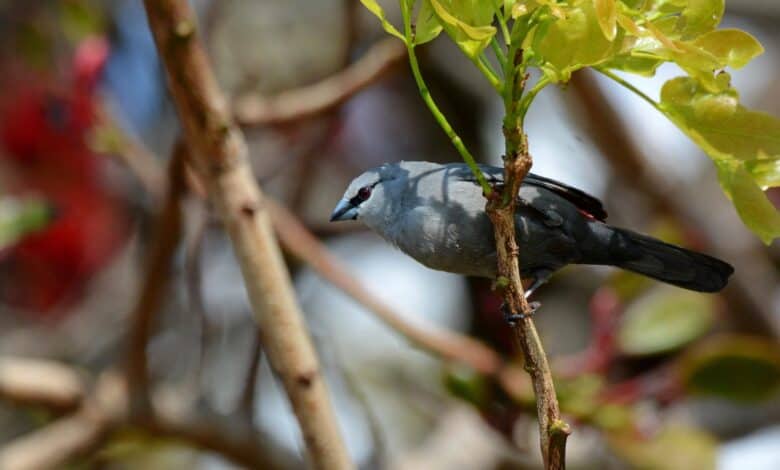
IN this article we review a very quaint and sociable bird, the Gray Waxbill.
Also read: Chirping with Kloof Conservancy – White-necked Raven
Description
The Grey Waxbill is a very small bird at 11cm and 7.5g and its predominantly grey colouration can make it difficult to spot. It has a very distinguishing feature in a bright crimson rump. The overall coloration is a dull grey with the head slightly lighter and almost “pearl-grey”. The tips of the tail feathers are black, and the bill is blue grey. It has a distinguishing thin black stripe behind the eye. Males and females are identical in appearance.
Distribution
In South Africa the Grey Waxbill is found only in a very narrow coastal strip from Umtamvuma in the south to the Mozambique border.
Habitat
The Grey Waxbill enjoys a well-covered, lush, evergreen forest which includes grasses on which it relies for feeding. It can often be spotted in small groups.
Feeding
This species feeds mainly on the ground, taking seeds from low growing grasses. It will also opportunistically take small insects such as ants and termites on trees and will also feed on nectar-producing plants.
Breeding
Although the Grey Waxbill is quite a sociable bird it does prefer to nest on its own. It is monogamous and pairs for life. The nest is built by both adults in small shrubs and not far from the ground. Two to five eggs are laid, which take about 12 days to hatch after which the chicks are looked after by both adults.
Predators and threats
This species is not considered to be under threat even though it is estimated that the population is gradually declining. It is listed by the International Union for Conservation of Nature as “Least Concern”. Nevertheless, they are susceptible to habitat loss due to housing or industrial development and are also preyed upon by many of the smaller raptors and snakes such as the Green Mamba.
Local information
The Grey Waxbill is not very common in the Highway area so you will need to find its ideal habitat to stand a chance to spot it. Look for them on well forested grassland edges such as the Msinsi Grassland or Krantzkloof Nature Reserve
Interesting facts
The name “waxbill” appears to have been first used in describing the Common Waxbill which has a very bright red beak. The initial descriptions suggested that the colour of the bird’s bill looked like the red sealing wax used for seals on old documents and that name was then applied to all in the waxbill family.
For more from the Highway Mail, follow us on Facebook , X and Instagram. You can also check out our videos on our YouTube channel or follow us on TikTok.
Click to subscribe to our newsletter here