
Chirping with Kloof Conservancy – The Egyptian Goose
Find out more about this feathered Highway resident below.
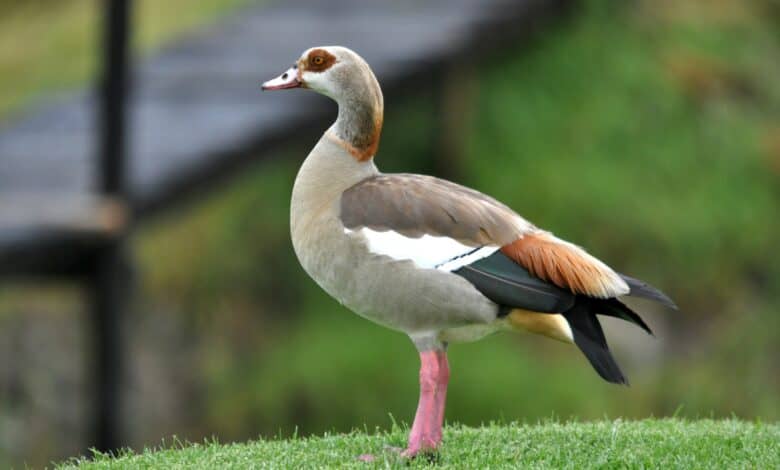
IN this article we review one of the most common and nosiest birds in our area, the Egyptian Goose, which is not actually a goose but closely related to the shelduck family!
Also read: Chirping with Kloof Conservancy – National Bird Day
Description
The Egyptian Goose is a large bird at 68cm tall and with a weight of 2.1kg. It is mainly different shades of brown with a dark brown patch on its chest. They are easy to identify, and distinguishing features are the reddish-brown eye patches and pink feet. Males and females are very similar and difficult to tell apart other than when they are calling. Males tend to make a hissing sound while females make loud honking noises.
Distribution
The Egyptian Goose is indigenous to Africa, mainly the eastern and southern parts of the continent but it has been introduced in many parts of the world. It is found across all areas of South Africa.
Habitat
This bird can be found across a wide range of habitats, but it does enjoy having access to water so is most commonly spotted near dams, lakes and ponds.
Feeding
The Egyptian Goose feeds primarily on grasses, seeds and aquatic plants.
Breeding
These birds are monogamous and pair for life. Nests are built by the female on the ground and usually near water. The nest is somewhat untidy and made from leaves, grasses and reeds. Eggs are laid at any time of the year and clutches can number as many as 22 eggs, but the average clutch is approximately six eggs. Incubation is done exclusively by the female and the eggs take approximately 30 days to hatch. The chicks are looked after by the parents for about 70 days.
Predators and threats
The adults are fearsome defenders of their territory and scare off most predators, but the chicks can be quite vulnerable as they are often in the open and exposed to threats from raptors, baboons and dogs in urban environments.
Local information
The Egyptian Goose is very common in the Highway area and can often be found with their young in school or private pools, local golf courses and in our parks and gardens.
Interesting facts
These birds are well known for following hippos when they are out of the water as the large mammals disturb the soil, making it easier for the Egyptian Goose to feed on the plants and seeds which are churned up by the hippos.
It is believed that the Egyptian Goose was first recorded by the Ancient Egyptians, which explains its name. The Ancient Egyptians considered these birds to be sacred, and they appeared in much of their artwork.
For more from the Highway Mail, follow us on Facebook , X and Instagram. You can also check out our videos on our YouTube channel or follow us on TikTok.
Click to subscribe to our newsletter here