
Chirping with Kloof Conservancy – National Bird Day
Celebrate National Bird Day with a closer look at four iconic bird species found in the Highway area, like the African Crowned Eagle.
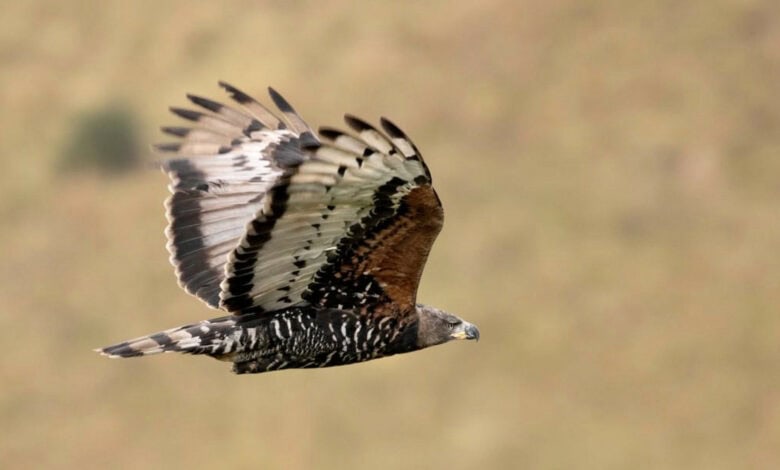
IN celebration of National Bird Day, we feature four iconic species of the Highway area, the Strong, the Tall, the Small and the Beautiful!
Also read: Chirping with Kloof Conservancy – Grey Waxbill
African Crowned Eagle – We start with the strongest raptor of our area, the African Crowned Eagle. Although not the biggest raptor (the Martial Eagle has a bigger wingspan) the African Crowned Eagle is considered to be by far the strongest because of its incredibly powerful talons. They have very large legs and a lethal weapon in their hind talon which can be up to 6cm long. Their strength enables them to lift prey of up to 20kg. We are fortunate that the Durban area has the highest concentration of African Crowned Eagles in Africa.
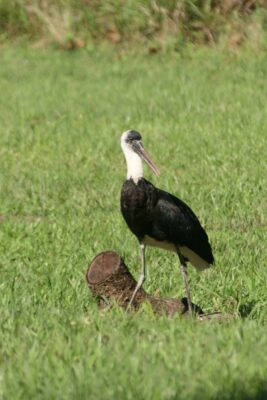
Woolly-necked Stork – Next, we feature the tallest common bird in the Highway area, the Woolly-necked Stork. Standing at approximately 95cm the Woolly-necked Storks look down on all the other commonly found bird species in our area. They used to be migratory, but they have found the perfect habitat in the Highway area and are now permanent residents and growing in numbers. Many have become very accustomed to humans, and they are often found in local gardens.
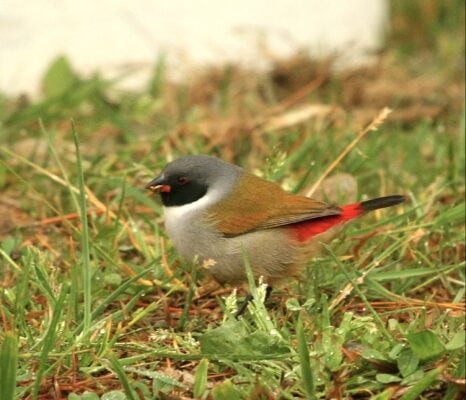
Swee Waxbill – Our smallest species of birds are the Mannikins and Waxbills and here we feature the Swee Waxbill. At just 9.5cm and a weight of 6.5g these are tiny compared to most of the other birds in our area. These pretty birds are often found in small flocks in grasslands and on forest edges. They are primarily seedeaters but will also eat small insects. Its name is derived from its call which is a soft swee swee which usually increases in volume as the call progresses.
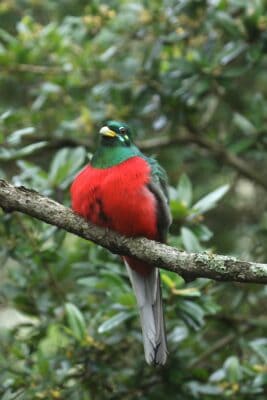
Narina Trogon – Arguably our most beautiful bird is one that is much sought after by birdwatchers around the world, the Narina Trogon. The male has a vibrant crimson red chest with metallic green plumage on its neck and back. In addition, when it calls during the breeding season the male exposes a bright turquoise throat, completing a stunning kaleidoscope of colours. This is a forest dwelling bird and has been particularly active this summer in the Highway area.
As a conservancy we advocate the non-feeding of all wildlife. We are fortunate that there is plenty of natural food in our area and there is no need to feed birds. Bird feeding stations can also spread diseases and some birds, particularly the smaller ones, become more vulnerable to hunting birds as they feed at static points.
For more from the Highway Mail, follow us on Facebook , X and Instagram. You can also check out our videos on our YouTube channel or follow us on TikTok.
Click to subscribe to our newsletter here