
PHOTO: Submitted
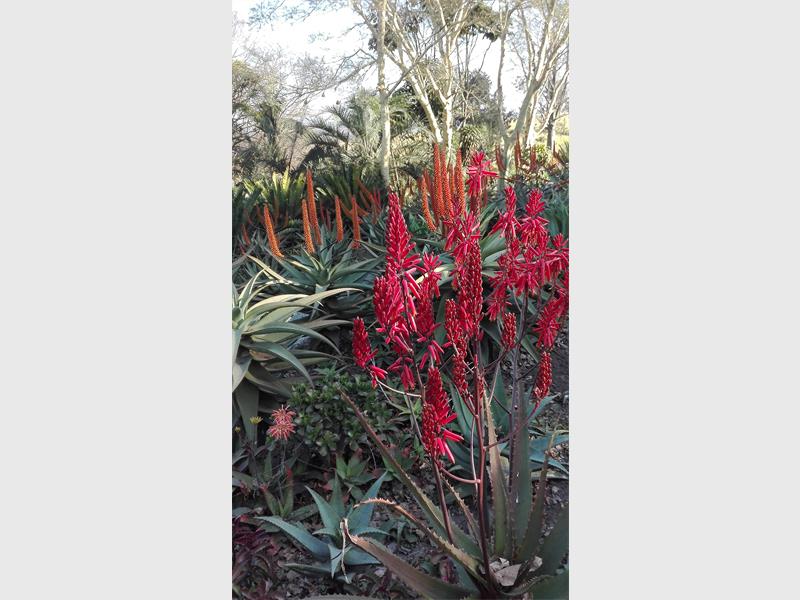
IT’S winter and the aloes are in bloom.
While exotics struggle to survive in the drought, aloes thrive in the harshest conditions.
No water, all the better. It’s not only their striking racemes of flowers; they also provide nectar for the bees to make honey.
Why people still fill their gardens with thirsty exotics which do not sustain wildlife I cannot understand.
Our beautiful, neatly trimmed gardens are actually barren deserts.
Recently I went to the Gwahumbe Nursery in Mid Illovo and I was taken aback.
It’s not just a nursery but a huge aloe farm in the remote Illovo River valley. Instead of crops, Keith Bales cultivates aloes and other indigenous plants on the arid slopes.
He is in love with aloes and makes money out of them, supplying nurseries and landscapers all over the country.
I have also visited Cato Ridge Electrical, not to buy electrical goods but to admire their glorious indigenous garden filled with aloes, succulents and cycads. It’s incredible how a creative landscape artist can turn a drab piece of ground on a hillock into a wonderland.
But it’s the award-winning Hackland Garden, one of the venues at the Ashburton Aloe Festival, which took my breath away. If you are not left spell-bound by this spectacular display then nothing else will.
Of course, there’s the Creighton Aloe Festival which celebrates these incredible plants.
Each year the crowds get bigger at these festivals.
Those who say our local plants are boring and only the English rose, pansies and chrysanthemums are beautiful should visit these places, especially Cato Ridge Electrical, Rocky Wonder and Hackland Garden, and see for themselves how aloes can make your garden magical in winter.
T Markandan
Chatsworth