Watch: Monkey business is serious business
According to primatologist Wayne MacLeod, monkeys should not be kept as pets
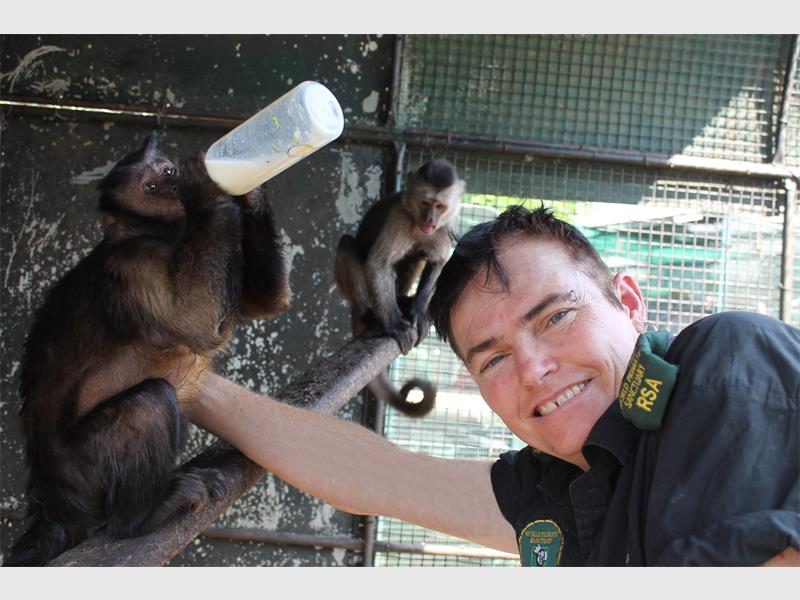
THE World Primate Sanctuary in Esther Park is a non-profit organisation and safe haven for orphaned monkeys that need a home, predominantly monkeys that are sick or have attacked their owners.
The founder, nutrition counsellor, fitness instructor and primatologist Wayne MacLeod said owners did not realise that the monkeys needed special care and this led to the abuse and neglect of these animals.
“We provide a happy, healthy environment for monkeys in the company of their own species,” said MacLeod.
Also read:
• You could give your pet money the kiss of death
• Monkey saved at sanctuary
• Watch as monkey is kidnapped in India
The sanctuary was originally the Marmoset Care Centre but in 2001, after realising she was looking after a variety of exotic monkeys, Macleod decided to change the name. She moved to Kempton Park in 2007 with around 30 monkeys.
The safe haven currently has around 60 small exotic monkeys, including marmoset, squirrel, tamarin and Capuchins.
In 1986, at 21years old, MacLeod headed to the Amazon jungle on her own to explore the wildlife.
“I went for the adventure and excitement. I stayed for almost a month, slept in the jungle as well as the beach with the Indians. I used signing and drawings in the sand to communicate,” she explained.
This, she said, was her first encounter with monkeys. She then got a squirrel monkey as a pet.
More photographs of the monkeys at the sanctuary
“Nobody knew anything about them, how to feed them or take care of them.”
In 1990 she headed to the Amazon for a second two-week visit to explore and learn the progression in wildlife regarding monkeys. A few years later she headed to London to read up about the primates. At this point in time, people started giving her their monkeys to look after. She also volunteered at Onderstepoort as a vet’s assistant.
MacLeod said many people were not educated about monkeys, including veterinarians. “Monkeys are too easily obtainable without permits or licences in Gauteng, which leads to wrong caring and impulse buying.”
As part of the objectives of World Primate Sanctuary, the organisation also provides education to owners, schools and vets. According to MacLeod, monkeys should not be kept as pets. “If you really want to keep one, you have to get two monkeys and not just one and you need to do your homework well.”
The monkeys have to be kept in a cage in a controlled environment. The biggest misconception, she said, was that people thought monkeys could be kept as pets to run around the garden.
“They are cute to a degree when they’re small but become aggressive later. People dress monkeys and put jewellery on them, which is not right.”
MacLeod reckons keeping monkeys as pets shortens their life span. “They could drown in your pool, get hit by a pellet gun, get stung by a bee, get taken by eagles, drown in the toilet or even burn their hands.
“They are much like humans. They contract illnesses and diseases such as flu, cancer, diabetes and cardiovascular diseases. If you do not act quickly, they die quickly.”
Explaining why the monkeys sometimes became violent, MacLeod said it was because they were taken away from their mothers and their own kind at a young age.
“It’s like giving the baby of another species to another world, it’s supposed to learn from its parents. Monkeys should be with their own kind,” she added.
Some owners, she said, removed their pet monkey’s teeth and even gave them a vasectomy in the hope of taming them but to no avail.
The monkey lover pointed out that her team also acted on calls to rescue monkeys or check on complaints and provide a helpline service. “Our future goals are to better our cages and premises and open up more dedicated care centres in different provinces.”
MacLeod said it was costly taking care of the monkeys and that she cooked one full chicken a day to feed the primates.
“They eat almost everything from fruit, bully beef, eggs, yogurt, fish fingers, mixed veg, potatoes, rice, spaghetti, macaroni, mielie pap and even cereal. Their diet is exactly like ours,” she explained.
The monkeys need a balanced amount of proteins, starch, fruit and vegetables on a daily basis. “The big expense is the cereal and baby milk, they eat anything but chocolate flavoured cereal.
“We are in need of volunteers and rely on the public for assistance in taking care of the monkeys.”
“It doesn’t feel like a job, it feels like love. I still cry when I lose a monkey, no matter how many I have.”
MacLeod believes taking care of monkeys is her calling and teaching others to do the same is her purpose.
“I am here on earth to help the monkeys. I can only do that through people. I need to spread my knowledge to people,” she said.
You may contact MacLeod on 084-597-4044 or you can send an email to monkeymacleod@imaginet.co.za if you would like more information on how to contribute as a volunteer or donor to the sanctuary or if you would like her to conduct a school talk.