
Water bottles: worse than a dog’s bowl
Drinking from a refillable water bottle can be ‘many times worse than licking your dog's bowl’.
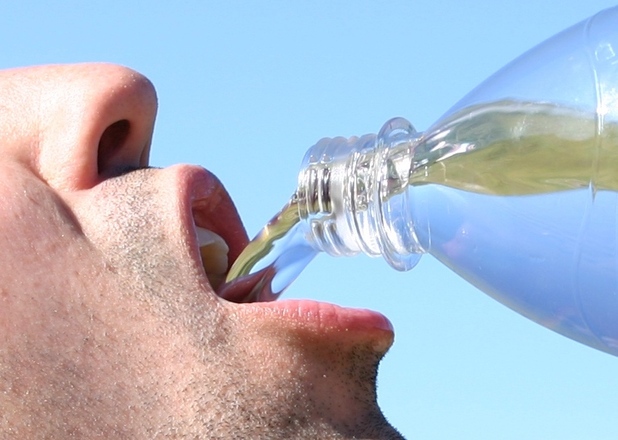
Many health- and weight-conscious people worldwide have switched from drinking cooldrinks to drinking water, and those claiming to be ecologically aware have opted to carry refillable water bottles.
New research from the United Kingdom has proved that drinking from refillable bottles can be ‘many times worse than licking your dog’s bowl’, because of the amount of bacteria that the bottles carry.
12 water bottles of four different types – screw-top, slide-top, squeeze-top, and straw-top, were tested. Each water bottle had been used by an athlete for a week without being washed.
The findings were as follows:
•Slide-top bottles were found to have the highest germ content, with more than 900 000 colony-forming units per square centimeter (CFU/cm2) on average.
•Squeeze-top bottles had 162 000 CFU/cm2.
•Screw-top containers hosted just under 160 000 CFU/cm2.
•Straw-top bottles were found to contain a fraction of the bacteria of other bottles – just 25 CFU/cm2.
All the bottles were found to be carrying gram-positive cocci, which can lead to skin infections, pneumonia, or blood poisoning. The study therefore concluded that drinking from these bottles can be worse than eating or drinking from your pet’s bowl. South African National Bottled Water Association (SANBWA) executive director,
Charlotte Metcalf, conceded the risk is real but said that – given the health benefits of drinking water – it would be a shame to ditch the water bottle. “The health benefits of drinking water – from any clean and reliable source – cannot be overlooked,” she said.
“Internationally renowned scientists restated the importance of adequate hydration to maintain good health and well-being at the 12th European Nutrition Conference FENS held in Berlin late last year. “Locally, the importance of water in the daily diet was highlighted in the Department of Health, which put water – in all its forms – at the top of the list when it comes to serving beverages at meetings, conferences or in cafeterias or canteens, as well as the list it compiled in respect of beverages provided through vending machines and kiosks3.”
Metcalf said that, rather than not carry a water bottle, people should simply ensure they wash their bottles regularly or purchase bottled water on-the-go and ensure the empty bottle lands up in the recycling stream. “Bacteria thrive in warm, moist environments; that is, in virtually any beverage container under the right conditions. Wash all your containers, not just your PET bottles, with hot soapy water and dry thoroughly between each use. “Further, when looking for a bottle for long term use, pay attention to the design of it and its closure. Make certain you can easily get into all ‘nooks and crannies’ in order to be able to clean it properly.
“You can even re-use the bottled water bottles you have purchased, if you take the same steps outline above to prevent the growth of bacteria.
“Like the planet we inhabit, our bodies comprise mostly water. The brain is 85% water, our blood is 90% water, and the liver, one of our most vital organs, is 96% water. “Water is therefore a vital component of our diet, as well as the healthiest beverage option for societies plagued by diseases such as obesity and diabetes. It’s therefore important we take steps to ensure we can continue to drink it.” Metcalf added that inert PET, used to make bottled water bottles, is a well-accepted and safe packaging4 used all over the world.
“Bottled water also is the best packaged beverage option for the environment; it has the lightest environmental footprint of all packaged beverages — one that can be reduced by 25% if consumers were to simply recycle the bottle,” she said.