
Guide dogs are allowed everywhere
Guide dogs in training must be allowed in public areas.
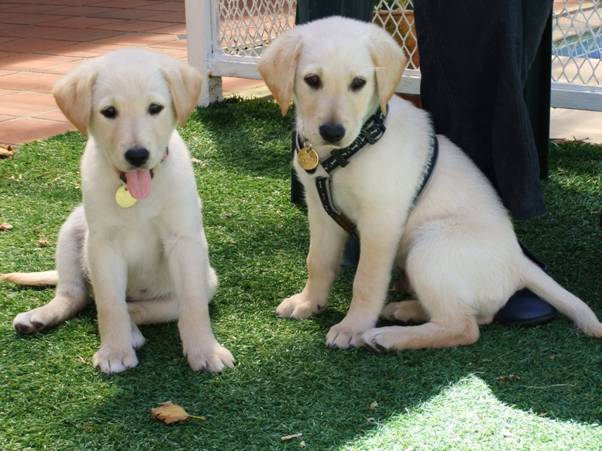
Imagine living a life in complete darkness. Imagine not being able to go to shopping malls or attend a concert. Imagine life being even more difficult without the help of a guide dog.
Guide dogs are assistance dogs trained to lead blind and visually impaired people around obstacles. They also assist people in wheelchairs. Golden Retrievers, Labradors and German Shepherds are most likely to be chosen by service animals facilities as guide dogs.

The News recently received a complaint about a puppy trainer being refused entry to a shopping mall with the dog she was training. The guide dog was wearing its guide dog vest and the trainer had a letter from the Guide Dog Association (GDA) explaining the purpose of exposing the puppy to all kinds of environments.
“The puppies need to learn to be able to serve their blind or wheelchair owners in the best possible way. Taking the puppies to different places help them to get used to different smells, people and things that they do not know, and to help them not to be scared of new noises,” puppy raiser Aloysha Jooste said.
A puppy raiser is therefore allowed to take the dog everywhere blind people with guide dogs go. This includes public areas.
Recently, local ward councillor Jacques Hoon fetched a guide dog puppy from the GDA that will be trained as a guide dog. He supports their cause to educate people about guide dogs.
The GDA encourages all citizens to show consideration for people using guide dogs and for puppy trainers, and allow them to participate in all activities.
Dogs can be trained to become —
• Service dogs: A service dog is a type of assistance dog specifically trained to help people with disabilities, such as visual impairment, hearing impairments, mental illnesses, seizure disorder, mobility impairment and diabetes
• Autism dogs: The autism support dog’s primary role is to help with the serious tendency of children with autism to bolt or run away. Future breeding stock dogs will be used for breeding the new generation of guide dogs
Each working dog spends the first year of its life in the care of a puppy raising family. The eight-week-old puppy will live with the raisers who will socialise it so that it has the best chance of becoming a working dog. When the young dog is a year old it will be returned to the GDA for its formal training of about six months. Successful dogs will graduated as Guide Dogs, Service Dogs, Autism Support Dogs or future breeding stock. Dogs not suitable for becoming working dogs will be re-homed as family pets.
Anyone may become a puppy raiser, but needs to meet the following criteria:
• Must be a dog lover and must care about the challenges disabled people face
• Must have time to socialise the puppy and attend weekly training sessions
• Must be happy to let the puppy live inside their home and travel inside their car
• Must be able to give the dog a safe environment
• May not have other aggressive dogs
Do you perhaps have more information pertaining to this story? Email us at krugersdorpnews@caxton.co.za or phone us on 011 955 1130.
For free daily local news on the West Rand, also visit our sister websites:
Randfontein Herald, Roodepoort Record, Get It Joburg West Magazine
Remember to visit our Facebook, Twitter and Instagram pages to let your voice be heard!