
Working with the people behind the crimes
"Irrespective of the crime a person has committed, he/ she still belongs to a family and the community that loves him/ her."
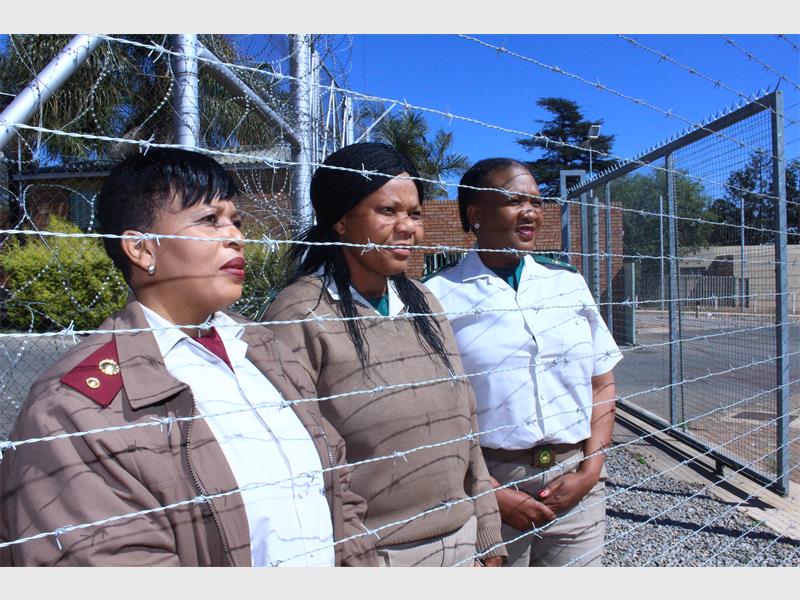
With a clinking of keys, a tall woman opens the gate of the Krugersdorp Correctional Services in the early morning of Monday, 4 September.
She walks tall as she approaches a door with a plaque which reads ‘Assistant Director’. She opens the portal to a neat office where she quickly makes herself at home.
“It has been my dream to change lives and bring transformation into other people’s lives since I was a little girl,” said Cynthia Gwebu as she starts telling the story of how she ended up being a female director at a prison for men.
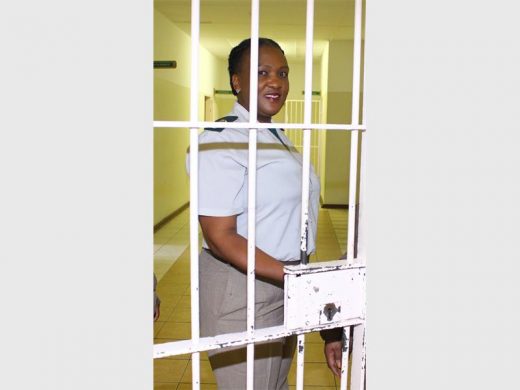
“I wanted to work with people who had lost hope and were regarded as write-offs by others. I was interested in the process of seeing a person changing from being a criminal to being a law-abiding citizen.”
To her, working with the person behind the crime contributes to the person’s rehabilitation and not everyone can say they have such an exciting job.
To prove her point she starts telling a heartwarming story about a prisoner’s life that really touched her.
“There was an offender who had spent his entire life in and out of correctional centres. He left his family in Limpopo when he was 13 and came to Johannesburg. Because he was incarcerated most of his life, he hadn’t seen his family in more than 40 years. When he was 65 years old, he was completing his last long-term sentence of 20 years. He had nowhere to go when he was released on parole, and at the time I was his social worker.”
Cynthia said they went together to Limpopo, knocking from door-to-door, asking if the occupants knew him as they searched for his relatives.
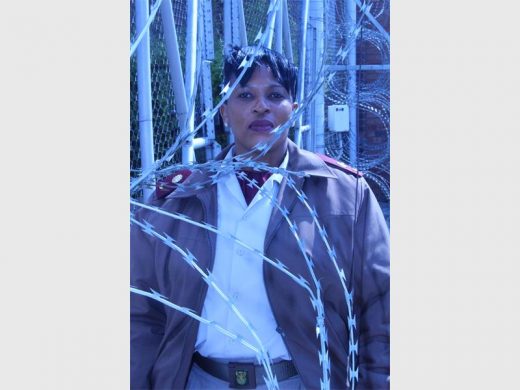
He remembered where his home had been, but unfortunately there were no houses there any more. “We went to the chief who in turn called the eldest member of his clan to try and identify him.”
One of the women in the clan came forward and said she was the man’s sister. She was, until that moment, the sole surviving member of her family, but at long last, she had found her brother.
After telling the story and drinking a good cup of tea or two, Cynthia said one of the other female officers had a few good stories as well.
“You might be surprised to learn that most of the prison’s staff are women,” she said while walking to her colleague’s office.
Jeanette Mako, community corrections officer was at the door to meet her. Jeanette previously worked in a female prison, and said that female and male prisons are more or less the same for her.
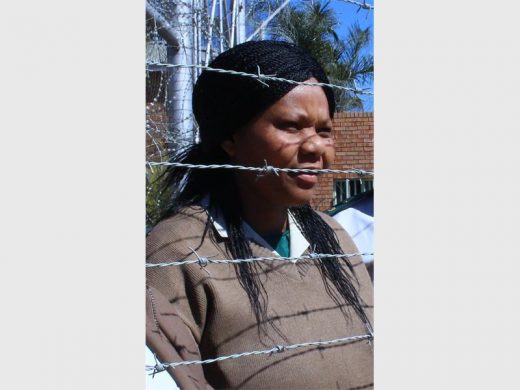
“I worked at the Johannesburg Female Correctional Centre,” she said. “The rules are the same, but the characters of female and male prisoners differ.”
She said the section that touched her the most was the mother and baby section of the prison. “Some women are arrested with their babies and some come in pregnant and deliver their babies while incarcerated.”
Jeanette said that this and other factors require a special skill-set. To her, communication skills play a major role in terms of report writing and verbal communication for all staff members.
“In addition, one needs to know how to manage diversity and handle conflict, because prison accommodates people from different backgrounds with different cultures, religions, languages and races.”
She used the example of females who enjoy being kept busy. They do activities relating to maintaining their beauty. “In most sections you will find women plaiting each other’s hair, doing their fellow inmates’ make-up and mostly competing on cleaning their cells. Some will even attend programmes and school.”
Male prisoners are however more impatient.
She said this contributes to the likelihood of conflict occurring. “One needs the patience to enable one to facilitate rehabilitation. as all people aren’t the same.”
She then introduced Portia Hlatshwayo, who had just walked into the room. Portia is the nursing manager of the Krugersdorp Correctional Centre.
To her, it’s overwhelming to see thousands of men, who all have different challenges (social, psychological and physical ill-health), kept in a facility.
“Those who have been released greet us with smiles and tell their friends that I took care of them while they were incarcerated,” she said. “Amazingly, they are not shy about it.”
She said being mentally and physically strong, very disciplined and having self-respect are some of the most important characteristics to have in a prison environment.
“Being open-minded and emphatic also adds to the value of the care of these men.”
She started telling a story of an encounter with one of the juveniles she cared for.
“It was a Saturday morning. I was on my way to render health care services to the offenders in the juvenile unit when I came across a situation in the contact visiting area.”
She said she saw an old woman hugging a very young prisoner. To her, the young man seemed innocent-looking and very handsome. He was the old woman’s only grandson, she was told.
“She started to cry hysterically and screamed very loudly, which led to the offender crying as well,” she said.
It turned out that the boy’s mother passed away when he was eight, and his biological father was not known to the family.
“He was raised by his maternal grandparent as the only grandson. He was a very sweet boy, cooking, cleaning and helpful at home. They could not believe it when he was arrested for robbery. That day was her first contact visit. I also became emotional because I needed to assist with the situation. Irrespective of the crime the person has committed, he/ she still belongs to a family and the community that loves him/ her,” Portia concluded.
The women agreed that the most important part of working at a prison is the reintegration of its inmates into the world, and said that is their sole purpose and passion, and the reason they dedicate their lives to correctional services.
Do you perhaps have more information pertaining to this story? Email us at krugersdorpnews@caxton.co.za or phone us on 011 955 1130.
For free daily local news on the West Rand, also visit our sister websites:
Remember to visit our Facebook, Twitter and Instagram pages to let your voice be heard!