
Two truck accidents a day apart
As the busy festive season approaches, Arrive Alive posted an article about how truck drivers can keep themselves, their load, and other road users safe.
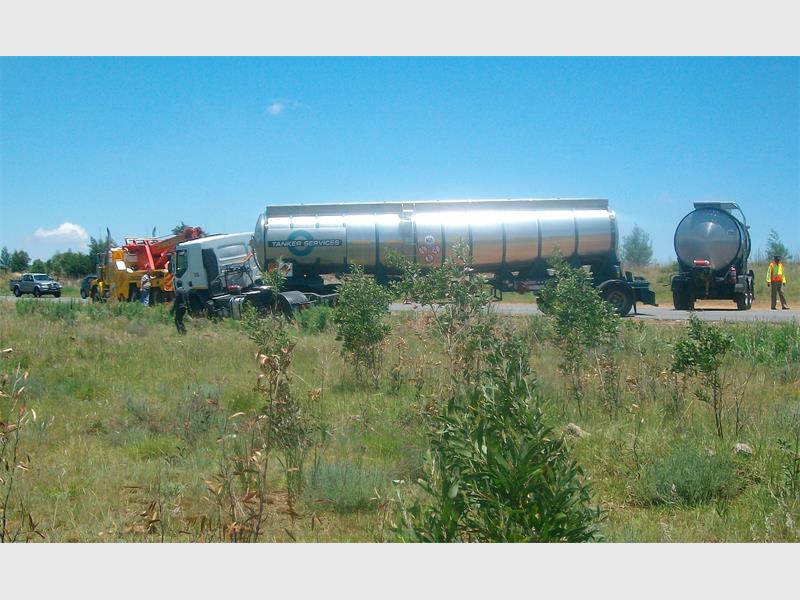
Emergency services urged truck drivers to know their abilities after two truck accidents took place in Krugersdorp just a day apart.
On Tuesday, 28 November, a truck jack-knifed in Chamdor at the intersection of Chamdor Road and Surrey Street in Lewisham.
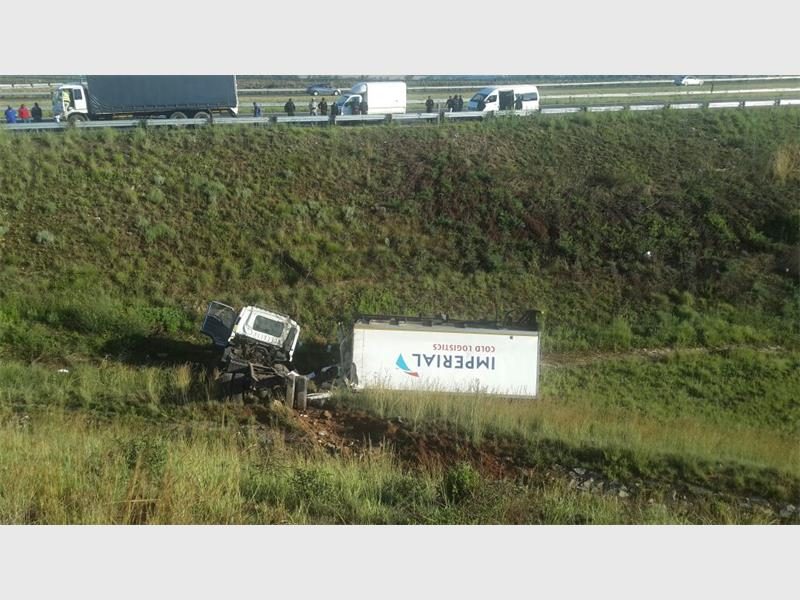
Photo: Submitted
It’s believed the truck driver braked too hard and consequently jack-knifed his vehicle. Traffic officials needed to redirect traffic around the truck because it came to a standstill across the road.
No injuries were reported.
Also Read: [BREAKING] Another truck crash at Pinehaven intersection
In the early morning of Wednesday, 29 November another truck driver lost control of his vehicle and drove off the road on the N14 at the Beyers Naudé Drive exit.
No serious injuries were reported, but the truck sustained substantial damage.
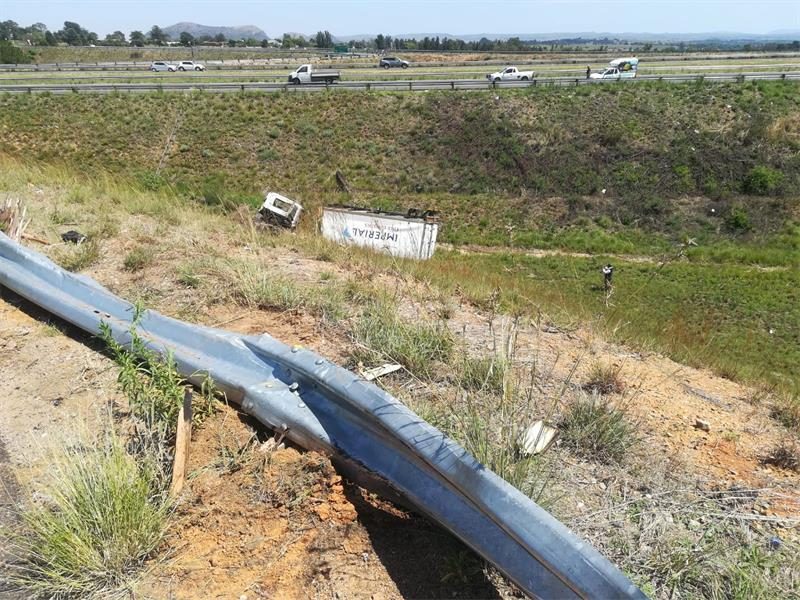
Photo: Submitted
As the busy festive season approaches, Arrive Alive posted an article about how truck drivers can keep themselves, their load, and other road users safe. Here’s a helpful checklist for truck driver safety.
How to check:
Braking systems –
• When starting the vehicle, air pressure must build up to the maximum (cut-out pressure).
• Switch off the engine – air pressure should remain constant.
• Press and hold the brake pedal – air pressure should drop a little and then remain constant.
• If the pressure continues to drop, the system has an air leak!
• Switch on vehicle and pump the foot brake pedal until the pressure drops to half of your system pressure. The low pressure indicator must warn you with a buzzing sound and a flashing light.
• The air pressure should adjust and recharge to maximum.
• Air tanks must be drained daily.
• Brake adjustment must be checked weekly by an authorised workshop.
Tyres –
• Tyre pressure must be to the manufacturer’s specification, bearing the load to be carried in mind.
• Tyres must have a consistent tread pattern over the full width of the tyre and tread depth must not be less than 1mm.
• Tyres must be of the same size and type on the same axle.
• Dual wheel tyres must not make wall contact and correct tyre size and specified air pressure must be ensured at all times.
• Both tyres on a dual wheel must make ground contact when the vehicle is unladen on a flat surface.
• Always check all tyres for lumps, cracks and bulges in the side-walls. Make sure there are no obstructions wedged between dual wheels.
Steering –
• Steering must operate freely from lock to lock.
• There should not be too much free play on the steering wheel.
• The Power Steering Reservoir must be full.
• Check all pipes for stone damage and leaks.
• Regularly check the vehicle undercarriage for any oil or fluid leaks.
• The steering wheel of the vehicle must not be cracked.
Windscreens, Windows and Wiper-blades –
• A cracked or clouded windscreen that obstructs a driver’s day or night view in the “control zone” of vision will not pass a roadworthy test.
• The “control zone” runs from above the steering wheel to just under the sun visor, and falls within the driver’s windscreen wiper area.
• Windscreen and window glass must be clearly identifiable as safety glass.
• Any cracks in side windows that obstruct the driver’s view in the left rear-view mirror will lead to test failure.
• All vehicles must be fitted with at least one windscreen wiper in operation in front of the driver.
• Wiper mechanisms and blades must operate effectively by adequately clearing the driver’s view when in operation.
Visibility
Lights –
• The following lights are compulsory by law and must be in full working order at all times: Main beam and dipped beam (headlights), front and rear park lamps, stop, tail and number plate lamps, indicator and hazard lamps and reverse lamps.
• Make sure all peripherals like reflective tape, reflectors and chevron boards are clean and clearly visible.
• Make sure the correct signage i.e. warning diamonds are displayed and the corresponding documents are in order when transporting dangerous goods.
Bodywork –
• All bolt-on accessories like bumpers, bars and mirrors must be fastened and secured correctly.
• Overhead storage racks must not be overloaded.
• Emergency exits must be clearly marked.
For more information about truck safety, visit Arrive Alive’s website at https://www.arrivealive.co.za/Road-Safety-Checklist-for-Trucks-Buses
Do you perhaps have more information pertaining to this story? Email us at krugersdorpnews@caxton.co.za or phone us on 011 955 1130.
For free daily local news on the West Rand, also visit our sister websites:
Remember to visit our Facebook, Twitter and Instagram pages to let your voice be heard!