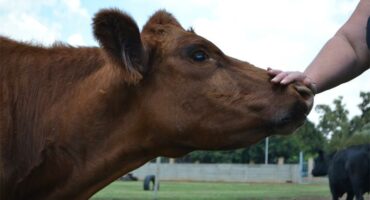
Special needs children benefit from horse therapy during fun exercise
The idea was to challenge every child, no matter how small the task, yet not to make it so difficult that they became discouraged.
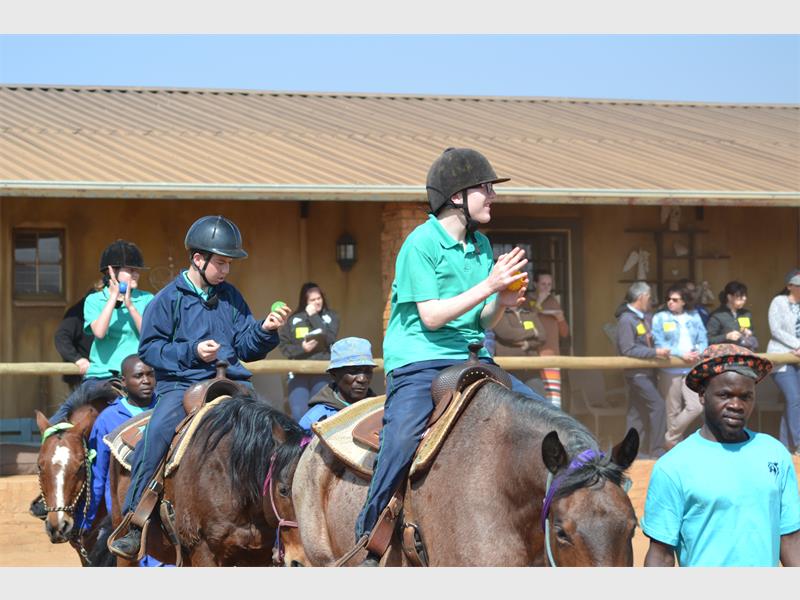
Oppistal, a fully fledged equine recreational and rehabilitation centre, joined forces with a reflex coach to present a new Equine Reflex programme to principals, teachers, pharmacist, psychometrists, counsellors and parents.
During the day, the spectators could see the Oppistal horses in action while the children from Curamus School received therapy that stimulated some of their reflexes in a fun and safe environment.
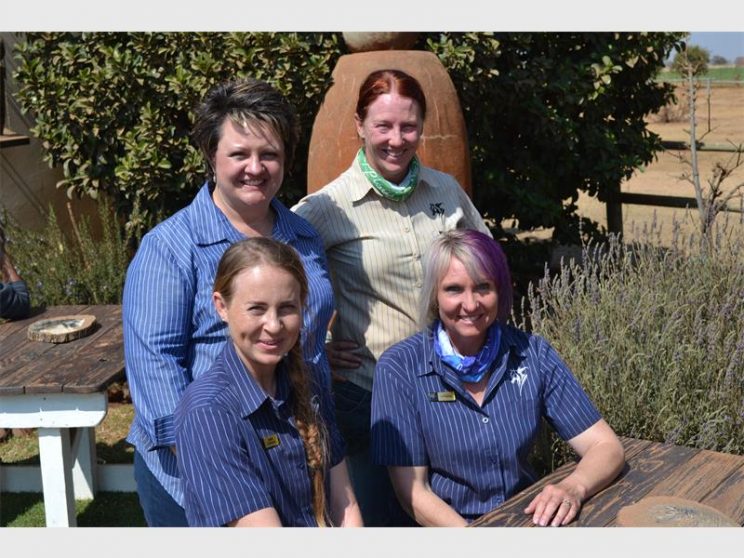
Yolanda Steyn (director at Oppistal) pointed out the benefits of horse riding therapy, while Velicia Clark (reflex coach) described the process of reflex stimulation. The purpose of the programme is to stimulate children from four to 13 years of age, using equine therapy and reflex stimulation to address problematic/ unwanted/ non-conducive behaviours in a fun and safe environment and is conducted by Christian facilitators. The programme focuses on the Fear Paralysis Reflex, palmar (hands) and plantar (feet) and oral reflexes.
Yolanda, Velicia and Anke Fouche (instructor at Oppistal) decided to write the Equine Reflex Programme to address issues that parents and teachers face at home and in the classroom, for example: anger, aggression, fear, anxiety and depression. Children can be out in nature, on horseback and receive therapy while having fun.
Positive feedback was received from the Gauteng Department of Education and all who attended the day.
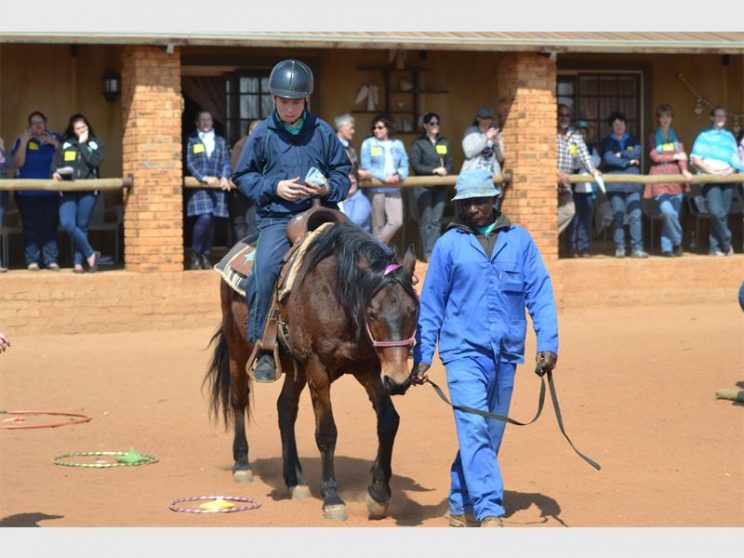
On this day (as with every day), the lesson was carefully thought out and put into action. Anke and Debbie Lynn Kirstein (another instructor at Oppistal) facilitated the therapy for the children.
The idea was to challenge every child, no matter how small the task, yet not to make it so difficult that they became discouraged.
All the exercises and games are planned to work while the children are on horseback. Oppistal chose their best horses for the therapy.
The theme for the day was ‘Under the sea’, and mainly targeted the Moro and Fear Paralysis Reflexes.
Before the children could mount their horses, they had to ‘walk the plank’. This was a thick rope on the ground that they had to balance on as they walked from one end to the other, much like a tightrope walker in a circus. This focuses on their balance.
• How does the programme work?
The children were required to throw two balls of their choice into a tyre. This gives them the feeling of making a decision. The balls vary from small to large, soft to hard, textured, colourful and so forth. This helps develop tactile sensitivity.
They had to then do a serpentine manoeuvre around four tyres in a S-formation and throw their two balls into two different tyres (again their choice). This helps for mid-line crossing.
From there they got four bean bags and had to aim at the hula-hoops on the ground that went from big to small. They had to aim for the ‘bulls-eye’. This also helped with mid-line crossing and focusing.
Next they got a ball on a long string that they had to hang down the side of the horse and follow a figure eight drawn in the sand. This is challenging on its own. However, they added a little twist and they had to wear an eye patch over one eye. During this exercise, the children were referred to as ‘pirates of the sea’.
They followed on with a serpentine of various coloured cones and got to choose as many colourful balls as they wanted. They then had to walk over a green mesh sail while holding their breath as they were now ‘swimming’ in the sea. There were also numerous hula-hoops attached to the side of the arena and they had to throw the balls through these hoops while the horse was still walking.
The lesson ended with a short jog from one end of the arena to the other before they dismounted. The jogging provides them with maximal vestibular stimulation, proprioception and improved balance.
The purpose of the games on the horses is that the children have fun while not realising they are stimulating their brain and body simultaneously.
For more information on the work that Yolanda and her team do, visit https://www.oppistal.co.za.