
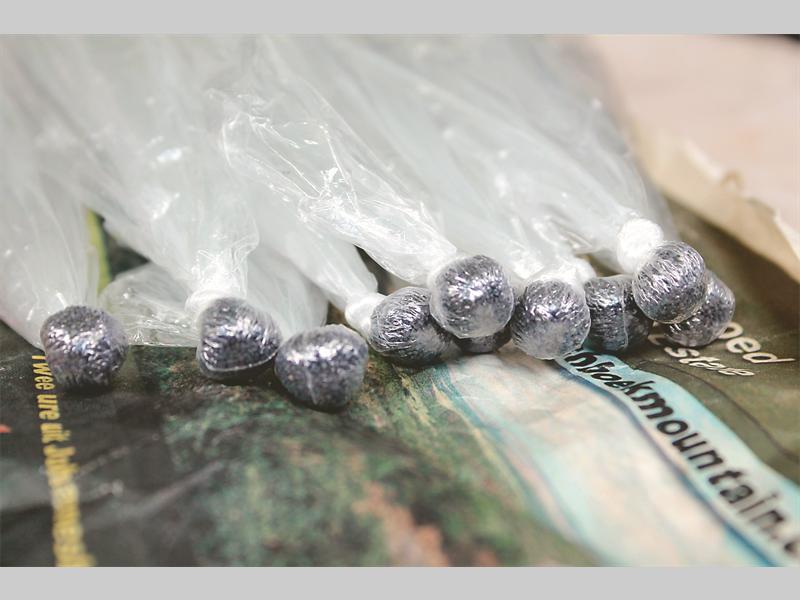
In early August, 40 dogs were poisoned in just one night in the Florida and Roodepoort area.
The Society for Animals in Distress (SAID), whose mission is to provide professional veterinary care and animal care education in indigent communities, stated in their newsletter of 12 August that up to 150 dogs are poisoned in a single night, in various suburbs.
Criminals use Aldicarb to eliminate dogs within residential areas, with the intention of gaining access to these properties for malicious activities. Statistics show that thousands of dogs are poisoned per month by unscrupulous criminals, who have no respect for people or animals. Once the dogs are poisoned, residents are no longer forewarned, and entry is easy and almost immediate.
Also Read:
https://www.citizen.co.za/krugersdorp-news/374974/five-dogs-poisoned-in-mindalore-police-investigating/
The illegal use of “Aldicarb” also known as “Temik”, “Two-Step” or “Maponyane” to maliciously poison dogs, is a major problem in South Africa. This poison is readily available at taxi ranks all over the country. It is packaged in small amounts and sold for as little as R10 to R30. It is a black or dark grey granular substance that looks like small seeds or gun powder.
It takes only a few seconds, from there the name “Two Step”, depending on the amount of poison, to make a dog die a torturous and excruciatingly painful death. Animals die within minutes after ingestion, owing to respiratory failure.
In 2001, Bayer Crop Science, the sole distributor of Aldicarb in SA, began adding an extremely bitter substance (denatonium benzoate) to Temik (in order to prevent its use for suicides or homicides in humans). Unfortunately, most animal species do not possess the specific taste receptors found in humans that detect the bitter taste. This protective measure, therefore, does not absolutely guarantee that animals would not ingest Aldicarb treated with denatonium benzoate.
The Roodepoort/ Krugersdorp SPCA has provided some tips to prevent your dogs from being poisoned. Mandy Cattanach, the SPCA manager, urged residents to do the following:
• Keep dogs in the back yard during the day
• Keep dogs indoors during the night
• Check the entire yard for possible poison before letting them out to roam in the yard
• Make sure there is no unknown bread or meat in the yard, because poison is normally placed there
• If you do find something which seems suspicious, do not pick it up with your bare hands
• If you suspect that your pet has been poisoned, immediately rush it to a veterinarian
The SPCA is also calling on anyone with information regarding the dogs that were poisoned recently in Janet Street, West Street, Maud Street and 6th Avenue, to come forward.
SAID reiterates that the most important practical precaution is to prevent your dogs from getting into the street. Remember, a dog will always go the extra mile for its owner and therefore it is our responsibility as owners, to protect our pets against unscrupulous criminals.