Kagiso cemetery saturated with water; here’s Mogale’s plan …
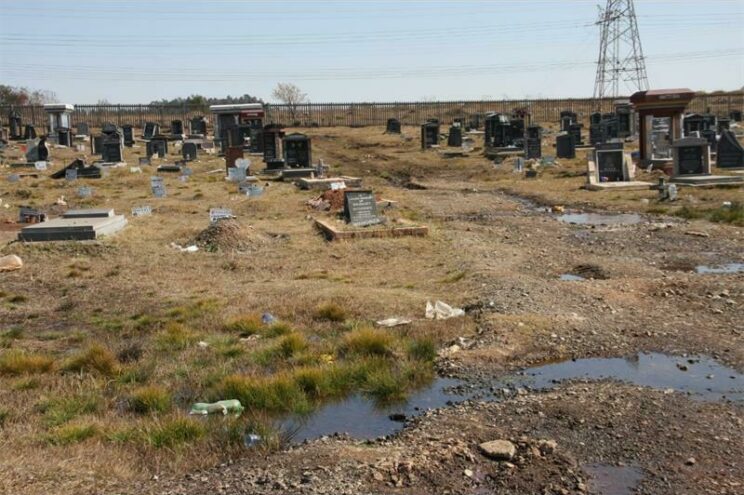
Shallow water tables and continuous rain have caused water to fill parts of the Kagiso Cemetery but the municipality says it has a plan.
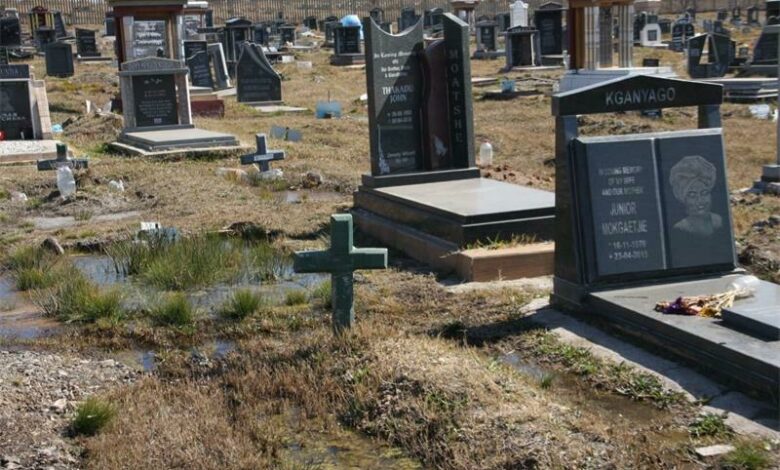
The graves in the north-western side of the Kagiso Cemetery have become waterlogged and Mogale City Local Municipality has now devised a plan of action to remedy this problem.
In a statement issued recently, the municipality said they have experienced a build-up of water in parts of the cemetery for some time which is located about 100m from a wetland system. During this time they have been using other accessible areas for burials for grave digging and re-openings to continue without delay.
But the situation worsened in 2022 when the waterlogging spread from the original 2.7ha to other parts of the cemetery. This was discovered when graves were dug or pre-booked double graves were re-opened.
The municipality called on the assistance of civil engineers and investigated the shallow water table. They conducted many site visits and dug test pits to determine soil profiles and how the water was entering this area.
In December 2022 the situation drastically declined further because of continuous rainfall in the area which led to the rise of the shallow water tables. The rise in these water tables could be seen in several natural wetland systems close to Rietvallei Extension 2 and 3, Rietvallei Extension 5, Tudor Shaft, and other areas.
• Managing the waterlog crisis
Certain sections of the cemetery were closed and no graves were allocated in these areas as a way to continue to meet the community’s need for burial sites and manage the waterlogged areas. A new burial section was then also developed in another unaffected part of the cemetery and affected stakeholders were informed of the situation.
Rather than exhume the affected grave sites, the municipality is opting for an engineering solution guided by professionals, and funds to kickstart the Kagiso Cemetery Hydro Survey and Drainage Construction Project have been secured.
• Exhumations
The municipality stated they are not in favour of the exhumation approach saying fulfilling these types of requests have been discussed with key role-players. These role-players include the municipality, undertakers, and community representatives. Such a decision has to factor in the costs, required processes as well as health and other risks associated with performing exhumations. Exhumations must also fully follow regulated procedures that relate to the management of human remains.
In addition to this, the municipality’s recent exhumation process test resulted in the near collapse of adjacent graves due to the poor integrity of soils between grave sites. Considering this as well, exhumations may bear further legal risks and potential measureless liabilities.
• The way forward
They explained that the shallow water table is a temporary occurrence and with engineering interventions and natural hydrological processes the waterlogged graveside can be restored, but it has to be professionally done.
They anticipate that the following needs to be done to achieve this:
• The construction area will be secured and closed off to the public for the duration of the project
• Any re-openings in the construction area will be facilitated by an escort offered by the municipality’s Public Safety personnel or security
• Local labour can be sourced for back-filling as discussed with the ward 6 councillor and community members
• The time frame for completion is unknown at this stage but the internal procurement process will soon commence
“The patience of the affected parties is therefore important as we work on a permanent solution that would be sustainable from a social, economic and environmental point of view,” the statement concluded.