
Stepping back in time: Krugersdorp’s heritage hidden behind the platform
The News goes back in time to explore the history of what remains Krugersdorp's oldest train station.
Krugersdorp — In the fourth edition of Echoes of Krugersdorp, in which the Krugersdorp News partnered with the Krugersdorp Heritage Association (KHA), we will journey down memory lane to explore the history of Krugersdorp’s first train station.
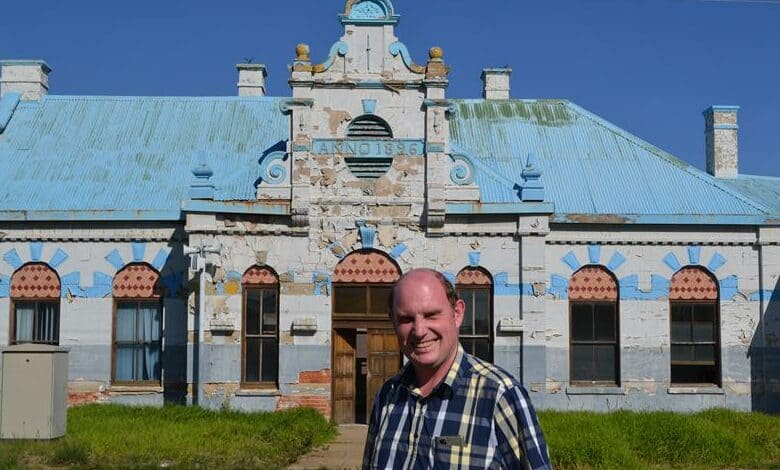
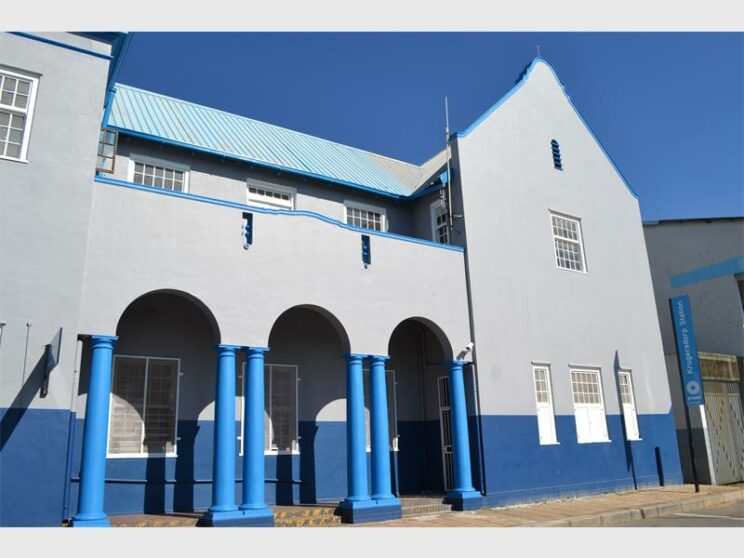
The News visited the Krugersdorp Train Station, where many residents might think the blue and grey building is the original, however, this is not the case.
The original train station is actually behind the current station, across the platform.
ALSO READ: Echoes of Krugersdorp: The old magistrate’s court
Co-founder of the KHA, Jaco Mattheyse, explains that in 1888, the Volksraad finally responded to several petitions requesting the development of a railway on the Witwatersrand goldfields.
A concession was granted for the construction and operation of a tramway between Boksburg and Johannesburg.
In practice, this was more of a light railway than a traditional tramway, as it followed the standard South African rail gauge of 1 065mm.
“However, to reduce costs and expedite construction, lightweight sleepers, rails, and small rolling stock were used.
“The conservative Transvaal government preferred the term tramway over railway, likely due to political sensitivities,” he added.
He continued on July 20, 1888, the government entered into a contract with the Netherlands-South African Railway Company (NZASM) for this so-called Rand Tram.
Keen to demonstrate that the Dutch could construct and operate a railway in South Africa as capably as the British, the NZASM began work in January 1889. By March 1890, the Boksburg-Johannesburg line was open to traffic.
“Due to the rapid development of the West Rand and the discovery of coal in the East Rand, the decision was made, between June and August 1889, to extend the Rand Tram westward to Krugersdorp and eastward to a coal mine at Fonteine [now Springs], which the NZASM planned to operate.
ALSO READ: Echoes of Krugersdorp: Town Hall and its rich history
“The Boksburg-Springs section was completed in October 1890, followed by the Johannesburg-Roodepoort-Krugersdorp extension in February 1891,” he added.
Jaco said different sections of the Rand Tram, including earthworks, masonry, ballasting, and track-laying, were built by various contractors, with additional contractors responsible for the necessary buildings.
He listed, despite its modest total length of 81 km, the Rand Tram had more stations and halts than any other NZASM line. From east to west, these included:
Springs, Schapenrust, Brakpan, Boksburg (Boksburg East), Vogelfontein (Boksburg), Oostrand (East Rand), Heidelbergpad (Angelo), Halfweg (Delmore), Knights (no longer in existence), Elandsfontein (Germiston), Driehoek, Simmer and Jack (disappeared), Geldenhuis, Cleveland, George Goch, Jeppe, Doornfontein, Johannesburg Park (Johannesburg), Johannesburg (Braamfontein), Fordsburg (Mayfair), Langlaagte, Claremont (Bosmont), Maraisburg, Florida, Roodepoort, Witpoortje, Luipaardsvlei, and Krugersdorp.
ALSO READ: Going back in time – 131 years of gentlemen socialising
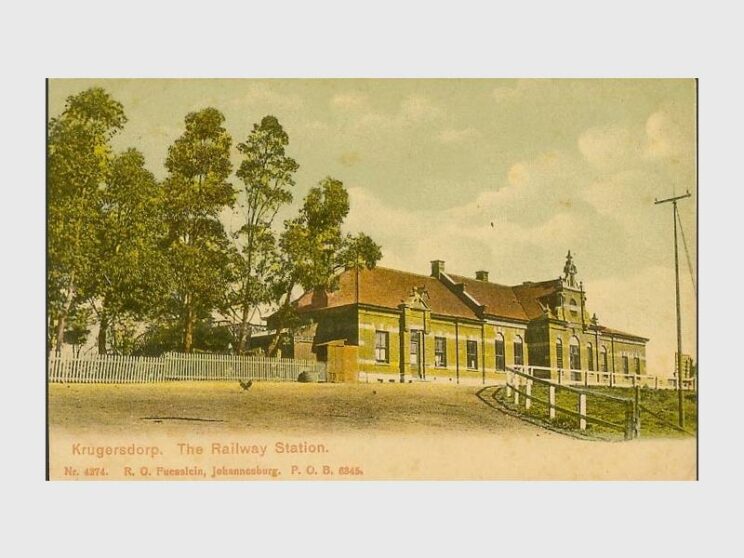
“The original Krugersdorp station was a standard Type II corrugated iron building with a hipped roof and a verandah. In July 1895, construction began on the South-Western Line to Klerksdorp, starting at Krugersdorp. At the same time, work commenced on a much larger, more sophisticated station building, as the original structure was inadequate for a terminus serving two railway lines – the Rand Tram and the Klerksdorp line,” he explained.
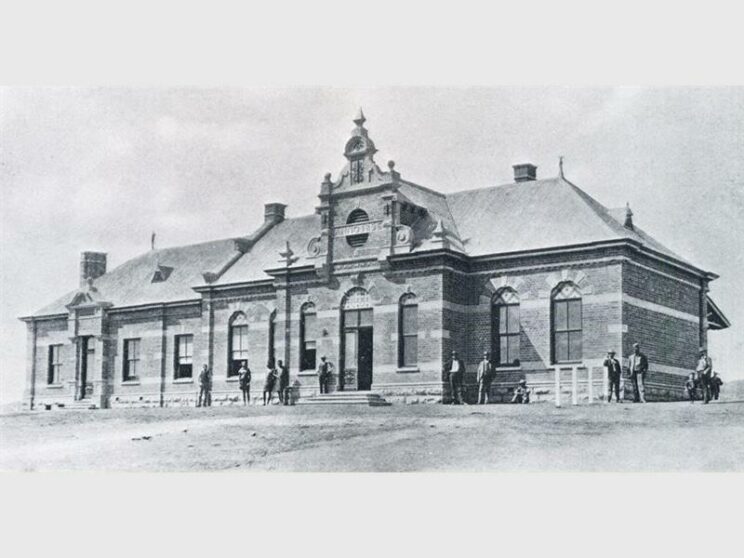
“Completed in 1896, the new station was built by renowned contractor MCA Meischke, who was responsible for numerous NZASM stations and workers’ cottages.
“Situated on elevated ground to the southwest of the town near the mining area, the new station was built according to NZASM architectural plans.
“The red-brick building was adorned with decorative stonework, including two horizontal bands, ‘speck lae’, cornices, and voussoirs framing the windows and doorways. Its most striking feature was the imposing Neo-Dutch Renaissance gable above the main entrance, which dominated the street-facing façade. The platform side, by contrast, featured only a lean-to canopy,” he said.
He continued, inside, the station included an entrance hall, waiting room, and offices, along with residential quarters for the stationmaster separated from the main part of the building by the introduction of a fire wall to lessen the possibility of fire.
Additional housing for NZASM staff was constructed further down the hill and remains in use today. This group of buildings represents a rare and well-preserved example of NZASM architecture in South Africa.
ALSO READ: Old Apostolic Church under threat
“After 1900, the building was extended lengthwise. Unfortunately, much of its original Dutch character was lost when all exterior walls, except the platform side, were plastered and painted. A bar and refreshment rooms were added during this renovation,” he said.
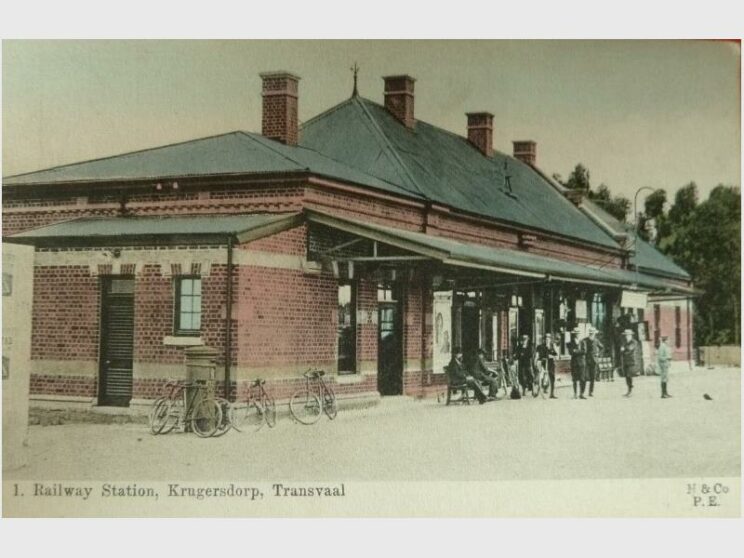
Jaco says the building served the Krugersdorp community well until the mid-1940s, when a new station was constructed in the popular Cape Dutch Revival style to prepare for the Royal Visit in 1948.
Afterwards, the original station was repurposed as offices for railway staff. It was restored and declared a historic building by the National Heritage Trust in the 1980s, though in recent years, it has sadly fallen into disrepair due to the decline of the rail network.
“Krugersdorp’s old station building remains one of the architectural treasures left by the NZASM. Thankfully, as a proclaimed National Monument, it is protected for future generations,” Jaco concluded.