
Echoes of Krugersdorp: The untold story of Coronation Park
Krugersdorp’s Coronation Park stands on historic ground once home to a concentration camp during the South African War. Discover how it transformed into a beloved symbol of renewal and community pride.
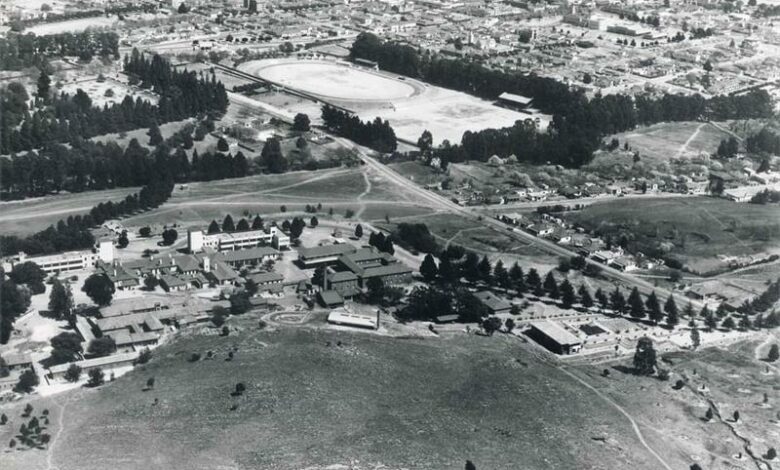
In the 17th edition of Echoes of Krugersdorp, produced in partnership with the Krugersdorp Heritage Association (KHA), the focus falls on one of the town’s most beloved open spaces – Coronation Park.
Located near the heart of modern-day Krugersdorp, few realise that this tranquil park occupies the very ground once used for the Krugersdorp Concentration Camp, established during the Second South African War (1899–1902).
According to KHA co-founder Jaco Mattheyse, official records mark the founding of the camp as April 15, 1901, though social reformer Emily Hobhouse suggested it may have begun informally as early as August 1900. The camp was situated roughly three-quarters of a mile from the old town, beneath a cluster of koppies near the town stream.
• Also read: Die Herberg Hotel: A legacy that died in flames?
The camp expanded rapidly. By the end of May 1901, it housed around 1 531 residents, and by July, the number had risen to over 4 000. It was finally closed in November 1902, following the signing of the peace and the departure of its remaining inhabitants.
“After the war, residents were uncertain how to repurpose the site,” Jaco explained. “In time, prominent British townspeople proposed transforming it into a public park to commemorate the coronation of King Edward VII, who succeeded Queen Victoria after her death on January 22, 1901. The initiative was also seen as a gesture of reconciliation – an effort to bridge the divide between the English-speaking community and former Boer citizens.”
• Also read: Forgotten war memorial remembered
In 1903, the Krugersdorp Town Council took over management of the park and officially named it Coronation Park.
The original design featured a labyrinth, inspired by the famous maze at Hampton Court in England. The park soon became known for its elegant rectangular flowerbeds, rose borders, palms, and golden privets, as well as its collection of rare trees and shrubs.
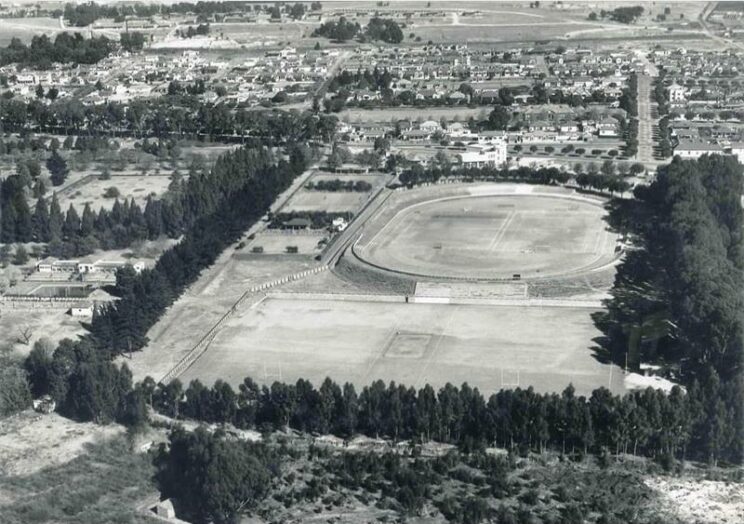
Much of this development was overseen by Harry Sharp, the town’s municipal horticulturist, who nurtured the grounds over an impressive 44 years, retiring as Chief Horticulturist in 1950. Sadly, none of the original flowerbeds or rose gardens survives today.
• Also read: Echoes of Krugersdorp: More than a century of history at Monnas
Between 1909 and 1924, the Krugersdorp Town Band drew large Sunday crowds with lively performances at the park’s central bandstand – a nostalgic landmark that still stands today. The band, made up of about 30 volunteer musicians (many of them former British soldiers), was led by WJ Ward and later E McEnvoy. The municipality supported the group with instruments and uniforms on condition that they perform publicly at least once a month.
• Also read: Police confirm gas bottle found in vehicle after Coronation Park fire
The park continued to evolve over the decades. Play equipment for children was first installed in 1911, followed by a swimming pool in 1932. A traffic training centre for children was added in 1959, and the Centenary Dam, developed during the 1980s, commemorated the town’s centenary in 1987. For many years, the park also featured a town farm with a small collection of domestic animals.
• Also read: Update: Woman burnt beyond recognition in Krugersdorp car fire near local school
“Through the generations, Coronation Park has remained a cherished place of leisure and community,” Jaco said.
“It hosted picnics, family outings, and even a caravan park during the 1990s and early 2000s. Though it later fell into neglect, recent upgrades have revived its charm. Today, Coronation Park once again offers a peaceful green refuge in the heart of Krugersdorp – a place layered with history, memory, and renewal.”