
Echoes of Krugersdorp: The hotels that built a town
From bustling mining-camp taverns to grand Victorian landmarks, the first 2026 edition of Echoes of Krugersdorp explores the hotels that shaped the town’s early social and cultural life.
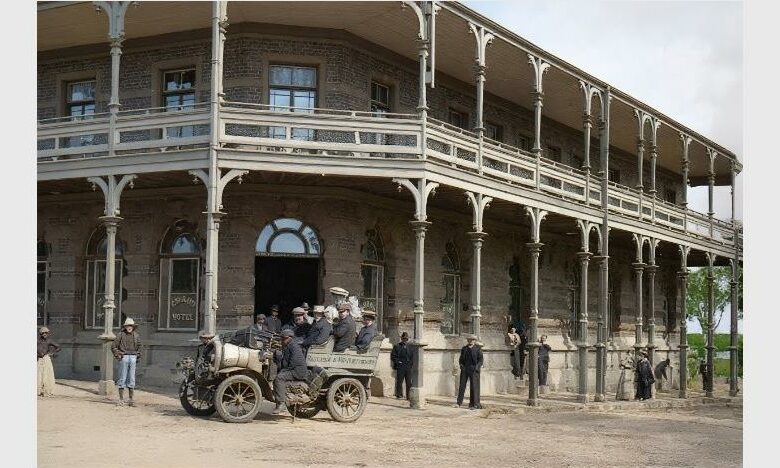
In the 19th edition of Echoes of Krugersdorp, produced in partnership with the Krugersdorp Heritage Association (KHA), the focus turns to some of Krugersdorp’s first and oldest hotels.
KHA co-founder Jaco Mattheyse said that from its earliest days as a mining camp, Krugersdorp boasted a remarkable number of hotels. Some faded into obscurity relatively early, while others survived well into living memory.
fbvideo_id vid_id=1942774709611858
A town built for miners and their thirst
In 1892 – five years after the town’s establishment – Krugersdorp was described in terms that conveyed impermanence: government buildings and about 25 single-storey houses made of corrugated iron. Jaco said there were two or three stores and the same number of hotels. All of these early structures have since disappeared, making way for progress once they had outlived their time.
He explained that early descriptions evoke the impression of a temporary settlement catering largely to thirsty miners. He added that a missionary noted in 1892 that Boers gathering annually at the nearby Paardekraal Monument to commemorate independence regarded the town as a place of illicit pleasure. Krugersdorp’s hotels and taverns, he observed, did a ‘brisk trade (with the Boers), as no intoxicants were sold in the Boers’ camp’.
• Also read: Echoes of Krugersdorp: The untold story of Coronation Park
Grand hotels and early social life
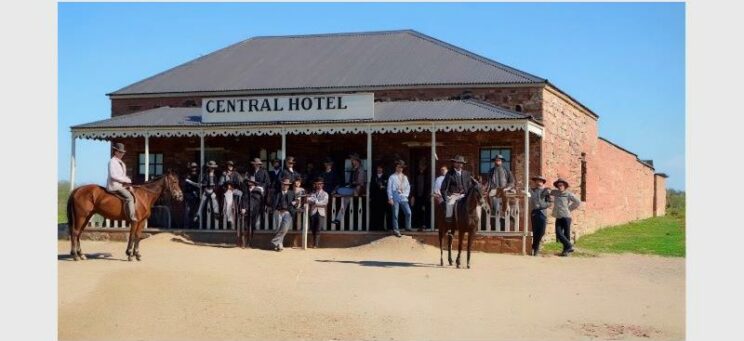
One of the earliest permanent stone-built structures was the Central Hotel, which stood in Ockerse Street between Market and Monument streets, near the site later occupied by the arcade.
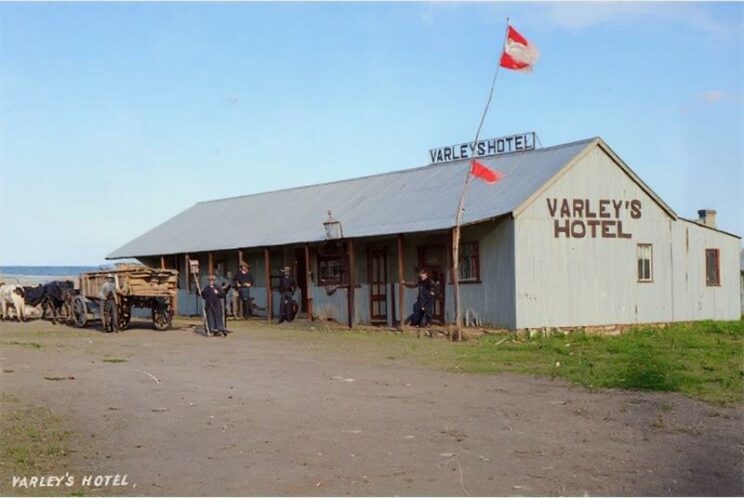
“This hotel was particularly popular with the more prosperous residents of the mining camp. Around the corner, Varley’s Hotel occupied the corner of Monument and Human streets. One of the town’s earliest hotels, its first building was constructed of corrugated iron on a wooden frame imported from Europe – a common practice at the time. The early years were not without hardship, however, and many entrepreneurs diversified to remain solvent. J Varley, while proprietor of a well-known hotel, also appeared in one directory as a cab proprietor,” Jaco said.
Further along Monument Street, at its intersection with Ockerse Street, stood the Grand Hotel.
“This handsome building featured verandas on two storeys and originally faced an open park, on the site now occupied by the former tax offices. The Grand Hotel was a centre of social life and innovation. It hosted the town’s first public demonstration of a gramophone, during which a recording of Queen Victoria’s voice was played in the open space opposite. Grand smoking concerts and other events were held in its ornate dining room, furnished with bentwood chairs, and the first motorbus service to Rustenburg departed from its entrance twice weekly,” Jaco described.
• Also read: Die Herberg Hotel: A legacy that died in flames?
Fires, farewells and fading landmarks
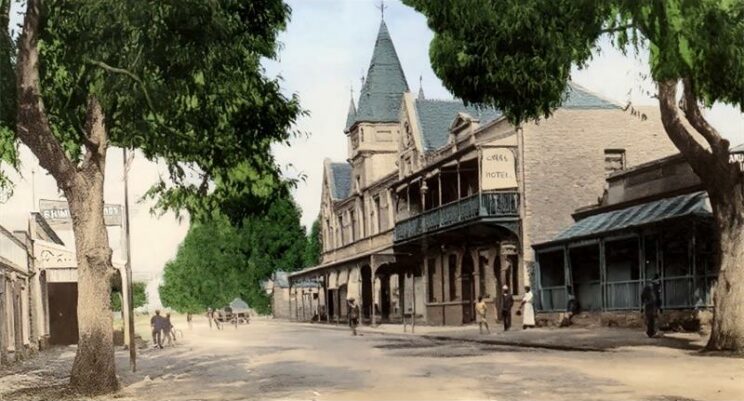
In the next block along Ockerse Street stood the Swan Hotel, adjacent to an impressive mock-Gothic office building with gables and a grand central tower.
• Also read: Forgotten war memorial remembered
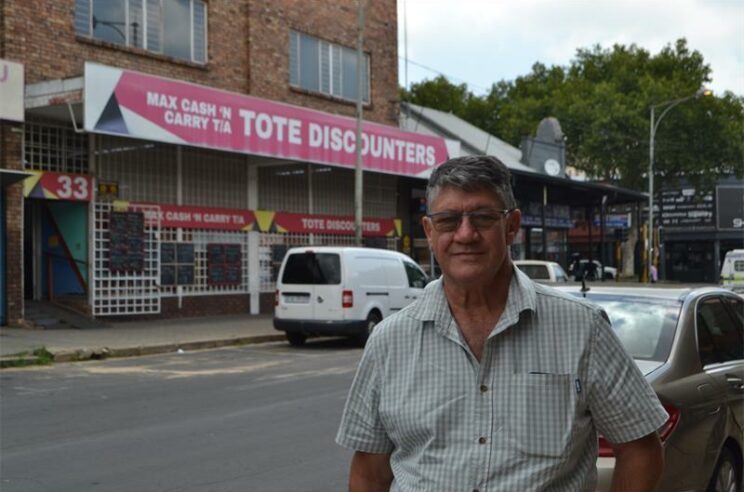
“While the office building survives – albeit stripped of much of its original decoration – the Swan Hotel was tragically destroyed by fire. Many older residents of Krugersdorp still remember it as a popular watering hole,” he said.
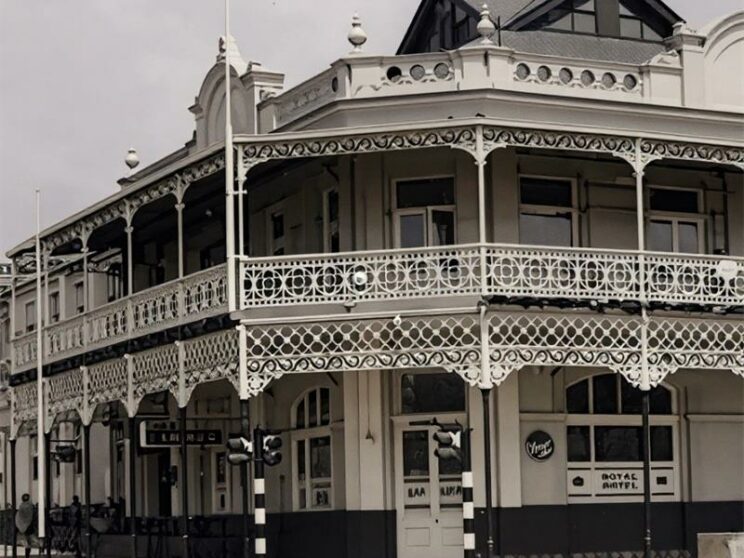
On the corner of Market and Human Street stood one of the town’s most beloved establishments, the Royal Hotel.
Built in 1890, Jaco said it was regarded as one of the finest examples of architecture of its period, featuring intricate Victorian wrought-iron work. Originally known as Price’s Hotel, it was later renamed the Royal. For many years, it was owned by Frederick William Bolt, who died around 1930. Bolt had previously served as a Member of Parliament for Bloemfontein before relocating to Krugersdorp with his wife and seven children. He was actively involved in efforts leading towards the founding of the Union of South Africa.
• Also read: Echoes of Krugersdorp: More than a century of history at Monnas
“In its heyday, the Royal was remembered for its window boxes overflowing with pink geraniums and as a favourite haunt of Sir Abe Bailey, who frequented it regularly. In 1974, the Allied Building Society purchased the hotel for R250 000 (between R4 and R6m today) and demolished it to make way for their new office block. Near the Methodist Church, the President Hotel once graced Burger Street, although regrettably little information about this establishment has survived,” he added.
The Monument Hotel and a colourful pioneer
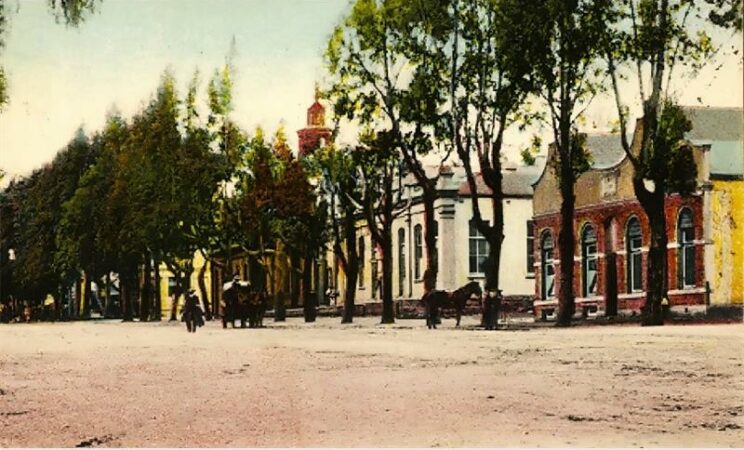
The Monument Hotel stood on the corner of President and Commissioner Street and is closely associated with one of Krugersdorp’s most colourful early figures. On his journey to Johannesburg, Abner Cohen pitched his tent on a rocky outcrop some 17 miles west of the city – on what would later become the heart of Krugersdorp – becoming the first English settler in the area. There, beside the Paardekraal Monument, he erected a humble wattle-and-daub hut and opened his first business, the Monument Hotel and Store.
“This venture was viewed by the conservative Boer government under President Paul Kruger as an irreverent intrusion upon sacred ground. Cohen was ordered to vacate the site and was effectively displaced into the mining camp forming in the valley below. He made a contrite journey on foot to Pretoria to plead his case, and in time was granted a commercial stand in the newly laid-out town. There he established his Court Bar and a second Monument Hotel,” Jaco explained.
Notably, Cohen’s was the only commercial stand within the government block bounded by Monument, Ockerse, Kruger and Commissioner streets.
“Ironically, his saloon stood adjacent to the courthouse, a symbol of Boer secular authority. A commemorative plaque marking this site still survives today. Though removed from the monument itself, Cohen successfully re-established his business at the heart of Krugersdorp’s early mining settlement. In later years, Cohen sold the Court Bar to allow for the expansion of the court buildings. The Monument Hotel passed through several owners, and in the 1930s, the present Majestic Hotel was erected on the same corner. A foundation stone there continues to pay tribute to Abner Cohen,” Jaco added.
Among other inner-city hotels, Jaco said establishments such as The Victoria (Die Herberg), The Luipaard and the Kruger Hotels are remembered, although none remain open today.
“Though none of these early hotels remain standing today, their stories continue to shape the character of Krugersdorp. They were more than places of refreshment or lodging; they were centres of social life, commerce, innovation and encounter in a young and rapidly changing mining town. Within their walls, deals were struck, journeys began, music was heard for the first time, and the rhythms of daily life unfolded. As progress swept away their physical structures, the memory of these establishments survives in photographs, foundations, plaques and recollections passed down through generations. By revisiting these lost hotels, we not only honour the entrepreneurs and patrons who animated them, but also preserve an essential chapter of Krugersdorp’s early urban history – reminding us that even the most transient buildings can leave a lasting imprint on a town’s identity,” Jaco concluded.