
Echoes of Krugersdorp: The impact that paved the way for SA’s gold rush
Long before Johannesburg became the country's mining hub, early prospectors were searching quartz ridges along the western Rand.
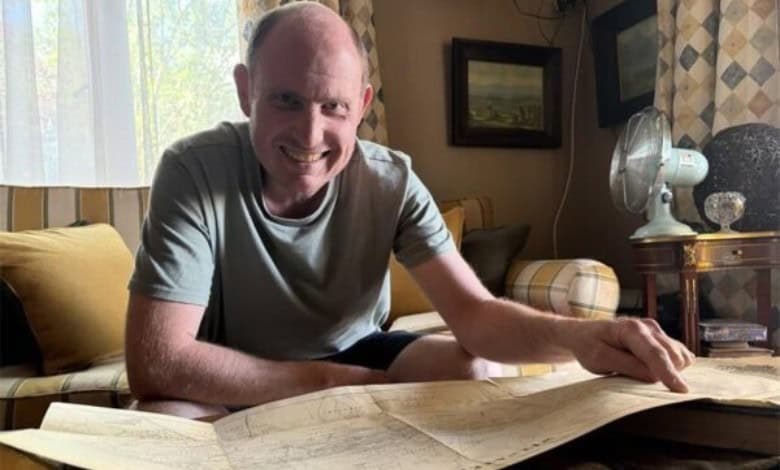
Long before Johannesburg became synonymous with gold, prospectors were exploring the rugged valleys and rocky ridges west of present-day Krugersdorp.
In the 30th edition of Echoes of Krugersdorp, produced in partnership with the Krugersdorp Heritage Association (KHA), co-founder Jaco Mattheyse said discoveries among the quartz outcrops of Blaauwbank and Kromdraai ignited prospecting fever and laid the foundations for an industry that changed South Africa’s economic and political history.
“The spectacular discovery of the Main Reef at Langlaagte in 1886 did not occur in isolation. It was the culmination of more than three decades of exploration by determined prospectors who believed that the ancient rocks of the Zuid-Afrikaansche Republiek concealed untold mineral wealth. Their persistence, often rewarded with only modest success, ultimately paved the way for the greatest gold rush the world had ever seen,” he said.
• Also read: Echoes of Krugersdorp: The early mining days of Krugersdorp
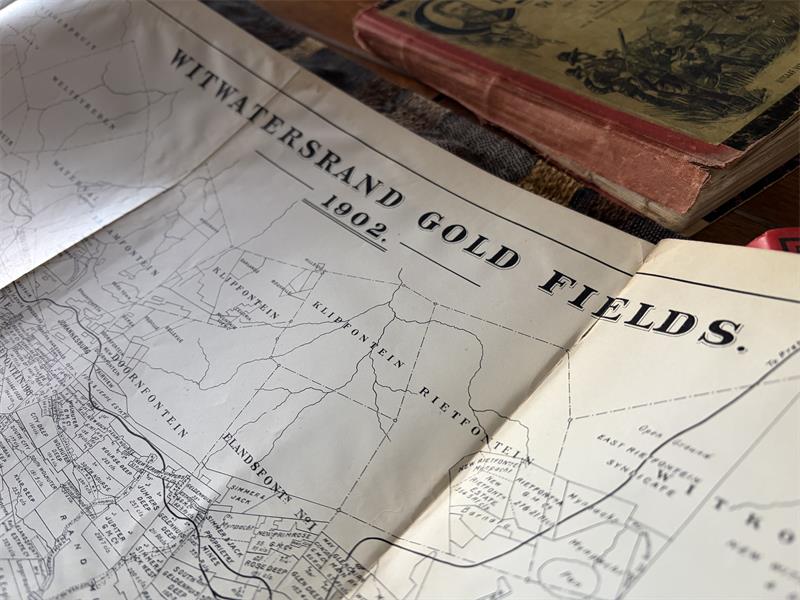
First hints of gold
Mattheyse said the earliest recorded gold discoveries in the Transvaal date back to the 1850s. In 1853, prospector Pieter Jacob Marais discovered small quantities of alluvial gold in the Jukskei River near present-day Johannesburg. Although the deposits proved too limited to sustain commercial mining, the discovery demonstrated that gold was present on the Witwatersrand and inspired further prospecting.
“A few years later, JH Davis identified additional gold-bearing deposits in the vicinity of present-day Krugersdorp. His discovery attracted considerable attention, but the government of the Zuid-Afrikaansche Republiek viewed the prospect of a gold rush with caution. It is generally accepted that President MW Pretorius feared that an influx of fortune-seekers would disrupt the young republic’s agricultural economy and threaten its social stability.”
According to contemporary accounts and local tradition, Davis was compensated by the government for his discovery and persuaded not to publicise it further. While some details of this story remain the subject of historical debate, there is little doubt that the authorities sought to discourage premature mining activity.
“Although neither Marais’s nor Davis’s discoveries led directly to commercial mining, they confirmed that the Witwatersrand contained gold and encouraged a new generation of prospectors to continue searching the ridges and valleys of the western Rand.”
The Blaauwbank discovery
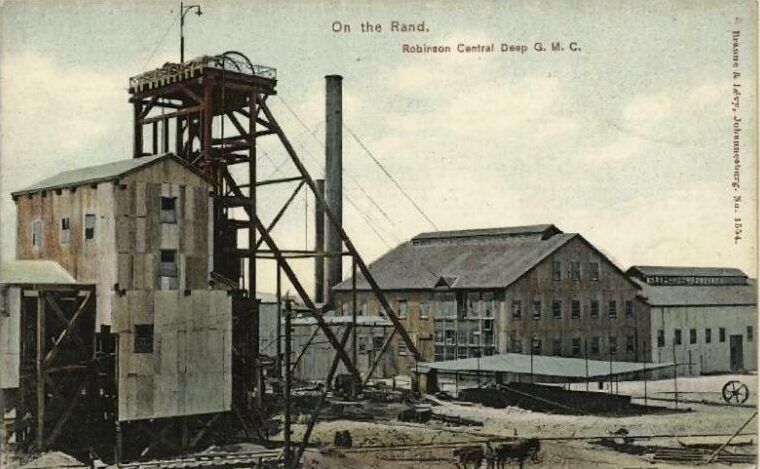
The first commercially successful gold discovery on the western Witwatersrand came in 1874, when Australian prospector Henry Lewis located gold-bearing quartz reefs along the Blaauwbank River, nestled against the southern slopes of the Magaliesberg.
Lewis’s discovery led to the establishment of the Nil Desperandum Co-operative Quartz Company, widely regarded as the first organised gold mining company on what would later become the Witwatersrand Goldfields.
“Unlike the rich conglomerate reefs discovered later on the Central Rand, Blaauwbank’s gold occurred in narrow quartz veins. Mining was labour-intensive and expensive. Ore had to be blasted from the hard rock, sorted by hand, crushed in stamp batteries and washed before the gold could be recovered. Despite these challenges, Blaauwbank proved beyond doubt that payable gold existed on the western Witwatersrand. Primitive mining camps developed around the workings, and the rhythmic pounding of stamp mills echoed through the valley as prospectors became increasingly convinced that even richer deposits awaited discovery,” Mattheyse explained.
• Also read: Through the lens of history: Krugersdorp’s story unveiled
Kromdraai – a new chapter
The search continued only a few kilometres south of Blaauwbank. In 1881, local farmer and prospector Johannes Stephanus Minnaar discovered gold on the farm Kromdraai. This discovery would become one of the defining moments in the early history of the western Witwatersrand.
“Although often overshadowed by the events of 1886, Minnaar’s contribution was of immense importance. His discovery confirmed that the gold-bearing formations extended beyond Blaauwbank and strengthened the belief that an extensive mineralised belt stretched beneath the Witwatersrand,” he said.
“It was the growing confidence created by the successive discoveries of Marais, Davis, Lewis and finally Minnaar that encouraged prospectors to continue exploring the region. Each discovery built upon the last, gradually revealing the extraordinary potential hidden beneath the ancient rocks of the Rand,” he added.
In 1885, Kromdraai was officially proclaimed a public gold field, allowing claims to be pegged and mining companies to begin systematic operations. Mining concentrated on the Black Reef Formation, one of the oldest auriferous conglomerates within the Witwatersrand Basin. The ore proved exceptionally rich, yielding an average of about 25 grams of gold per ton – an impressive grade by the standards of the day.
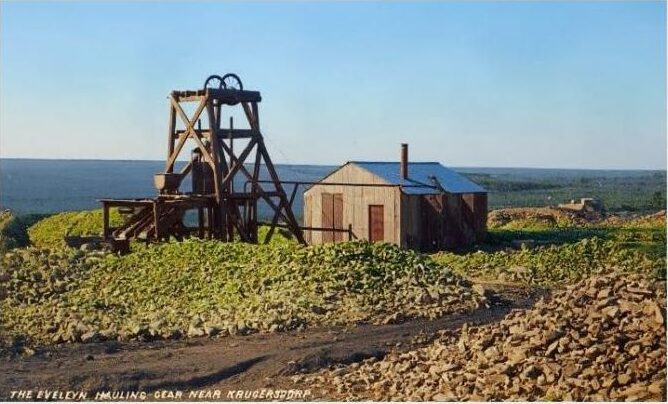
“Stamp mills were erected, shafts were sunk and winding gear installed. The once quiet countryside became alive with the sounds of blasting, steam engines and ore crushing as miners sought their fortunes beneath the rocky hillsides,” he added.
The Kromdraai Gold Mine became one of South Africa’s earliest gold mines. Mattheyse said that although production remained relatively modest compared with later developments on the Central Rand, it demonstrated beyond question that commercially viable gold-bearing reefs existed on the western Witwatersrand.
The mine operated until about 1910, briefly reopened in 1913, and finally ceased production in 1914. While its working life was comparatively short, its historical significance has endured.
The discovery that changed everything
The optimism generated by the discoveries at Blaauwbank and Kromdraai encouraged prospectors to continue searching eastwards along the Witwatersrand ridge. Their persistence was rewarded in 1886, when the immensely rich Main Reef was discovered at Langlaagte.
“This discovery triggered the famous Witwatersrand Gold Rush. Thousands of prospectors, engineers, investors and fortune-seekers poured into the region from across southern Africa and overseas. Within months, a sprawling mining camp had emerged, and before long it became the town of Johannesburg. Compared with the seemingly endless riches of the Main Reef, the western mines rapidly lost their commercial importance. Investment, machinery and skilled labour shifted eastward to the Central Rand. Yet without the pioneering discoveries at Blaauwbank and Kromdraai, the search that culminated at Langlaagte might have taken many more years,” he explained.
The birth of Krugersdorp
Mattheyse explained that the discoveries around Blaauwbank, Kromdraai and nearby Paardekraal directly influenced the establishment of Krugersdorp in 1887.
Recognising the need for an administrative centre to serve the expanding mining community, the government of the Zuid-Afrikaansche Republiek established the new town, naming it after President Paul Kruger.
Krugersdorp quickly became the commercial, administrative and social heart of the West Rand. Merchants, engineers, transport riders, craftsmen and miners settled in the growing town, while churches, schools, banks and public buildings soon followed.
“Although many of the earliest mines were eventually eclipsed by the spectacular production of the Central Rand, they had already transformed the surrounding farming district into one of southern Africa’s most dynamic regions,” he added.
From gold mine to heritage site
Following its closure, the Kromdraai Gold Mine entered a new chapter in its remarkable history.
“During the twentieth century, parts of the old workings were developed as a show mine, allowing visitors to descend underground and experience the conditions under which nineteenth-century miners searched for gold. The preserved tunnels and mining equipment provided valuable insight into the hardships, ingenuity and determination of the early prospectors who helped shape the history of the West Rand,” Mattheyse stated.
“Kromdraai occupies a truly unique place in South African heritage. Situated within the Cradle of Humankind World Heritage Site, it represents the meeting point of two extraordinary stories. One tells of the search for gold that transformed the economy of southern Africa; the other tells of discoveries that revealed some of humanity’s earliest ancestors.”
“It is a remarkable irony that a landscape once explored for precious metal would later become internationally celebrated for treasures infinitely older – and arguably far more valuable – than gold itself,” he added.
Echoes that remain
Today, remnants of old shafts, mine dumps, stone buildings and scattered mining machinery can still be found around Blaauwbank and Kromdraai. Mattheyse said these silent relics remind visitors of an era when determined prospectors believed that fortune lay hidden beneath every ridge of quartz and conglomerate.
He said that while Johannesburg became synonymous with the world’s richest goldfield, the story began much earlier. The pioneering discoveries of Pieter Jacob Marais, JH Davis, Henry Lewis and Johannes Stephanus Minnaar gradually revealed the extraordinary mineral wealth of the Witwatersrand. Each discovery built upon the last, encouraging further exploration until the momentous events of 1886 changed the course of South African history forever.
“For the people of Krugersdorp, these are not merely stories of gold. They are stories of courage, perseverance and vision. They are the opening chapters in the history of the West Rand – a history that gave birth to Krugersdorp, helped shape modern South Africa and continues to echo across our landscape today. As we preserve the remnants of Blaauwbank and Kromdraai, we honour not only the mines themselves but also the men and women whose determination unlocked the riches of the Witwatersrand and left an enduring legacy for generations to come,” he concluded.