Another Hoedspruit leopard lost to the R40
Hoedspruit’s leopard population faces growing threat as another prime breeding male is struck and killed on the R40 highway.
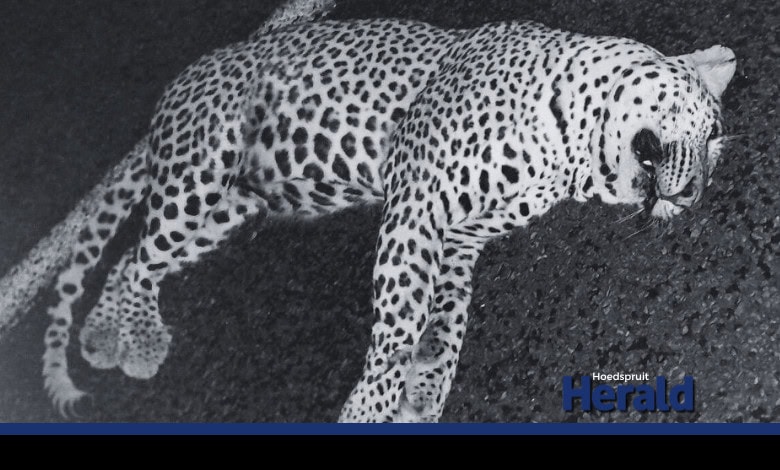
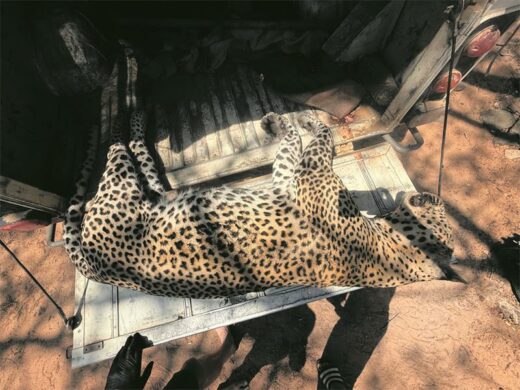
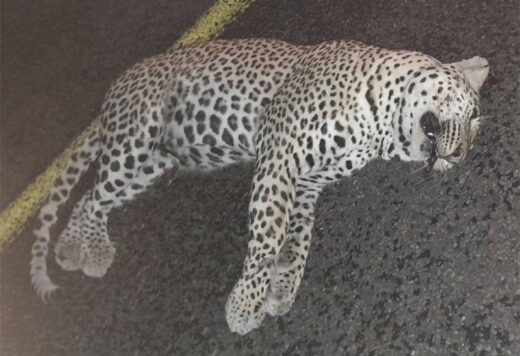
HOEDSPRUIT – The Hoedspruit community is mourning the loss of a male leopard, the latest victim in a growing road ecology crisis on the R40.
The animal was struck and killed in the early hours of Sunday, October 19, about 2km north of the Olifants West Gate.
The Ingwe Research Program confirmed the incident, noting that this brings the total number of leopards killed on local roads since mid-2024 to eight, six of which were on the R40 alone.
“We had hoped that 2025 would spare us further loss, but sadly, that will not be the case,” said Marine Servonnat, executive director of the Ingwe Research Program.
A blow to local genetics
The leopard, known to researchers as Selati LM0025, was an estimated five-year-old breeding male in his prime.
His death is a significant blow to the local population’s genetic health.
Selati LM0025 had dispersed from Selati Game Reserve in 2024 and successfully established his territory across the Wild Rivers and BOCCA reserves. His movements were closely monitored by partners at Rukiya Lodge, as well as through camera traps deployed by Transfrontier Africa and Ingwe.
While local frustration often focuses on reckless driving, Ingwe stresses that this is a systemic issue.
“The R40’s low-light conditions make spotting animals at night extremely difficult. In high-impact collisions with large predators like leopards, the outcome is often fatal regardless of vehicle speed. Fortunately, the driver involved was unharmed, though likely deeply shaken.”
Researchers launch road ecology project
Ingwe launched the Road Ecology Project, aiming to identify long-term, science-based mitigation measures.
The first three-month field season, completed in September, mapped roadkill hotspots, key wildlife crossing points, and the use of existing culverts by species.
Servonnat says immediate actions under consideration include installing highly visible reflective leopard awareness signs, similar to projects in the Western Cape.
These signs would be moved periodically to prevent driver habituation, though securing permits and mitigating theft will require resources that the small non-profit currently struggles to cover.
“Ingwe relies on the support of more than 45 reserves and lodges, and it urgently needs staff and funding for upcoming fieldwork, data analysis, and the development of implementable road mitigation solutions.

Residents urged to drive cautiously
“We emphasise that protecting local wildlife is a shared responsibility. Residents are encouraged to slow down at night, remain fully alert, avoid distractions, and drive cautiously in low-visibility areas.
“The loss of Selati LM0025 serves as a stark reminder that roadkill is not merely a driver issue but a systemic threat to wildlife. Community vigilance, data-driven solutions, and ongoing support for conservation research are essential to safeguarding Hoedspruit’s leopards for future generations,” says Servonnat.