
- The oldest ever known jewellery ever found is 100000 years old: Beads made form Nassarius shells.
- The word jewellery, from old French joule and in turn Latin jocale, means “plaything”.
- The Americans term is spelt ‘jewelry’, for everyone else it is ‘jewellery.’
- In many older cultures jewellery is supposed to ward off evil, one example is the Egyptian ankh.
- Through history, live insect jewellery was popular. The Egyptians being the first to do so, wearing scarab beetles into battle. The Mexican Maquech Beetle and Giant Madagascar Hissing Cockroach have also been used in jewellery. In Britain the Victorians adored it, sporting huge, vivid live beetles attached to their clothing by fine gold chains.
- 24ct gold is 99.9% pure, and most USA and European jewellers find it too soft for jewellery. 24ct gold is used in jewellery across East Africa, Asia and the Middle East.
- Jewellery in Platinum alloys range from 900 (90% pure) to 950 (95% pure).
- The first Diamonds were mined in India in the 4th Century BC.
- The Cullinan Diamond is the largest gem quality diamond ever mined. It was mined in 1905 and weighed 3,106.75 carats, which is 621.35 grams in weight.
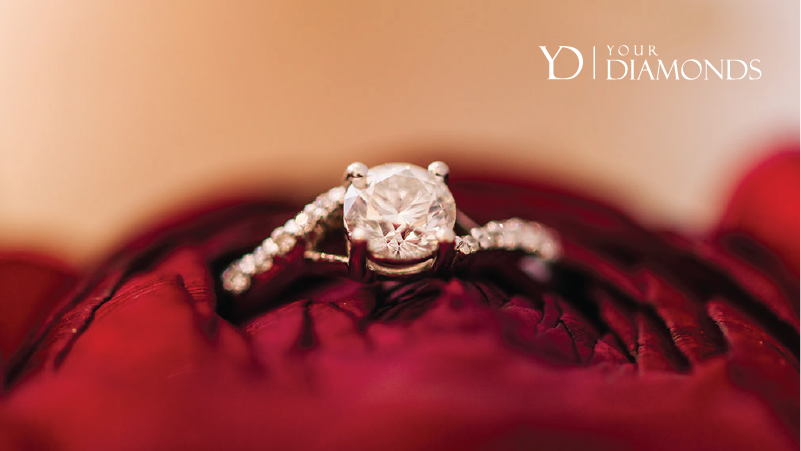
- Engagement rings date as far back as 1477, established by the marriage of Maximilian the1st to Mary of Burgundy.
- Amethyst is a version of quartz, but its beautiful purple comes from trace amounts of iron that is irradiated from natural radiation.
- One of the four precious gemstones, Emeralds, was mined by the Egyptians as early as 3500 BC.
- In the Indian language of Sanskrit, the word Isratnaraj, which means ‘king of precious stones’, is used for Rubies.
- The most known form of sapphire is blue, but they also come in yellow, pink, purple and green.
- An organic gemstone is substances like pearls, amber and coral, all made by living organisms.
- In some African cultures large earrings are a sign of masculinity, power, status and prowess.
- By the mid 1940s, both male and female partners started wearing wedding rings.
- In the traditional Islamic religion, men wearing gold is considered a social taboo and women should only wear ear jewellery.
- Snail shell beads found in the ancient Blombos Cave in Africa, date back 75,000 years.
- Other beads, made from ostrich egg shell, were discovered in Kenya’s Enkapune Ya Muto, dating back more than 40,000 years.
- Our Cro-Magnon ancestors wore simple jewellery like necklaces and bracelets made from bone, berries, stones and teeth, threaded on string or animal sinew.
- Ancient bracelets carved from mammoth tusk have been found in Russia.
Tips how to choose an engagement ring
- Copper jewellery were unearthed by the Museum of Ancient History when they found a female jewellers grave. Copper jewellery started appearing about 7000 years ago.
- The Egyptians loved gold and it appeared in Ancient Egypt between 3000-5000 years ago.
- Mesopotamia tombs at the Royal Cemetery of Ur, dating back to 2900–2300 BC, were stuffed with gorgeous silver, gold, and semi precious gemstone-studded jewellery including lapis lazuli and gold crowns, pins and collars.
- In ancient Assyria, both men and women were adorned in huge amounts of jewellery including ankle bracelets, amulets and massive multi-strand necklaces.
- The Indus Valley Civilization started manufacturing jewellery In India more than 5000 years ago.
- People started manufacturing jewellery in China around the same time, but it only become widespread when Buddhism started to gain popularity about 2000 years ago.
- The ancient Chinese had an obsession with Jade, which they loved for its alleged human qualities: hardness, beauty and durability.
- In the early 1980’s, a rock band, The Smiths made jewellery for men popular again, reviving the hippy 1960’s trend.
Visit Your Diamonds’ website for great specials and promotions – https://www.yourdiamonds.co.za/
At Caxton, every story is written by humans. We use AI only to perform quality checks - never to generate the news. Happy reading!